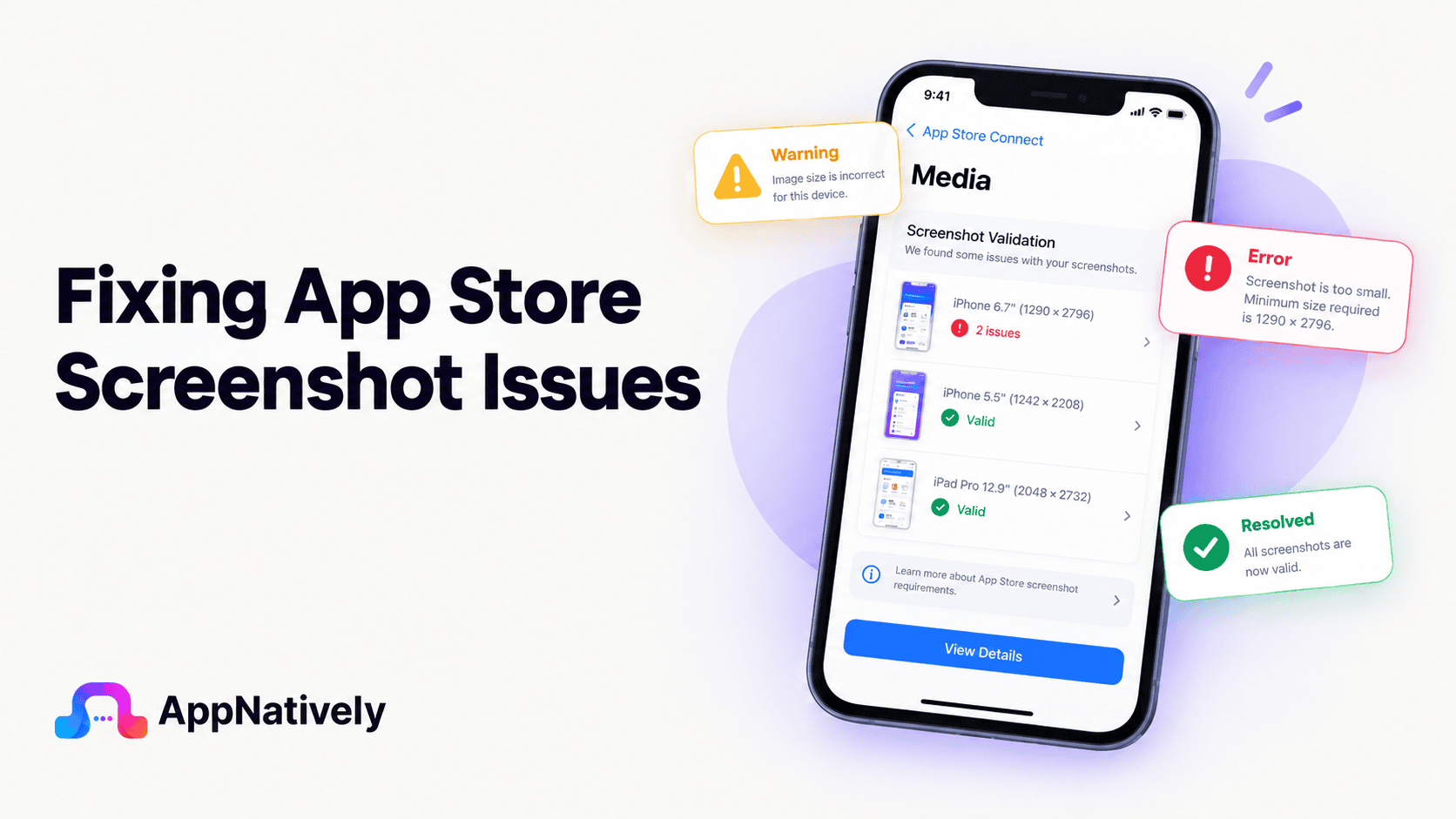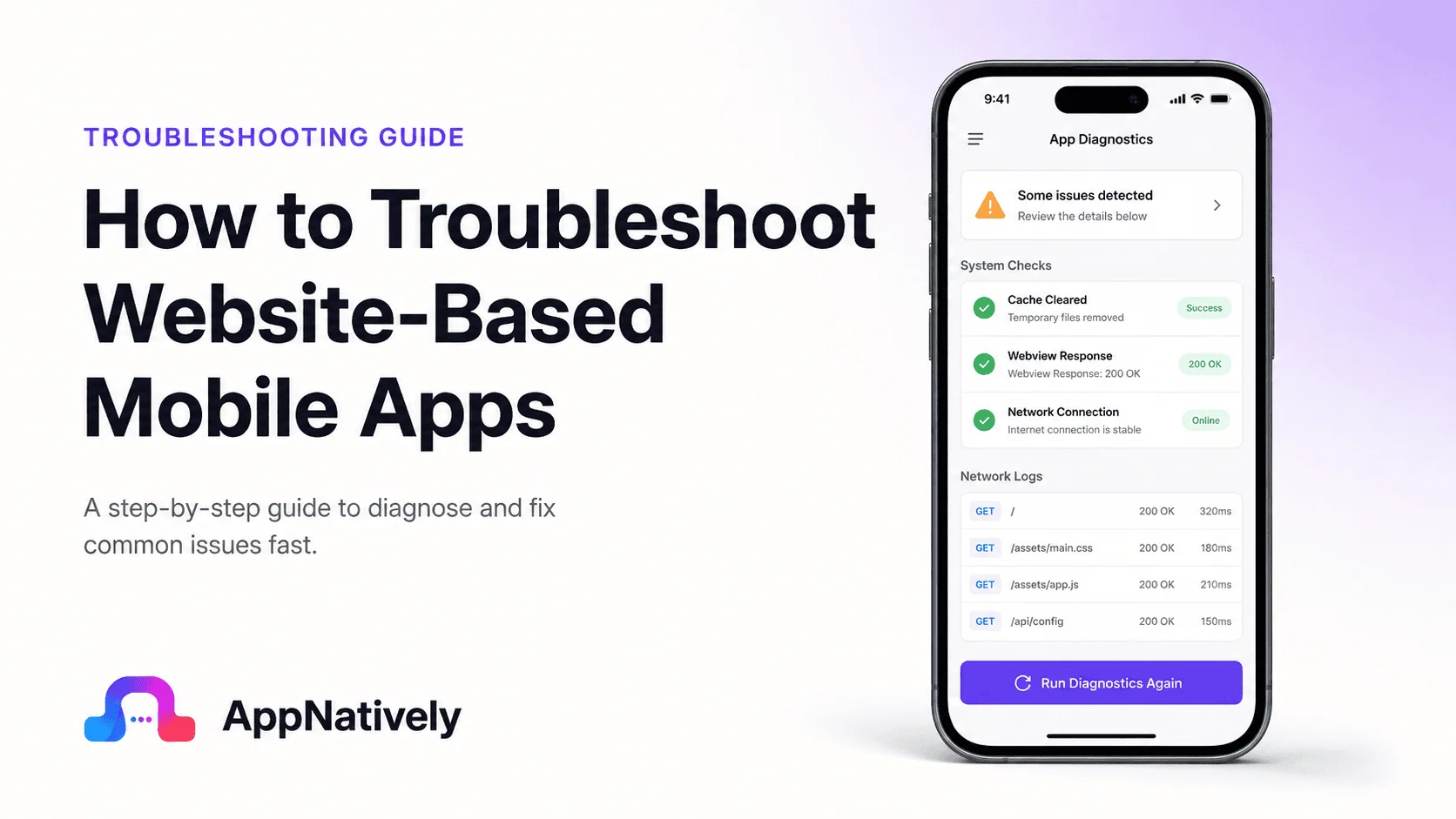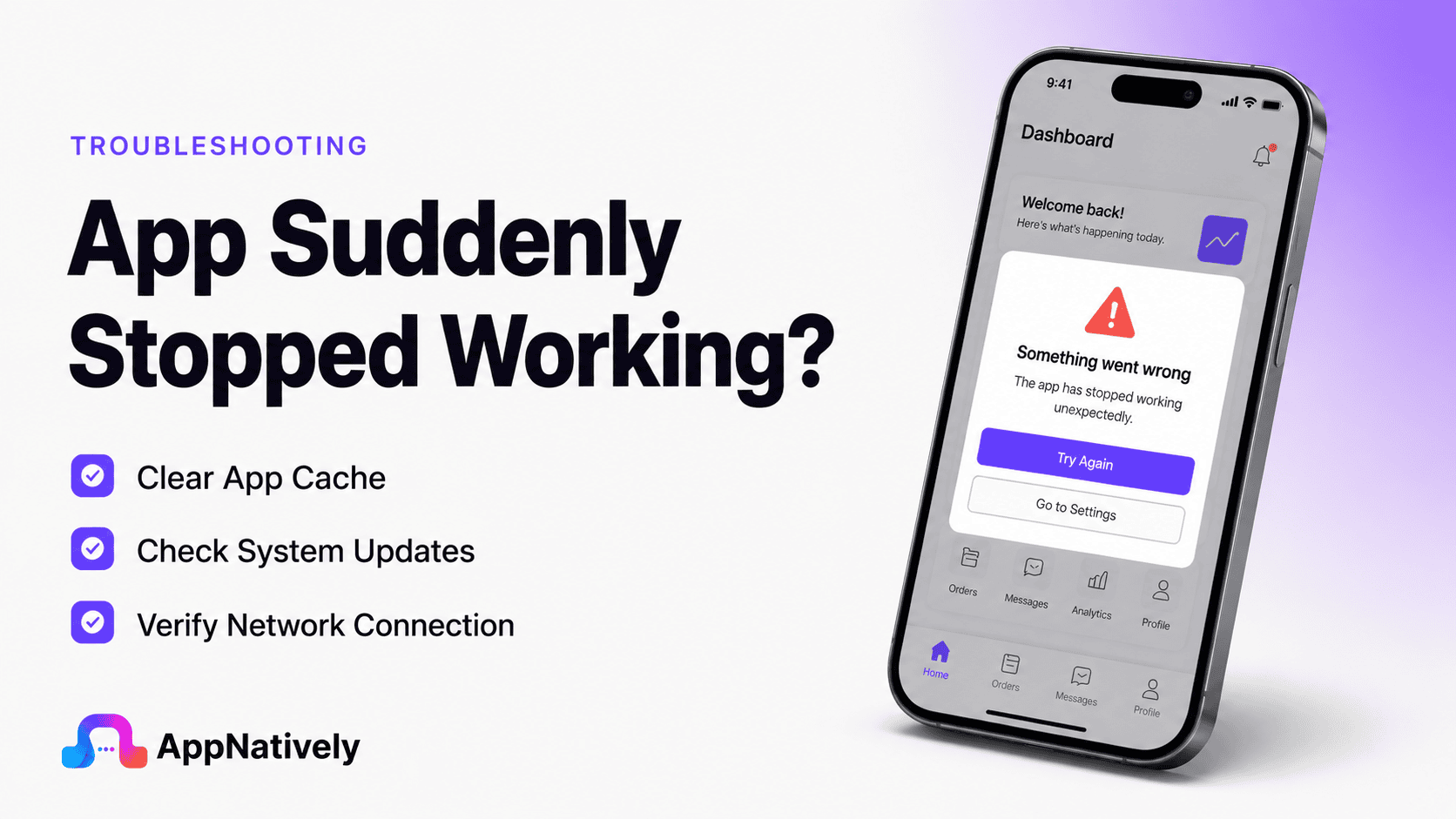
“Vibe coding” — building apps fast using AI, no-code tools, or rapid prototyping — is exploding in 2026.
But here’s the problem: most of these apps fail App Store approval, not because they don’t work, but because they ignore strict platform guidelines.
Apple and Google reject up to 25% of app submissions, often for avoidable reasons such as incomplete functionality, privacy violations, or spam-like duplication.
If your app feels “done” but keeps getting rejected, the issue isn’t your idea. It’s the gap between the vibe of coding speed and the reality of App Store compliance.
Build fast. Get approved. Join App Natively waitlist
What Is Vibe Coding (And Why It’s Dangerous for Approval)
Vibe coding is all about speed. You build apps using AI tools and templates without deep attention to technical or compliance details.
It prioritizes:
Speed over structure
Features over polish
Launch over compliance
And that’s exactly why apps fail review.
Moreover, Vibe Coding prioritizes experience feel over edge-case handling. Apple prioritizes reliability over novelty.
Here’s where they clash:
Vibe Coding Artifact
Apple Guideline Violated
Typical Rejection Reason
Single-screen MVP with no navigation
4.2.0 (Minimum Functionality)
“Your app appears to be a web view or demo.”
AI-generated placeholder icons
4.0 (Design – Spam)
“Binary does not match screenshots.”
Missing privacy manifests
5.1.1 (Data Collection)
“No App Privacy Response.”
Hardcoded API keys
2.5.1 (Performance)
“Crash on launch due to network failure.”
No offline state handling
2.4.1 (Hardware Compatibility)
“App fails on airplane mode.”
Hidden mistake #1: Vibe Coding tools (Cursor, Replit, v0.dev) rarely enforce Apple’s human interface guidelines. You get “vibes” but not a UINavigationController hierarchy.
The Core Problem: Speed vs Compliance
Vibe coding creates apps fast.
App Store guidelines expect apps to be:
Fully tested
Policy-compliant
User-safe
Production-ready
This mismatch is where most developers fail.
👉 Over 40% of rejections come from incomplete or broken apps alone.
Vibe Coding vs App Store Guidelines: Side-by-Side Compliance Map
Requirement
Vibe Coding Default
App Store Expectation
Fix
Minimum functionality
One interactive view
Multi-screen + settings
Add tab bar + UserDefaults
Privacy labels
None
Full disclosure
Add PrivacyInfo.xcprivacy
Performance
Assumes perfect network
Graceful degradation
Add offline alerts + retry
UI consistency
AI hallucinated colors
HIG compliance
Run uicheck or manual audit
App icon
Placeholder emoji
Distinct, non-spam
Custom asset + proper sizes
Hidden mistake #0 (the killer): Vibe-coded apps often include unused permissions. Apple sees NSCameraUsageDescription but no camera button → automatic rejection (Guideline 2.3.1).
10 Hidden Mistakes Killing Your App Approval
Getting your app approved isn’t just about building it, but it’s about meeting strict, often overlooked standards that most developers miss. Before you hit submit, make sure you’re not making these hidden mistakes that silently kill your chances of approval.
1. Incomplete App (The #1 Killer)
Apps with:
“Coming Soon” features
Broken buttons
Placeholder content
…get instantly rejected under Guideline 2.1.
Apple expects a fully functional product, not a prototype.
2. Copycat or “Spammy” apps
If your app looks like:
Another AI-generated clone
A template-based duplicate
You’ll hit Guideline 4.3 (Spam).
👉 This is extremely common in vibe coding.
3. Missing or weak privacy policy
Apps without:
Clear data usage
Privacy links
Get rejected under Guideline 5.1.
Privacy violations are among the top rejection reasons.
4. Broken login or demo access
If reviewers can’t log in, your app = rejected.
You must provide:
Working credentials
Full access to features
5. Poor UI/UX (Even if it works)
Ugly or confusing design = rejection.
Apple expects:
Smooth navigation
Native feel
Clean layout
6. Misleading screenshots & metadata
If your listing shows features not in the app:
Instant rejection (Guideline 2.3)
7. Payment rule violations
Trying to:
Bypass in-app purchases
Use external payments
= Rejection under Guideline 3.1
8. Excessive permissions
Requesting:
Camera
Location
Contacts
Without a clear reason = rejection.
9. Crashes & performance issues
Even one crash during review = rejection.
This is one of the most common real-world failures
10. No real value (Minimum Functionality)
Apps that feel like:
Simple wrappers
Basic templates
Thin AI tools
…get rejected for lacking usefulness.
Vibe Coding vs App Store Reality (Comparison Chart)
Factor
Vibe Coding Approach
App Store Expectation
Development Speed
Fast
Irrelevant
App Completeness
Often partial
Must be complete
UI/UX
Template-based
High-quality native
Privacy
Often ignored
Mandatory
Testing
Minimal
Extensive
Approval Chances
Low
High (if compliant)
How to Submit a Vibe-Coded App Successfully (Checklist)
Use this pre-submission checklist:
Navigation: Can the user reach at least two different logical sections?
Persistence: Does the app restore state after force-close?
Offline behavior: Does it show a friendly message when offline?
Privacy manifest: Included and accurate?
Hardcoded secrets: None in binary (use environment variables or cloud config)
Screenshots vs binary: 100% match (no fake UI)
Minimum iOS version: Realistic (vibe tools often set too high or too low)
👉 If you’re currently building with AI or no-code, joining the waitlist now gives you an unfair advantage before launch.
Frequently Asked Questions (FAQs)
Q1: Is Vibe Coding allowed for App Store apps?
Yes, but Apple does not review your process—only the binary. Vibe-coded apps are allowed if they meet all guidelines.
However, AI-generated code often skips edge cases, so manual validation is mandatory.
Q2: Why does Apple reject “minimum functionality” apps so often?
Guideline 4.2 exists to prevent “shell apps” that could be PWAs or web views.
Apple requires native-grade utility, navigation, and persistence. A vibe-coded single-screen quote generator will be rejected.
Q3: Can I use AI to generate my App Store description and metadata?
Yes, but you must ensure it’s accurate. Many AI-generated descriptions promise features (e.g., “cloud backup”) that don’t exist in the binary. That’s a Guideline 2.3 rejection.
Q4: What’s the most common hidden rejection for vibe-coded apps?
Missing UIApplicationDelegate Methods for background tasks. Vibe coders rarely implement background fetch or audio handling, causing crashes when the app is suspended.
Q5: How do I test a vibe-coded app like Apple’s review team?
Use TestFlight with “Review Mode” enabled. Disable Wi-Fi. Force-close the app. Tap push notifications. Open from a universal link. If any step fails, you’ll get rejected.
Q6: Does Apple scan for AI-generated code?
No. But they scan for guideline violations. AI-generated code is not penalized—low-quality code is.
The hidden mistake is assuming AI will handle Apple’s unique runtime expectations.
Traditional app development is expensive, time-consuming, and heavily dependent on skilled developers.
For startups and businesses, this creates a major bottleneck—ideas sit idle while competitors move faster.
What if you could turn your idea into a working app in days instead of months? What if your marketing team, founder, or operations manager could build tools without writing a single line of code?
No-code platforms are removing the biggest barrier in tech, coding. With drag-and-drop builders, automation, and AI integration, anyone can now create powerful applications without technical expertise.
👉 Join the waitlist for App Natively and be among the first to build AI-powered apps without code.
Why 90% of Apps Will Be Built Without Code by 2027
1. The developer shortage is accelerating the shift
The demand for software is growing faster than the supply of developers.
Companies are struggling to hire and retain engineering talent, which makes no-code platforms a practical alternative.
Businesses can’t afford to wait—they need solutions now.
2. AI is making no-code even more powerful
AI is supercharging no-code platforms by enabling automation, smart workflows, and even app generation from simple prompts.
This combination drastically reduces the need for manual coding while increasing output.
3. Speed is the new competitive advantage
In today’s market, the fastest builder wins. No-code tools allow teams to launch MVPs in days, validate ideas quickly, and iterate based on user feedback, something traditional development struggles to match.
4. Cost efficiency is driving adoption
Hiring developers, maintaining infrastructure, and managing long development cycles are expensive.
No-code reduces these costs significantly, making app development accessible to startups and small businesses.
5. The rise of citizen developers
Non-technical users like marketers, founders, and product managers are now building applications themselves.
This shift is redefining who can create software and how innovation happens.
What Types of Apps Will Be Built Without Code
i. Startups and MVPs
Founders are increasingly using no-code to validate ideas quickly before investing in full-scale development.
ii. Internal business tools
Companies are building dashboards, CRMs, and automation tools without relying on engineering teams.
iii. Marketplaces and SaaS products
No-code platforms now support complex applications, including multi-vendor marketplaces and subscription-based SaaS tools.
iv. Mobile apps
With the rise of AI-powered builders, native mobile apps are becoming easier to create without coding knowledge.
Why You Should Care Right Now
Early adopters will win big
Just like early adopters of social media and SEO dominated their industries, early no-code adopters will gain a massive competitive advantage.
The barrier to entry is disappearing
You no longer need a technical background to build software. Ideas and execution matter more than coding skills.
The market will get crowded
As more people adopt no-code, competition will increase. Getting in early is the key to standing out.
No-Code vs Traditional Development (Comparison Chart)
Factor
No-Code Development
Traditional Development
Speed of Development
Extremely fast — apps can be built in days or weeks
Slower — typically takes months to develop and launch
Technical Skills Required
No coding skills needed — beginner-friendly
Requires experienced developers and coding expertise
Cost
Low cost — minimal development and maintenance expenses
High cost — developer salaries, infrastructure, ongoing maintenance
Flexibility & Customization
Limited to platform capabilities and integrations
Fully customizable — complete control over features and logic
Scalability
Improving rapidly — suitable for most startups and SMEs
Highly scalable — ideal for complex, enterprise-level systems
Maintenance
Handled by the platform — minimal effort required
Requires continuous updates, bug fixes, and DevOps support
Time to Market
Very fast — launch MVPs quickly
Slow — longer testing and development cycles
Security
Managed by platform providers — generally secure
Fully controlled — depends on development practices
Integration Capabilities
Easy integrations via APIs and plugins
Fully flexible but requires manual implementation
Ownership & Control
Platform-dependent — limited backend access
Full ownership of code and infrastructure
Learning Curve
Very low — intuitive drag-and-drop interfaces
High — requires programming knowledge and experience
What if you could turn your idea into a fully functional, native app without writing a single line of code, hiring expensive developers, or waiting months to launch?
Designed for founders, marketers, creators, and agencies, App Natively is an AI-powered no-code platform that eliminates the biggest bottlenecks in app development.
Instead of struggling with complexity, you simply describe what you want and the platform helps you bring it to life faster than ever before.
Imagine launching your MVP in days. Imagine testing ideas instantly. Imagine owning your product without technical dependency. This is not just convenience—it’s a competitive advantage.
The future of app development is not coding. It’s creation without friction. And early adopters always win.
Right now, while others are still stuck in slow development cycles, you have the opportunity to get ahead before the market becomes crowded.
👉 Join the App Natively waitlist today and secure your early access to the next generation of app building.
Frequently Asked Questions (FAQs)
What is no-code app development?
No-code app development allows users to build applications using visual interfaces and drag-and-drop tools without writing code.
Will no-code replace developers?
No, but it will reduce the need for developers in many projects. Developers will focus more on complex and scalable systems.
Is no-code scalable for large applications?
Modern no-code platforms are increasingly scalable and can handle complex applications, especially when combined with APIs and integrations.
How fast can you build an app with no-code?
Depending on complexity, apps can be built in days or weeks instead of months.
Are no-code apps secure?
Most reputable no-code platforms offer strong security measures, including data encryption and compliance standards.
What is the future of no-code development?
No-code is expected to dominate app development by 2027, making software creation accessible to millions of non-developers worldwide.
Apple is not rejecting apps simply because they are built with AI. Instead, it’s rejecting them for violating core App Store guidelines.
In 2026, stricter rules around privacy, functionality, and dynamic code execution mean that many AI-generated apps fail before they even reach users.
If your AI app keeps getting rejected, it’s likely due to poor compliance, lack of originality, or hidden technical violations, not the AI itself.
Convert your website into an iOS & Android app in minutes (Join waitlist)
The Real Truth: Apple Isn’t Anti-AI (But It Is Anti-Lazy Apps)
Despite the headlines, Apple isn’t banning AI apps. In fact, it actively supports AI development inside tools like Xcode. The crackdown is happening because of how AI apps are being built and deployed.
Recent reports show Apple has even blocked updates to AI “vibe coding” apps unless they remove problematic features or comply with guidelines.
So what’s the issue?
👉 Apps that bypass review systems, auto-generate content, or behave unpredictably are being flagged.
What You’re Doing Wrong Actually
Before we dive into the specific mistakes, understand this: most App Store rejections aren’t random—they’re predictable and preventable.
If your AI app keeps getting rejected, chances are you’re breaking key guidelines without even realizing it.
Mistake #1: Your app violates the “No Dynamic Code Execution” rule
One of the biggest silent killers.
Apple strictly prohibits apps from:
Downloading new code
Changing functionality after approval
Creating other apps inside the app
AI-generated apps often break this rule unintentionally, especially “app builder” apps.
Apple clearly enforces this under long-standing policies to prevent apps from altering behavior after review.
💡 Fix:
Ensure your AI outputs content, not executable app logic.
Mistake #2: You’re using AI without proper data disclosure
Since late 2025, Apple has treated AI as a regulated data category.
If your app:
Sends prompts to external AI (OpenAI, Gemini, etc.)
Collects user input for AI processing
You MUST:
Clearly disclose it
Get user consent
Failure to do this leads to instant rejection.
💡 Fix:
Add:
AI data usage disclosure
Transparent privacy policy
Consent prompts
Mistake #3: Your app has “Minimum Functionality” issues
This is the #1 reason AI apps fail.
Apple rejects apps that feel like:
Wrapped websites
Basic AI prompt tools
Template-based clones
Guideline 4.2 requires your app to offer real value beyond a web view.
💡 Fix:
Ask yourself: 👉 “Would this exist as a real product without AI?”
If not, it’s getting rejected.
Mistake #4: You built a template-based “AI Spam App.”
AI makes it easy to mass-produce apps—but Apple hates that.
Apps created from:
Generators
Templates
Clone scripts
They are flagged as design spam under Guideline 4.2.6.
💡 Fix:
Customize UI/UX deeply
Add unique features
Avoid repeating app structures
Mistake #5: Your AI logic Is a “Black Box.”
Apple reviewers need to understand:
How your AI works
What data it uses
What outputs it generates
If they can’t verify this, rejection is almost guaranteed.
💡 Fix:
Include in review notes:
AI workflow explanation
Sample inputs/outputs
Moderation strategy
Mistake #6: Metadata doesn’t match the app
This is more common than you think.
If your App Store listing says:
“AI-powered design tool”
But the app is:
A simple chatbot
You’ll get rejected.
Apple frequently flags mismatches between:
Description
Screenshots
Actual functionality
💡 Fix:
Align:
Screenshots
Demo content
Feature descriptions
Mistake #7: You ignore content moderation
AI apps generate unpredictable content.
If your app:
Produces unsafe outputs
Lacks moderation
Allows harmful content
It violates user safety rules.
Apple requires moderation for any user-generated or AI-generated content.
💡 Fix:
Add filters
Include reporting systems
Moderate AI outputs
Why Rejections Are Increasing in 2026
The numbers tell the story:
Around 15% of apps are now rejected due to stricter enforcement
AI-generated apps are rising fast
Apple is prioritizing quality over quantity
And with AI making app creation easier, Apple is acting as a gatekeeper more than ever.
How to Get Your AI App Approved (Checklist)
Instead of guessing, follow this:
Build real functionality (not just an AI wrapper)
Disclose all AI data usage
Avoid dynamic code execution
Add strong moderation
Ensure originality
Explain your AI clearly in review notes
Pro Insight: The “Vibe Coding” Problem
A new trend called AI vibe coding lets users create apps using prompts.
Sounds powerful, but here’s the issue:
👉 These apps often generate apps outside Apple’s review system, which violates core policies.
That’s why Apple has started restricting or modifying such apps.
Build App Store-Ready AI Apps Without Rejection Risks — Try App Natively
If you’re tired of getting stuck in the App Store rejection loop, this is where things change.
Instead of relying on unstable “vibe coding” tools or generic AI builders, App Natively is being designed specifically to help you launch compliant, high-quality apps that actually get approved.
Unlike typical no-code or AI app generators, App Natively focuses on what Apple truly cares about—real functionality, clean architecture, and guideline compliance from day one.
That means you’re not just building faster, you’re building smarter with fewer risks of rejection due to dynamic code issues, poor UX, or policy violations.
What makes it powerful is its approval-first approach. Every feature, workflow, and output is being shaped around App Store standards, so you don’t have to guess what might get flagged.
Whether you’re building an MVP, SaaS tool, or AI-powered app, the goal is simple: help you go live without the frustrating back-and-forth with Apple’s review team.
👉 App Natively is currently under development, and early users are getting priority access. If you want to stay ahead of the curve and launch AI apps the right way, this is your chance to get in early.
Join the waitlist now and be among the first to build rejection-proof apps.
Frequently Asked Questions (FAQs)
Why is Apple rejecting AI-generated apps?
Apple rejects AI apps mainly due to violations of privacy, functionality, and code execution rules—not because they use AI itself.
Can AI apps get approved on the App Store?
Yes, if they comply with App Store guidelines, especially around transparency, moderation, and originality.
What is the biggest mistake in AI app submission?
Lack of minimum functionality—apps that feel like templates or simple wrappers are most commonly rejected.
Do I need to disclose AI usage in my app?
Yes. Apple requires full disclosure and user consent when using third-party AI services.
How do I fix a rejected AI app?
Carefully read the rejection reason, align your app with the guidelines, improve functionality, and resubmit with clear explanations.
What if you could launch your startup idea without coding, developers, or months of waiting?
Today’s no-code app builders let founders, entrepreneurs, and creators build fully functional MVPs (Minimum Viable Products) in days instead of months, saving time, money, and effort.
Whether you’re building a startup MVP, or turning your website into a native mobile app, modern no-code platforms provide drag-and-drop interfaces, built-in databases, integrations, and AI-powered features.
This means you can validate your idea faster, test your market, and launch before competitors even start development.
In this blog post, you’ll discover the best no-code app builders for launching an MVP quickly, compare their features, and find the perfect platform to turn your idea into a live product today.
Why Use No‑Code App Builders for MVP Development?
Using no-code app builders for MVP (Minimum Viable Product) development has become very popular, especially for startups, students, and solo founders.
Here’s why they’re so useful
1. Build much faster
No-code tools let you build apps in days or weeks instead of months. Instead of hiring developers, writing backend code, and designing databases, you can simply drag, drop, and launch quickly.
Platforms like Bubble, Glide, Adalo, and Webflow make it easy to turn ideas into working products in a short time.
2. Lower cost
Building an MVP traditionally can cost thousands of dollars. No-code tools significantly reduce costs because you don’t need a full development team.
Many platforms offer free plans or affordable subscriptions, making them ideal for students, startups, and solo founders with limited budgets.
3. Easy to test ideas
The main goal of an MVP is to test whether your idea works. No-code tools allow you to launch quickly, gather feedback, and make improvements without heavy investment.
This helps you avoid wasting time and money on ideas that may not succeed.
4. No coding skills required
You don’t need to be a programmer to build an app. No-code platforms use visual editors and simple logic, allowing anyone to create functional applications.
This empowers entrepreneurs, designers, and students to build their own products.
5. Quick changes and updates
No-code tools make it easy to update your app based on user feedback.
Instead of rewriting code, you can adjust features, layouts, or workflows in minutes. This flexibility is perfect for MVP development.
6. Faster time to market
Launching early gives you a competitive advantage. No-code platforms help you release your MVP quickly so you can start gaining users, feedback, and traction sooner.
How to Choose the Best No‑Code App Builder for MVP
Choosing the right no-code platform depends on your idea, timeline, and complexity.
Not all tools are the same — some are fast but limited, while others are powerful but require more learning.
Here’s a simple guide to help you choose the best one.
Decide what type of app you want
Start by identifying what you’re building. If you’re creating a web app, platforms like Bubble work well because they support complex features and workflows.
If you’re building a mobile app, Adalo is designed specifically for mobile experiences. For simple tools or quick MVPs, Glide is often the fastest option. If your MVP is mainly a website, Webflow is a strong choice.
Consider speed vs flexibility
Some platforms prioritize speed, while others offer more flexibility. Glide helps you build quickly with simple features, making it great for testing ideas fast.
Adalo offers a balance between ease and customization. Bubble provides deeper control and advanced logic, which is useful for more complex MVPs.
Check the learning curve
Your experience level also matters. Beginners often find Glide and Adalo easier to start with because of their simple interfaces.
Webflow requires some design knowledge but offers more customization. Bubble is powerful but may take longer to learn due to its advanced features.
Think about scalability
Consider whether your MVP might grow into a full product. If you’re building a simple MVP, Glide or Adalo may be enough.
If you’re planning to build a startup that grows over time, Bubble is often better suited.
Webflow is ideal when design and user experience are your top priorities.
Check integrations & features
Look at what features the platform supports. Some no-code tools provide built-in databases, API integrations, payment systems, authentication, and automation.
Platforms like Bubble typically offer more advanced backend capabilities, which can be helpful as your product grows.
Best No‑Code App Builders to Launch an MVP Fast
Most startup ideas fail—not because they’re bad, but because they take too long to launch and validate. No-code app builders eliminate that delay, letting you turn ideas into real products in days instead of months.
1. Adalo — Best for Native Mobile MVPs
If your goal is to launch a real mobile app on the App Store or Google Play without coding, Adalo is your best bet.
It allows you to visually build apps and publish them as native apps, making it ideal for founders targeting mobile-first users.
Its drag-and-drop interface plus AI-assisted builder help you go from idea to live product quickly.
Research shows it ranks #1 among visual builders for non-developers due to its balance of ease and capability.
2. Glide — Fastest for MVP Prototyping
Glide is the quickest way to turn a spreadsheet into a working app. If your MVP relies on structured data (like directories, CRMs, dashboards), this tool can get you live in hours—not weeks.
It’s extremely beginner-friendly and ideal for internal tools or validation-stage products.
3. Softr — Best for Client Portals & SaaS MVPs
Softr shines when you want to build membership platforms, directories, or SaaS dashboards.
It connects easily with Airtable, Google Sheets, and other databases.
With templates and drag-and-drop blocks, you can launch polished web apps quickly without technical complexity.
4. Bubble — Best for Complex MVPs
Bubble is the most powerful no-code builder for creating full SaaS products. It offers advanced workflows, backend logic, and deep customization.
However, it has a steeper learning curve compared to other tools, but if your MVP requires complex logic or scalability, this is the platform to choose.
5. FlutterFlow — Best for Scalable Apps
FlutterFlow is ideal if you want both no-code speed and developer-level scalability.
Built on Flutter, it allows you to export code and integrate with Firebase.
This makes it perfect for startups planning to transition from MVP to production-grade apps.
6. Thunkable — Best for Cross-Platform Apps
Thunkable enables you to build apps for both iOS and Android using a block-based system.
It’s particularly useful for beginners who want to create interactive apps quickly.
Live testing features make iteration and MVP validation faster.
7. Bravo Studio — Best for Design-First MVPs
If you’re a designer or using Figma, Bravo Studio lets you turn designs directly into functional apps.
It’s perfect for startups that prioritize UI/UX and want a visually stunning MVP without backend complexity.
Comparison Table of Best No‑Code App Builders
Tool
Best For
Speed
Complexity
Platform
Adalo
Native mobile apps
Fast
Medium
iOS + Android
Glide
Spreadsheet apps
Very Fast
Low
Web/PWA
Softr
SaaS & portals
Fast
Low
Web
Bubble
Complex SaaS
Medium
High
Web
FlutterFlow
Scalable apps
Medium
Medium
Web + Mobile
Thunkable
Cross-platform apps
Fast
Medium
iOS + Android
Bravo Studio
Design-based apps
Fast
Low
Mobile
Step‑by‑Step: How to Launch an MVP Fast Using a No‑Code App Builder
Launching an MVP doesn’t fail because of lack of ideas, but it fails because founders overbuild before validating. With the right no-code approach, you can go from concept to real users in days, not months.
Step 1: Define a painful problem worth solving
Before touching any tool, get crystal clear on the problem. Your MVP isn’t about features, it’s about solving one specific pain point.
Instead of building a “feature-rich app,” define a simple outcome like: “Help freelancers track invoices easily” or “Help gyms manage member bookings.”
The sharper the problem, the faster your MVP will succeed.
Step 2: Choose the right no-code builder
Not all tools are built for the same purpose, so your choice directly impacts speed and scalability.
If you want to build a SaaS product with complex workflows, go with Bubble. For ultra-fast data-driven apps, Glide is ideal. If you’re creating client portals or directories, Softr works best. And for mobile-first apps, Adalo is a strong choice.
The key is simple: don’t pick the most powerful tool—pick the fastest tool for your use case.
Step 3: Sketch your MVP (Don’t Design Yet)
Jumping into design too early is a trap. Instead, map your user flow on paper or a simple tool.
Think in terms of actions:
User signs up → completes one key task → gets value → returns again
This clarity prevents feature overload and keeps your MVP lean.
Step 4: Build only the core feature
This is where most founders go wrong—they try to build everything.
Your MVP should answer one question:
“Will users pay or use this solution?”
If you’re building a booking app, don’t add reviews, chat, or dashboards yet.
Just enable booking. That’s it.
Step 5: Use templates to save time
Most no-code platforms offer ready-made templates. Use them.
Templates reduce development time from weeks to hours. You can customize later, but speed matters more than perfection at this stage.
Step 6: Connect a simple database
Your app needs data, but it doesn’t need complexity.
Use tools like Google Sheets, Airtable, or built-in databases to manage users, products, or listings.
Keep your structure simple so you can iterate quickly.
Step 7: Launch a “Good Enough” version
Perfection delays progress. Launch when your app works—not when it’s perfect.
Early users don’t expect polish—they expect value.
Even a slightly rough MVP can validate your idea if it solves a real problem.
Step 8: Get real user feedback fast
Share your MVP in communities, social media, or directly with your target audience.
Ask simple questions:
Did it solve your problem?
What confused you?
Would you pay for this?
Feedback at this stage is more valuable than any feature you could build.
Step 9: Iterate based on data (Not Assumptions)
Don’t guess—measure.
Track user behavior, drop-offs, and engagement. If users aren’t completing the core action, fix that before adding anything new.
Iteration is where real products are born.
Step 10: Decide — Scale or Pivot
After validation, you’ll reach a critical point:
If users love it → improve and scale
If users don’t care → pivot or refine
No-code makes this easy because you can rebuild or tweak quickly without high costs.
No-Code vs Traditional Development (Quick Comparison)
Feature
No-Code Builders
Traditional Development
Time to Launch
Days to Weeks
Months
Cost
Low
High
Flexibility
Medium–High
Very High
Technical Skills
Not Required
Required
Iteration Speed
Very Fast
Slow
Scalability
Moderate (Tool Dependent)
High
Why Smart Founders Are Joining App Natively (Before It Even Launches)
If you’re serious about launching an MVP fast, this is where you should pay attention.
App Natively is an upcoming no-code app builder designed specifically for founders who don’t want to waste months figuring out complex tools.
While platforms like Bubble or Glide are powerful, they often come with a learning curve that slows down execution, exactly what early-stage startups can’t afford.
App Natively is being built with one core philosophy: launch faster with less friction. That means a cleaner interface, simplified workflows, and a system focused on helping you go from idea → MVP → users in the shortest possible time.
What makes it exciting (and why early adopters are paying attention) is its founder-first approach.
Instead of overwhelming you with endless features, it focuses on what actually matters at the MVP stage—speed, simplicity, and real validation.
Since it’s currently under development, there’s a unique opportunity here. Early users who join the waitlist are likely to get early access, exclusive perks, and a chance to shape the product itself.
If you’re planning to build an MVP anytime soon, joining now could give you a serious head start once it goes live.
👉 The smartest move right now? Get on the waitlist before everyone else catches on.
When choosing between Bubble and App Natively for MVP development, the best option depends on your product goals.
Bubble is ideal for building complex web apps with advanced workflows, while App Natively excels at quickly launching mobile-first MVPs without coding.
If your priority is speed and app store presence, App Natively is the better choice. If you need flexibility and customization, Bubble stands out.
Building an MVP is all about validating your idea fast without wasting time or resources. But here’s the challenge: choosing the wrong no-code platform can delay your launch, increase costs, and limit scalability.
This is where the Bubble vs App Natively comparison becomes crucial. Both tools promise fast development, no coding, and scalable solutions, but they serve very different purposes.
In this guide, you’ll discover which platform is better for MVPs based on speed, features, cost, scalability, and real-world use cases.
What Is Bubble?
Bubble is a powerful no-code platform that allows you to build fully functional web applications without writing code. It is widely used for SaaS platforms, marketplaces, CRMs, and complex dashboards.
Bubble gives you full control over workflows, database structure, and UI design. This makes it a favorite among founders who want flexibility without hiring developers.
However, with great power comes complexity. Bubble has a learning curve, especially for beginners.
App Natively: The AI-Powered Speed Advantage
App Natively represents a new generation of no-code tools. Instead of focusing on maximum flexibility, it focuses on reducing friction and accelerating execution through AI.
The core idea is simple but powerful. Instead of building everything manually, the platform assists you in creating apps faster by automating setup, simplifying decisions, and removing unnecessary complexity.
App Natively allows founders to go from concept to working mobile app in a fraction of the time it would take using more traditional tools.
Another important distinction is its focus on native mobile apps. While many no-code platforms are web-first, App Natively prioritizes mobile experiences, which aligns with how most users interact with products today.
Convert your website into an iOS & Android app in minutes (Join waitlist)
Bubble vs App Natively: Core Differences
1. Speed of MVP launch
Speed is everything when building an MVP.
App Natively allows you to launch a mobile app in days, not weeks. It eliminates complex setup and focuses on rapid deployment.
Bubble, on the other hand, requires time to design workflows, structure databases, and test features. While powerful, it’s not the fastest option for beginners.
Winner: App Natively
2. Ease of use
App Natively is built for simplicity. You don’t need technical knowledge to get started.
Bubble offers more control but comes with a steeper learning curve. Beginners often spend time understanding its interface and logic system.
Winner: App Natively
3. Customization & flexibility
Bubble is unmatched in customization. You can build almost any type of web application with advanced logic.
App Natively focuses on predefined structures, especially for directory and listing-based apps. While customizable, it’s not as flexible as Bubble.
Winner: Bubble
4. Mobile app capability
App Natively shines here. It creates real mobile apps that can be published on app stores.
Bubble primarily builds web apps. While you can wrap Bubble apps into mobile apps, it requires additional tools and effort.
Winner: App Natively
5. Scalability
Bubble is highly scalable for complex SaaS platforms.
App Natively is scalable for directory apps and mobile-first platforms, especially when combined with powerful backends like Directorist.
Winner: Depends on use case
6. Cost efficiency
App Natively is cost-effective for MVPs because it reduces development time and eliminates the need for developers.
Bubble can become expensive as your app scales due to workload units and infrastructure usage.
Winner: App Natively (for MVP stage)
When Should You Choose Bubble?
Choose Bubble if you are building a complex MVP that requires custom workflows, user dashboards, or SaaS functionality.
It is ideal for startups that want full control over their product and are willing to invest time in development.
When Should You Choose App Natively?
Choose App Natively if your goal is to launch quickly and validate your idea through a mobile app.
It is perfect for directory apps, marketplaces, and local business platforms where speed and accessibility matter most.
Frequently Asked Questions (FAQs)
Is Bubble good for MVP development?
Yes, Bubble is excellent for MVPs that require complex features and custom workflows. However, it may take longer to launch compared to simpler tools.
Can App Natively build a full mobile app?
Yes, App Natively creates fully functional mobile native apps that can be published on app stores without coding.
Which platform is cheaper for MVPs?
App Natively is generally more cost-effective for MVPs due to faster deployment and lower development complexity.
Is Bubble better than App Natively?
Bubble is better for complex web applications, while App Natively is better for fast mobile app MVPs.
Can I scale my startup with App Natively?
Yes, especially for directory and mobile-first platforms. However, for highly complex systems, Bubble may offer more flexibility.
Do I need coding skills for these platforms?
No, both Bubble and App Natively are no-code platforms designed for non-developers.
Can I build a SaaS MVP with Bubble?
Yes, Bubble is one of the best no-code tools for SaaS MVP development.
Is App Natively good for startups?
Yes, especially for mobile-first startups and directory-based platforms.
Do both platforms require coding?
No, both Bubble and App Natively are no-code platforms.
Which platform is faster to launch?
App Natively is significantly faster for MVP deployment.
Can I scale after MVP?
Yes, both platforms support scaling, but Bubble offers more flexibility for complex systems.
Most apps struggle to make real money. Downloads don’t equal revenue, and one-time purchases rarely sustain long-term growth.
So you keep chasing users for more traffic, more installs, but the income stays unpredictable. Users leave, engagement drops, and your app feels like it’s working against you instead of for you.
A directory-focused app business model flips the script. Instead of chasing users, you build a platform where businesses pay to be discovered.
With listings, subscriptions, and featured placements, your app becomes a revenue-generating ecosystem—scalable, predictable, and built for long-term growth.
Convert your website into an iOS & Android app in Minutes (Join waitlist)
What is a Directory App Business Model?
A directory app is an organized platform that lists businesses, professionals, or services in a specific niche or geographic area. Think of it as a digital Yellow Pages, but on your smartphone.
The business model focuses on generating revenue by connecting users with the right services and offering value-added features to business owners.
Key Components of a Directory App Business Model:
User Base: Individuals searching for services or businesses.
Listings: Businesses or service providers paying to be visible.
Revenue Streams: Monetization methods such as subscription fees, featured listings, advertising, or affiliate partnerships.
Platform: The mobile app or web app interface that connects users and businesses.
Revenue Streams: 7 Proven Ways Directory Apps Make Money
Directory apps are powerful platforms that connect users with businesses, services, or resources. But how do they actually make money?
Here are 7 proven revenue streams used by successful directory apps.
1. Featured listings
Featured listings are one of the most popular revenue models. Businesses pay to appear at the top of search results or in highlighted positions.
A directory can offer a free basic listing while charging for premium placement, badges, or highlighted profiles.
Pricing usually ranges from $5 to $50 per month, depending on the niche and audience size.
Businesses are willing to pay because better visibility often leads to more customers.
2. Subscription plans
Subscription plans create predictable recurring revenue. Businesses pay monthly or yearly to unlock premium features such as featured placement, analytics, additional images, contact visibility, and lead generation tools.
Many directory apps offer a tiered model. A free basic plan attracts users, while premium plans such as Pro or Business provide additional benefits that encourage upgrades.
3. Lead generation fees
Lead generation is a performance-based revenue model. Businesses pay only when they receive actual leads.
This could include contact form submissions, phone calls, booking requests, or messages.
This approach is highly attractive to businesses because they only pay when potential customers show interest. It also helps build trust early in your platform’s growth.
4. Ads and sponsored content
Advertising becomes powerful once your directory gains traffic. You can sell banner ads, homepage promotions, sponsored listings, or sponsored articles.
You can also integrate ad networks such as Google AdMob or other mobile advertising platforms.
This revenue model works best for directories with high user engagement and regular visits.
5. Commission on transactions
If your directory supports bookings or payments, you can charge a commission on each transaction.
For example, a service marketplace may charge 10 to 20 percent per booking, while a restaurant directory may take a smaller percentage.
This model scales naturally as your platform grows, making it one of the most profitable long-term strategies.
6. Paid memberships
You can also charge users instead of businesses. Premium user memberships can include benefits such as unlimited searches, saved favorites, exclusive deals, an ad-free experience, or early access to listings.
This works especially well for niche directories where users rely heavily on the platform.
7. Data and insights
Advanced directories monetize data by offering insights to businesses. This may include search trends, demand patterns, popular categories, and location-based analytics.
Businesses value this information because it helps them make better marketing and expansion decisions.
Step-by-Step Blueprint to Launch a Profitable Directory App
Here is the step-by-step guide to launching a profitable directory app.
Step 1: Choose a hyper-niche (Do Not Build a “General” Directory)
General directories (e.g., Yellow Pages) die. Profitable niches:
Vegan restaurants in Berlin
Mobile dog groomers in Austin
Teledentistry providers
EV charging stations with real-time availability
Remote notary publics
Step 2: Validate demand with minimum data product (MDP)
Before coding, scrape or manually list 50 businesses in your niche. Create a simple Google Sheet + WhatsApp group. If 100 users join within 7 days (zero ads), proceed.
Step 3: Select your tech stack
Layer
Options
Frontend
Flutter (iOS/Android) + Next.js (web)
Backend
Firebase (MVP) or Supabase + PostgreSQL
Maps
Mapbox or Google Places API ($200 free monthly credit)
Payments
Stripe Connect (for split payments)
Reviews
ReviewWidget or custom React component
Step 4: Seed the supply side (Businesses)
Offer a lifetime free premium listing to the first 200 businesses. Use cold email + LinkedIn: “We’re launching [App Name] in your city. Get a free verified badge and 5 leads this month.”
Step 5: Launch demand generation (Users)
Local SEO – create “best [service] in [city]” landing pages.
Google Maps Embeds – embed maps of listed businesses on your site.
Incentivized referrals – user gets a $5 credit for sharing; business gets a free highlight.
Step 6: Monetize from Day 30
After 500 active users and 100 businesses, introduce:
Pay-per-lead (starting at $2/lead)
Featured listings ($49/month)
Remove the “free forever” option for new businesses.
SEO Strategy for Directory Apps
SEO is one of the most powerful growth engines for directory apps. A strong SEO strategy helps your platform attract organic traffic, grow listings, and generate consistent leads without relying on paid ads.
Here’s a complete SEO strategy specifically for directory apps.
1. Target long tail keywords first
Directory apps perform best when targeting long tail keywords. These keywords are less competitive and more specific, which makes it easier to rank.
Examples include phrases like “best dentists in Madrid,” “plumbers near Barcelona,” or “freelance designers in Spain.” These keywords also attract users who are ready to take action.
You can find keyword ideas using tools like Google Keyword Planner, Ubersuggest, or Ahrefs.
2. Create SEO friendly category pages
Category pages are essential for directory SEO. Each category should target a specific keyword and location.
For example
Restaurants in Rome
Doctors in Venice
Electricians in Naples
Make sure each category page includes a clear title, a helpful description, and structured listings. This helps search engines understand your content and rank it higher.
3. Create location-based pages
Location pages help capture local search traffic. You can create pages for cities, neighborhoods, or regions.
Examples
Best hotels in Paris
Gyms in Lyon
Lawyers in Nice
This strategy is used by major directory platforms like Yelp and TripAdvisor.
4. Optimize listing pages
Each listing should be optimized for SEO. A good listing page includes business name, description, location, category, images, and reviews.
Encourage businesses to add detailed information. More content improves rankings and increases visibility in search results.
Also, include keywords naturally in titles and descriptions.
5. Use programmatic SEO
Programmatic SEO is powerful for directory apps. It allows you to create thousands of SEO pages automatically.
Examples include
Best restaurants in Kolkata
Best restaurants in Bengaluru
Best restaurants in Mumbai
Large platforms like Airbnb and Zillow use this strategy.
6. Add user-generated content
User-generated content improves SEO naturally. Reviews, ratings, comments, and Q&A sections help create fresh content regularly.
Search engines prefer pages that update frequently. Encourage users to leave reviews and feedback.
This also builds trust and improves conversions.
7. Optimize for mobile SEO
Most users access directory apps on mobile devices. Make sure your platform loads fast and works smoothly on mobile.
Focus on fast loading speed, clean layout, and easy navigation. Tools like Google PageSpeed Insights can help optimize performance.
8. Build internal linking
Internal linking helps search engines discover your pages. Link categories to listings, listings to locations, and blog content to relevant pages.
For example, a blog post about “Best Restaurants in California” can link to your restaurant listings.
This improves rankings and keeps users on your platform longer.
9. Create blog content
A blog helps attract additional traffic. You can publish guides, tips, and recommendations.
Examples include
Best cafes in Lahore
Top gyms in Karachi
How to choose a good dentist
Blog content helps you rank for more keywords and build authority.
10. Get backlinks
Backlinks are one of the strongest SEO ranking factors. You can get backlinks from blogs, local websites, and partnerships.
Submit your directory to other directories, collaborate with bloggers, and publish guest posts.
Search engines like Google view backlinks as trust signals.
Directory App Revenue Models
Understanding monetization is crucial to making your app profitable. Here are the most effective ways:
Freemium Listings: Basic listings are free; premium features cost extra.
Subscription Model: Businesses pay recurring fees for advanced features or visibility.
Advertising: Sell ad space to local businesses targeting your app users.
Commission-Based: Earn a percentage when users make bookings or purchases through your app.
Affiliate Marketing: Promote relevant services and earn commissions.
Financial Model & Unit Economics
1. Startup Costs (First 12 months)
Item
MVP Cost
Scalable Version
Development (outsourced)
$8,000–$15,000
$40,000–$80,000
Hosting (AWS/Firebase)
$50–$150/mo
$500–$2,000/mo
Maps API (10k requests/day)
$200/mo
$1,000/mo
Legal (ToS, Privacy)
$1,500
$5,000
Initial SEO content
$2,000
$15,000
Total
$12k–$19k
$60k–$103k
2. Unit Economics (Per Paying Business)
Average revenue per paying business (ARPB): $47/month
Average customer acquisition cost (CAC): $35 (via Google Ads) or $8 (via SEO)
Lifetime value (LTV): 24 months × $47 = $1,128
LTV/CAC ratio (SEO): 141x (excellent)
LTV/CAC ratio (paid): 32x (still viable)
3 Break-Even Analysis
With 500 paying businesses at $47/month → $23,500 MRR. Monthly costs: hosting $500 + 1 VA $2,000 + marketing $1,000 = $3,500. Breakeven at 75 paying businesses ($3,525 MRR).
Most niche directories hit this in month 4–6.
Competitor Failure Points (What to Avoid)
1. The ghost town problem
The directory dies because 90% of businesses have zero reviews.
Fix: Auto-remind users to leave reviews via push notification after a geofence trigger (e.g., “You visited Joe’s Diner – rate it”).
2 Low-intent clicks
Pay-per-lead fails when clicks come from bots or non-buyers.
Fix: Require users to verify their email or phone before contacting a business. Charge businesses only for verified leads.
3 No mobile optimization
Over 78% of directory searches happen on mobile. If your app’s web version loads over 2 seconds, Google demotes you.
Fix: Use Core Web Vitals (LCP < 2.5s).
4 Ignoring schema markup
Without ItemList and LocalBusiness schema, your listings never appear in rich results.
Fix: Use RankMath or Schema Pro to auto-generate.
How to Launch a No-Code Directory App
Launching a directory app without code involves several strategic steps:
1. Choose your niche
Focus on industries like restaurants, salons, local services, or professionals. A specialized niche increases value for both users and businesses.
2. Select a no-code platform
Popular options include:
Glide: Great for Google Sheet-driven apps.
Adalo: Drag-and-drop functionality with in-app payments.
Bubble: Highly customizable web apps.
3. Design user experience
Prioritize intuitive navigation:
Search filters
Categories and tags
Business profiles with images and reviews
4. Integrate monetization
Implement subscription plans, featured listings, or ad banners. Ensure easy payment processing with Stripe or PayPal.
5. Market your app
SEO-optimized landing pages, social media marketing, and local partnerships are key to user acquisition.
App Natively (Coming Soon) — Join the Waitlist Before Public Launch
App Natively is currently under development, and we’re building something powerful for entrepreneurs who want to launch profitable directory apps without coding.
If you’re serious about getting early access, exclusive features, and launch-only perks, now is the time to join the waitlist.
Why Join the App Natively Waitlist?
Joining early gives you a competitive advantage before the platform opens to the public:
✅ Early Access — Be among the first to build your directory app ✅ Founding Member Benefits — Exclusive features only for early users ✅ Launch Pricing — Lock in discounted pricing before public release ✅ Priority Support — Get direct help during your app setup ✅ Feature Requests — Help shape the platform based on your needs
Who Is App Natively For?
App Natively is designed for:
Entrepreneurs launching any type of directory apps
Agencies building apps for clients
Local business owners creating niche directories
No-code creators looking for faster launches
Startup founders validating marketplace ideas
What You’ll Be Able to Build
With App Natively, you’ll soon be able to create:
Local Business Directory Apps
Service Marketplace Apps
Restaurant & Food Directory Apps
Professional Listings Platforms
Community-Based Directory Apps
Doctor directory apps
Lawyer directory apps
Real Estate directory apps
Classified listing apps
And many more
Limited Early Access — Join Now
We’re rolling out access in phases to ensure the best experience. That means waitlist spots are limited.
Join the Waitlist Now
Be the first to launch your directory app when App Natively goes live.
No spam. Just early access, updates, and exclusive launch perks.
Conclusion
The directory app business model, especially in the no-code era, offers enormous opportunities for entrepreneurs to create profitable platforms without a technical background.
By understanding monetization, focusing on a niche, optimizing for SEO, and using the right no-code tools, you can build a directory app that scales, attracts users, and generates sustainable revenue.
Frequently Asked Questions (FAQs)
Q1: What is the most profitable directory app business model?
The pay-per-lead (PPL) model combined with premium subscriptions generates the highest margins (60–70%) for high-intent categories like legal, home repair, and medical.
Example: Angi (formerly Angie’s List) charges pros $30–$100 per lead and retains 68% gross margin.
Q2: How much does it cost to build a directory app like Yelp?
An MVP directory app costs $12,000–$19,000 (outsourced dev + maps API + hosting).
A full-featured Yelp clone with AI reviews and real-time analytics costs $80,000–$150,000.
However, niche directories can launch for under $10,000 using no-code tools like Glide or Softr.
Q3: How do directory apps make money without charging users?
They monetize businesses via (1) pay-per-lead, (2) featured listings, (3) display ads, (4) transaction fees on bookings, and (5) data licensing.
User-facing features remain free to maximize network growth.
Q4: Can a single person run a profitable directory app?
Yes. Many solo founders run niche directories (e.g., vegan restaurants, pet sitters), generating $5,000–$15,000/month.
Key tasks: SEO content, outreach to businesses, and moderation. Automate review reminders and lead delivery.
Q5: What is the best niche for a directory app in 2026 and beyond?
Top niches: EV charging stations (real-time availability), remote notary publics, mobile IV therapy, short-term rental cleaners, and LGBTQ+-friendly healthcare providers.
Avoid oversaturated niches (restaurants, general contractors).
Q6: How do I get the first 100 businesses to list for free?
Scrape Google Maps for email addresses, then send a personalized video Loom: “I see you have 3 reviews on Google.
My directory app [name] will send you 10 extra leads per month – free for 6 months if you join today.” Conversion rates average 8–12%.
Q7: Is the directory app business model still viable against Google?
Yes, because Google Local Pack only shows 3 results. Directory apps offer filters (price, insurance, languages), user photos, and direct booking.
Apps that integrate Google’s API but add unique data layers thrive. For example, Zocdoc (medical directory) grew 40% YoY despite Google Health.
Most directory apps start with a simple idea: collect useful information, organize it, and help people find what they need quickly. On paper, it sounds almost guaranteed to succeed.
After all, people are always searching for places, services, communities, or opportunities. But in reality, most directory apps quietly fail, not because the idea is bad, but because execution is much harder than it looks.
The biggest challenge is that directories depend on momentum. Without enough listings, users don’t find value. Without users, businesses and contributors don’t see a reason to join.
This creates a classic “empty room” problem and many directory apps never make it past this stage. Others struggle with outdated information, poor user experience, or lack of a clear niche, turning what could have been useful tools into forgotten apps.
The good news is that these failures are predictable and avoidable. By understanding why most directory apps fail, you can design smarter from the start, focus on real user value, and build something that people actually return to.
In this post, we’ll break down the most common mistakes and show you how to avoid them while building a directory app that stands out and lasts.
Convert your directory website into an iOS & Android app in 60 seconds (Join waitlist)
Why Most Directory Apps Fail (And How to Avoid It
Most directory apps sound like a great idea — list businesses, connect users, monetize with ads or subscriptions.
But in reality, most directory apps fail. Here’s why and how you can avoid the same mistakes.
1. No real problem being solved
Most directory apps fail because they don’t solve a meaningful problem. Many of them simply list businesses, services, or people without offering anything new or valuable.
Users already rely on search engines, maps, and social media for recommendations, so a basic directory rarely gives them a reason to switch.
To avoid this, focus on solving a specific problem for a specific audience.
A niche directory that offers unique insights, curated recommendations, or specialized features is far more likely to succeed than a general listing platform.
2. The cold start problem
Directory apps depend on both users and listings, which creates a difficult starting point.
Without listings, users have no reason to visit. Without users, businesses see no value in joining. This creates a cycle that prevents growth.
The best way to overcome this is to start small. Build listings manually, invite businesses directly, and launch in a limited geographic area or niche community. Once you gain traction, you can expand gradually.
3. Lack of ongoing engagement
Many directory apps are used once and then forgotten. Unlike social media or messaging apps, directories often lack reasons for users to return regularly. This leads to low retention and eventual failure.
To prevent this, create ongoing engagement. Features like updates, recommendations, new listings, deals, reviews, and saved favorites can encourage users to come back. The goal is to turn a one-time visit into repeated use.
4. Targeting too broad an audience
Trying to serve everyone often leads to serving no one effectively. Broad directories struggle to stand out and compete with established platforms.
Without a clear focus, the app becomes just another generic listing service.
Choosing a niche helps you stand out. Whether it’s student services, local food spots, tutors, or freelancers, a focused directory builds stronger user trust and grows faster.
5. Monetizing too early
Some directory apps attempt to generate revenue immediately by charging businesses or showing excessive advertisements.
Without a strong user base, businesses are unlikely to pay, and too many ads can push users away.
A better approach is to prioritize value first. Build a strong user base, grow listings, and then introduce monetization. When users find value, businesses will naturally become interested.
6. Poor data quality
Outdated or incorrect information quickly damages trust. Users expect accurate details, and even a few bad experiences can cause them to abandon the app entirely.
Maintaining quality data is essential. Regular updates, verified listings, and user feedback help keep information reliable. Trust plays a major role in long-term success.
7. Poor user experience
A confusing or slow interface can drive users away immediately. If people cannot quickly find what they need, they will return to alternatives that are easier to use.
A successful directory focuses on simplicity. Fast search, clean design, and intuitive navigation make the app more useful and encourage users to stay.
Turn Your Directory Website Into a Powerful Mobile App
If you’re serious about scaling, a mobile app is no longer optional — it’s essential.
Why App Natively is a Game-Changer
App Natively lets you convert your directory website into a fully functional mobile app without writing a single line of code.
🔥 Why it stands out:
✔ Works with powerful directory plugins like Directorist, GeoDirectory, HivePress, Business Directory Plugin, Brilliant Directories, and more ✔ No-code solution — launch faster ✔ Fully customizable and scalable ✔ Native app performance (not just a wrapper) ✔ Perfect for both Android & iOS
Whether you’re just starting or scaling fast, this tool gives you the competitive edge to dominate your niche.
🚀 Turn your directory into a high-performance mobile app in minute — Join the App Natively waitlist today and be the first to scale smarter.
Frequently Asked Questions (FAQs)
Q1: Why do most directory websites fail?
Most fail due to lack of niche focus, poor user experience, weak monetization, and no sustainable traffic strategy.
Q2: How do directory apps make money?
They generate revenue through paid listings, subscriptions, featured placements, and lead generation fees.
Q3: Is a directory app still profitable in 2026?
Yes, if you target a niche market and provide real value with strong SEO and monetization strategies.
Q4: How do I get users for my directory app?
Start with manual onboarding, SEO, partnerships, and offering free listings initially to build momentum.
Q5: What is the biggest mistake in building a directory app?
Trying to build a general directory instead of focusing on a specific niche.
No-code directory app builders are platforms that allow you to create fully functional mobile apps for directory websites without writing any code.
These tools provide drag-and-drop interfaces, integrations with directory plugins, and features like push notifications, monetization, and real-time syncing.
The best no-code directory app builders include solutions that support WordPress directories, marketplace apps, and scalable business listings with minimal effort and cost.
What is a No-Code Directory App Builder? (Deep Dive)
A no-code directory app builder is a platform designed to transform structured data (like listings, categories, locations, and user profiles) into a fully functional mobile application without requiring programming knowledge.
But to truly understand their power, you need to look beyond the surface definition.
The core architecture behind no-code builders
At their core, these platforms operate on three essential layers:
1. Data layer
This is where your directory content lives—listings, user data, categories, reviews, and more. Most builders either:
Connect directly to your existing website database (e.g., WordPress) Provide a built-in database
Sync with external data sources like APIs or spreadsheets
2. Logic layer
This defines how your app behaves:
User authentication
Search and filtering logic
Booking or messaging systems
Payment and monetization workflows
3. Presentation layer
This is what users interact with:
UI design
Navigation structure
Listing pages
User dashboards
No-code builders give you visual control over all three layers—something that previously required multiple developers and tools.
Convert your website into an iOS & Android app in 60 seconds (Join waitlist)
Why You Should Use a No-Code App Builder for Directory Apps
i. Faster time to market
Traditional app development can take months. No-code tools reduce this to days or even hours, allowing you to launch quickly and validate your idea.
ii. Cost efficiency
Hiring developers is expensive. No-code platforms eliminate development costs while still offering professional-grade results.
iii. Scalability
Modern no-code tools are built for growth. You can handle thousands of listings, users, and transactions without performance issues.
iv. Easy customization
You can customize layouts, colors, features, and user experience without needing technical skills.
v. Seamless integration
Most builders integrate with popular directory plugins, enabling smooth data synchronization between your website and mobile app.
Best No-Code Directory App Builders (Latest Edition)
Here are some of the best no-code directory app builders right now — each with different strengths depending on whether you’re building a startup directory, business listing app, or marketplace.
1. Softr
Softr is one of the easiest ways to build a directory app quickly. It connects directly to data sources like Airtable, Google Sheets, and Notion, then turns that data into a polished web app with search, filters, categories, and user accounts.
The interface is block-based, so you can drag components like listing grids, profiles, maps, and forms onto your page without touching code.
What makes Softr especially strong for directories is how fast you can go from spreadsheet to working product.
You can also add paid listings, memberships, and gated content, which makes it useful if you’re planning to monetize your directory later.
Many founders use Softr to launch startup directories, SaaS directories, and niche community directories within a day or two. ✨
2. Glide
Glide is particularly strong if you want your directory to feel like a mobile app. It builds clean, fast interfaces automatically and syncs with Google Sheets, Airtable, or Glide’s built-in database.
The UI components are very polished, and adding filters, search, and categories is straightforward.
Glide works really well for local directories, community listings, school directories, and internal company directories.
It’s also beginner-friendly, so if you’re new to no-code tools, Glide is one of the easiest places to start.
The downside is that deep customization is more limited compared to more advanced platforms, but for most directory apps, it’s more than enough.
3. Bubble
Bubble is the most powerful option if you’re planning something more complex.
Instead of just building a directory, you can build a full platform with user dashboards, payments, messaging, and advanced filtering. Bubble uses a visual programming system that lets you create workflows and logic without writing code.
This makes Bubble ideal for marketplace directories, paid listing platforms, or startup directories that may evolve into full products.
The learning curve is steeper than Softr or Glide, but the flexibility is unmatched. If you’re thinking long-term and want full control, Bubble is often the best choice.
4. Adalo
Adalo is designed for building real mobile apps without code. If your directory needs to be published on the App Store or Google Play, Adalo is a strong option.
You can create listings, categories, profiles, and user accounts, all with drag-and-drop components.
Adalo is commonly used for local business directories, service marketplaces, and community apps.
It’s not as powerful as Bubble, but it’s easier to learn and better suited for mobile-first directories.
AppNatively — The Premium Choice for Native Directory Apps (Join Waitlist)
AppNatively sits in a category of its own. Unlike most no-code builders that create web apps or hybrid apps, AppNatively focuses on true native mobile apps, meaning your directory feels faster, smoother, and more professional right out of the box.
This makes it especially appealing if you’re building something premium, such as an exclusive startup directory, luxury business directory, or private membership directory.
What makes AppNatively stand out is its performance-first approach. You’re not just creating listings, but you’re building a real mobile experience with native navigation, push notifications, offline support, and smooth UI interactions.
This is particularly valuable if your directory relies on user engagement, repeat visits, or a curated community.
AppNatively also works well for founders who want to position their directory as high-end or invite-only.
The platform supports gated access, user authentication, and custom onboarding flows, which allows you to create that “exclusive club” feel rather than just another public listing website.
If you’re building something that needs to feel exclusive, polished, and mobile-native at an affordable price, AppNatively becomes one of the most compelling choices in the market.
Frequently Asked Questions (FAQs)
What is the best no-code directory app builder in 2026?
App Natively is one of the best options for converting directory websites into mobile apps, while Adalo and Bubble are good ones.
Can I convert my WordPress directory into an app?
Yes, tools like App Natively allow seamless conversion with real-time syncing.
How long does it take to build a directory app?
With no-code tools, you can launch within days instead of months.
Is no-code scalable for large directories?
Yes, modern platforms support thousands of listings and users.
How do directory apps make money?
Through subscriptions, featured listings, ads, and lead generation.
A directory app makes money by connecting users with businesses and charging for visibility, leads, or premium access.
The most effective monetization strategies include paid listings, featured placements, subscriptions, advertising, and lead generation.
With the rise of no-code tools, anyone can launch a profitable directory app without coding and scale it into a recurring revenue business.
What makes a directory app so powerful is its ability to generate income from multiple streams at once.
Instead of relying on a single model, you can combine listings, ads, and subscriptions to build a sustainable digital asset.
Whether you’re targeting local businesses, global niches, or service marketplaces, the opportunity is massive if you execute the right strategy.
Convert your directory website into an iOS & Android app in 60 seconds (Join waitlist)
Why Directory Apps Are a Goldmine in 2026 & Beyond
Directory apps are quietly becoming one of the most profitable and low-risk digital businesses in 2026 & beyond. Here’s why they’re considered a goldmine right now
i. AI made building them ridiculously easy
In 2026, tools like ChatGPT, Bubble, Glide, and Webflow let anyone build a directory in hours instead of months.
People now create directories for AI tools, remote jobs, student scholarships, and local businesses.
In the past, building something like this required developers and high costs.
Now one person can build and launch in a weekend. Low cost, combined with a fast launch, creates a massive opportunity.
ii. SEO traffic compounds over time
Directories naturally perform well on search engines because they contain many pages, target long-tail keywords, and earn backlinks over time.
Searches like “Best AI tools for students,” “Best free design tools,” and “Remote jobs for teens” are perfect examples of how directories attract traffic.
Sites like Product Hunt, G2, and Yelp are essentially large directories generating millions in revenue.
Once SEO starts working, traffic becomes free, and revenue becomes more passive. This is why founders love directories.
iii. Multiple ways to make money
Directory apps offer several monetization opportunities. Owners can charge for featured listings, offer premium subscriptions, promote affiliate tools, and run ads once traffic increases.
A single directory can generate income from multiple sources, making it a flexible and sustainable business model.
iv. Niche directories are exploding
General directories are becoming crowded, but niche directories are growing fast.
Examples include AI tools for students, startup tools for teenagers, freelance jobs for beginners, scholarships in Japan, and creator tools directories.
When you choose a smaller niche, competition becomes lower, and growth becomes faster. This makes it easier for new creators to enter the market and succeed.
v. Low-maintenance business
After building a directory, maintenance is relatively simple. Owners mostly add new listings, update information occasionally, and respond to inquiries.
Compared to SaaS products that require constant development or e-commerce businesses that involve shipping and inventory, directories are much easier to manage.
vi. Big exit potential
Many people are buying directories in 2026. Smaller directories can sell for thousands of dollars, while successful ones can reach much higher valuations.
Buyers are attracted to passive traffic, SEO authority, and recurring revenue.
vii. Simple example
Imagine building a directory called “Best AI Tools for Students.” After adding around 100 tools and gaining search traffic, you could charge companies for featured placements.
If several companies pay for promotion, the directory can quickly generate monthly income. A small directory can turn into real money.
Your website. Now truly native. Experience App Natively
12 Proven Ways to Monetize a Directory App
Directory apps are powerful because you can monetize them in multiple ways at the same time.
Here are 12 proven methods used by successful directory founders in 2026.
1. Paid listings
You charge businesses or creators to be listed in your directory. This is one of the most common monetization methods.
For example, companies pay to appear in an AI tools directory, job board, or local business directory.
You can offer one-time payments or recurring listings. Many directories charge between $10 and $200, depending on niche and traffic.
2. Featured listings
Businesses pay to appear at the top of your directory. This gives them more visibility and clicks.
For example, you can offer:
Featured on homepage
Top of category
Highlighted listing
This works extremely well once you get traffic.
3. Subscription plans
You can create monthly or yearly plans for businesses. These plans may include premium placement, analytics, backlinks, or verified badges.
Example pricing:
Basic plan $9/month
Pro plan $29/month
Business plan $99/month
Recurring revenue makes directories very valuable.
4. Affiliate commissions
You earn money by promoting tools or services. When users sign up through your directory, you get a commission.
Many directories earn using programs from companies like Amazon, Shopify, and Notion.
This works especially well for:
AI tools
Software directories
Course directories
5. Advertising (Display ads)
Once your directory gets traffic, you can run ads. You can use platforms like Google through Google AdSense or sell direct ad space.
Even small directories can start earning passive ad revenue.
6. Sponsored posts
Companies pay you to publish a featured article about their product or service. This works well if your directory also has a blog.
Example:
“Top AI Tools for Students — Sponsored by XYZ”
Sponsored content often pays well.
7. Lead generation
You collect leads for businesses and charge them per lead. This works great for directories like:
Agencies
Freelancers
Local services
Real estate
Businesses pay because you’re sending potential customers.
8. Job posting fees
If your directory includes job listings, you can charge companies to post jobs.
Example:
$19 per job post
$49 featured job post
Job directories monetize extremely well.
9. Premium access for users
You can charge users for premium features like:
Advanced filters
Exclusive listings
Early access
Saved favorites
This creates an additional revenue stream.
10. Sell data & insights
Directories collect valuable market data. You can create reports and sell them.
Example:
“Top AI Tools Growth Report 2026”
Companies pay for insights and trends.
11. Marketplace commissions
If your directory connects buyers and sellers, you can take a small commission.
Example:
Freelancer directories
Creator marketplaces
Tool marketplaces
Even a 5% commission can add up quickly.
12. Sell the directory (Exit Strategy)
Many founders build directories and sell them. Buyers love directories because they generate passive traffic and recurring revenue.
You can sell on platforms like Flippa or Acquire.com.
Some directories sell for thousands or even six figures
Launch, Scale & Monetize Faster with App Natively
What if your directory website could instantly become a high-converting mobile app that drives more traffic, more engagement, and more revenue without hiring developers or touching code?
That’s the unfair advantage App Natively gives you.
App Natively is not just another no-code builder—it’s a growth engine built specifically for directory businesses.
Whether you’re using Directorist, GeoDirectory, Business Directory Plugin, HivePress, aDirectory, or Brilliant Directories, App Natively seamlessly integrates with your existing setup and transforms it into a lightning-fast native app.
No rebuilding. No complexity. No delays.
Everything you’ve already built—your listings, users, categories, and content—instantly becomes part of your mobile experience.
And from there, you unlock the real power: deeper user engagement, higher retention, and significantly better conversions compared to web-only directories.
But the real magic happens when you scale.
With App Natively, you can fully customize your app to match your brand and niche while adding powerful features like unlimited push notifications, in-app monetization, advanced search, and user dashboards.
This means you’re not just launching an app—you’re creating a scalable, revenue-driven ecosystem designed to grow with your business.
Think about it—while your competitors are stuck with slow websites, you’re building a mobile-first brand that users keep on their home screen.
Don’t just build a directory. Build an app that people come back to daily.
Join the App Natively waitlist and get early access to the future of no-code app building.
Frequently Asked Questions (FAQs)
How much money can a directory app make?
A directory app can make anywhere from a few hundred to thousands of dollars per month, depending on traffic, niche, and monetization strategies.
High-performing directories generate consistent recurring revenue through subscriptions and ads.
What is the best monetization strategy for a directory app?
The best strategy is a combination of paid listings, featured placements, and subscriptions. This ensures both one-time and recurring income.
Can I build a directory app without coding?
Yes, no-code app builders allow you to create fully functional directory apps without any programming knowledge.
How long does it take to make money?
Most directory apps take 3–6 months to generate consistent income, depending on marketing efforts and niche demand.
Is a directory app profitable in 2026 & beyond?
Yes, directory apps remain highly profitable due to increasing demand for curated information and local search solutions.
How do I get businesses to pay for listings?
Offer free listings initially, then upsell premium features like better visibility, leads, and analytics.
You’re not alone. Most founders struggle with technical barriers, high development costs, and long timelines, often giving up before their idea even launches.
The good news? You no longer need coding skills to build and scale an app.
With modern no-code and AI-powered app builders, anyone can turn an idea into a working product in days.
The real challenge now isn’t development. Instead, it’s choosing the right idea that actually works.
In this blog post, you’ll discover 10 high-potential app ideas you can build without coding, each designed to validate quickly, attract users, and generate revenue.
Why No-Code App Ideas Are Booming
No-code development has transformed the startup ecosystem. Founders are no longer dependent on developers to launch MVPs or test ideas.
Today, you can:
Build faster
Launch cheaper
Validate instantly
Scale without technical bottlenecks
This shift has opened the door for non-technical founders to compete with traditional startups.
10 App Ideas Every Founder Can Build Without Coding
1. Niche job board for a specific audience
A niche job board is one of the simplest and most reliable no-code businesses you can build.
Instead of competing with massive platforms, you focus on a specific audience like remote jobs for students, AI jobs, internships in Bangladesh, or freelance work for beginners.
When you narrow the audience, companies are often willing to pay more because they know they are reaching the right people.
You can build this using Webflow for the front-end design, store job listings in Airtable, and turn everything into a working app using Softr. The entire process can take just a few days.
This idea works well because companies constantly need talent, and job boards naturally generate recurring revenue through paid listings, featured posts, and subscriptions.
Many founders have built profitable job boards without writing a single line of code.
2. AI tool directory for a growing market
AI tool directories are exploding in popularity because new tools are launching every day.
You can create a curated platform that helps people discover useful AI tools for a specific purpose, such as students, designers, marketers, or small businesses.
You could build this using Notion as your database, then convert it into a website using Super or build a mobile-friendly version with Glide.
This setup is extremely beginner-friendly and can be launched within hours.
This idea is powerful because it grows over time. As you add more tools, traffic increases, and monetization options like sponsorships, premium placements, and ads become available.
Some AI directories built this way generate thousands per month.
3. Local services marketplace
A local marketplace connects people who need services with people who provide them.
You could create a platform for tutors, freelancers, repair services, or even student services in your area.
This idea works especially well in growing cities where people need trusted recommendations.
Platforms like Bubble allow you to build full-featured marketplaces with profiles, messaging, and payments.
Alternatively, Sharetribe lets you launch faster with built-in marketplace features.
This type of app becomes more valuable as more users join. You can charge commissions, subscription fees, or listing fees, making it a scalable business with strong long-term potential.
4. Habit tracker for students or professionals
Habit tracking apps are always in demand because people want to improve productivity, fitness, and consistency.
A simple habit tracker designed for a specific audience like students, gym beginners, or entrepreneurs can attract a loyal user base.
You can build this using Glide or Adalo, both of which allow you to create mobile apps with login systems and progress tracking.
This idea works well because it encourages daily engagement. Apps that people use daily have strong retention and monetization potential through premium features, themes, or coaching add-ons.
5. Newsletter + community platform
A newsletter combined with a community creates a powerful ecosystem. You can focus on topics like startups, tech, student opportunities, or AI tools.
The newsletter brings traffic, while the community builds loyalty.
You can start the newsletter using Substack or Beehiiv, then build a community using Circle.
This idea is powerful because it builds an audience first, which makes launching future products much easier.
Many founders use this model to build profitable media businesses.
6. Micro SaaS for a specific problem
Micro SaaS apps solve small but annoying problems. Examples include invoice generators, meeting note apps, or simple CRM tools for freelancers. These apps are small but valuable.
You can build these using Bubble or Glide. These tools allow you to create login systems, dashboards, and subscription features.
Micro SaaS apps often succeed because they focus on solving one problem very well. Users are willing to pay monthly for tools that save them time.
7. Learning platform for a niche skill
Online learning is growing fast, and you can create a platform focused on a specific skill like design, freelancing, coding basics, or productivity.
You can build this using Gumroad, Podia, or Kajabi.
This idea works because education is evergreen. Once you create content, it can generate revenue repeatedly without much maintenance.
8. Digital product marketplace
You can create a marketplace where creators sell templates, ebooks, prompts, or design assets.
This idea works well because creators are always looking for platforms to sell their work.
You can launch using Gumroad or build a custom marketplace with Bubble.
This idea scales nicely because creators bring their own audiences, which helps grow your platform organically.
9. Startup idea validation platform
Many founders struggle to validate ideas. You can create a platform where users submit startup ideas, get feedback, and see trends.
You can build this using Softr with Airtable as the backend.
This idea becomes more valuable as more users participate. You can monetize through premium submissions or analytics tools.
10. Personal finance tracker for students
A simple personal finance tracker designed for students or beginners can be very useful. Users can track expenses, savings goals, and budgets.
You can build this with Glide or Adalo.
Finance apps work well because they provide continuous value, which encourages users to return regularly.
This increases retention and monetization opportunities.
“Convert your website into a native app in minutes.” 👉 Join the App Natively waitlist.
10 AI App Ideas You Can Build Right Now
i. AI Study Assistant for Students
An AI study assistant helps students summarize notes, generate quizzes, explain difficult topics, and create study schedules. You can target a specific audience like high school students, exam preparation, or language learners. The value comes from saving time and improving learning efficiency.
You can build this using Bubble combined with OpenAI APIs. This idea works well because students constantly need help, and you can monetize with subscriptions or premium features.
ii. AI Resume Builder
An AI resume builder helps users create professional resumes in minutes. Users enter basic information, and the AI generates polished resumes, cover letters, and LinkedIn summaries.
You can build this using Glide or Softr. This idea is powerful because job seekers are always looking for faster ways to stand out.
iii. AI Content Idea Generator
This app generates content ideas for creators, bloggers, and social media users. It can suggest video ideas, tweet ideas, blog titles, and posting schedules.
Using Webflow and Zapier, you can build this quickly. Content creators are always searching for inspiration, making this idea highly valuable.
iv. AI Business Name Generator
Founders struggle to find good business names. Your app can generate brand names, domain suggestions, and logo ideas instantly.
You can build this using Notion plus automation tools. This idea is simple but surprisingly popular.
v. AI Email Writer
This app helps users write professional emails for work, school, or business. Users describe their situation, and the AI generates polished emails.
You can build this with Adalo. It’s useful for professionals and students alike.
vi. AI social media post generator
This app creates Instagram captions, LinkedIn posts, tweets, and content calendars automatically.
Social media users constantly need content, which creates strong demand.
Using Bubble, you can launch quickly and scale later.
vii. AI homework helper
Students upload questions, and the AI explains answers step-by-step. This idea is especially useful for math, science, and language learning.
This can be built using Glide and AI APIs.
viii. AI website builder for beginners
Users describe their business, and your app generates a simple website layout and content automatically.
You can build this using Webflow and automation tools.
ix. AI personal coach
This app helps users with productivity, goals, and habits. It provides suggestions and tracks progress.
You can build this using Softr.
x. AI meeting notes summarizer
Users upload meeting recordings, and the AI summarizes key points and action items. This is extremely useful for teams and students.
You can build this using Bubble.
10 Startup Ideas You Can Start With $0
1. Digital newsletter business
A newsletter is one of the easiest businesses to start with zero money.
You pick a niche like AI tools, student opportunities, productivity, or tech news, and send valuable content regularly.
Over time, your audience grows, and you can monetize through sponsorships, paid subscriptions, or digital products.
You can launch using Beehiiv or Substack without spending anything.
Many founders start newsletters as side projects and eventually turn them into full-time businesses.
2. No-code website building service
Many small businesses still don’t have websites. You can offer to build simple websites using no-code tools and charge clients.
This requires no upfront investment, only your time.
You can build websites using Carrd or Webflow. Once you get your first client, you can reinvest profits into scaling.
3. Social media management
Small businesses often struggle with posting consistently. You can offer social media management by creating posts, scheduling content, and growing accounts.
Use free tools like Canva to create graphics and grow accounts without spending money. This business works well because demand is very high.
4. Digital product selling
You can create simple digital products like study planners, templates, or guides. Once created, these products can sell repeatedly without extra work.
You can sell through Gumroad or Payhip for free.
5. Online tutoring
If you’re good at a subject, you can offer tutoring online. Students constantly need help with school subjects, languages, or exam preparation.
You can find clients through social media and host sessions using Google Meet.
6. Freelance writing
You can offer writing services such as blog posts, social media captions, or newsletters.
Many companies need content but don’t want to hire full-time writers.
Start by reaching out on social platforms and building your portfolio.
7. Community building
Create a community around a niche like students, startups, AI, or productivity.
Once you grow your community, you can monetize through memberships.
You can build communities using Discord.
8. Affiliate marketing
Promote tools and earn commissions. You create content reviewing products and share affiliate links.
This works well with blogs, newsletters, or social media.
9. Personal branding agency
Help people build their online presence. Many professionals want to grow on social media but don’t know how.
You can help with content ideas, posting, and growth strategies.
10. Micro consulting
If you know something well, offer consulting sessions. This could be productivity, studying, social media, or design.
You only need knowledge and communication skills to get started.
10 App Ideas for Students
Study planner app
A study planner helps students manage homework, exams, and deadlines. You can add reminders, goal tracking, and productivity tools.
Apps like this work well because students use them daily, increasing engagement.
Study group finder
Students often want study partners. This app helps them find people studying the same subjects.
You can add chat features and group creation.
Note sharing platform
Students upload and share notes with others. You can organize notes by subject, grade, and exam.
This app grows naturally as more users upload content.
Homework tracker
Students track assignments and deadlines. This app helps reduce stress and improve organization.
You can add reminders and progress tracking.
Student marketplace
Students buy and sell books, notes, and supplies. This works especially well in schools and universities.
You can add ratings and messaging.
Focus timer app
Students use focus timers to study efficiently. You can add Pomodoro timers and productivity stats.
This idea is simple but highly useful.
Scholarship finder
Students search for scholarships and opportunities. This app helps students discover funding options.
You can add filters and notifications.
Class schedule organizer
Students organize their daily schedules. This app helps manage classes and deadlines.
You can add reminders and calendar integration.
Exam preparation app
Students prepare for exams with quizzes and study materials. You can add practice tests.
This idea has strong demand.
Student social network
A social network designed for students to connect and collaborate.
You can add groups and study communities.
10 Viral App Ideas You Can Try
1. Anonymous confession app
Users share anonymous thoughts and confessions. These apps often go viral in schools and colleges.
Viral factor comes from curiosity and sharing.
2. AI roast generator
Users upload their bio, and AI roasts them humorously. This type of content spreads quickly.
People love sharing funny results.
3. Personality test app
Users take fun personality quizzes and share results. These apps spread easily on social media.
You can add shareable graphics.
4. Challenge app
Users participate in daily challenges and share results. This drives engagement and growth.
Challenges encourage viral sharing.
5. AI avatar generator
Users generate AI avatars of themselves. These apps often go viral quickly.
People love sharing profile pictures.
6. Daily question app
Users answer daily questions and compare responses.
This builds daily engagement.
7. Prediction app
Users predict trends, events, or outcomes and compare them with others.
This creates competition and engagement.
8. Poll app
Users create and share polls with friends.
Polls are highly shareable.
9. Trend discovery app
Users discover trending topics and content.
This encourages sharing and engagement.
10. Social dare app
Users send dares to friends and share results.
This encourages viral growth.
“Your website. Now, an app.” → Join The Waitlist.
10 Billion-Dollar Startup Ideas
i. AI personal assistant that runs your life
Imagine an AI that manages your schedule, emails, tasks, reminders, travel planning, and even decision-making.
Instead of switching between apps, users rely on one intelligent assistant that learns their habits over time. As AI improves, this becomes more valuable and deeply integrated into daily life.
This could be built using APIs from OpenAI and automation tools like Zapier.
The reason this could become a billion-dollar startup is that everyone from students to CEOs needs productivity help.
ii. AI learning platform that replaces traditional education
A personalized AI learning platform that adapts to each student’s pace could disrupt education.
Students get custom lessons, quizzes, explanations, and progress tracking tailored to their strengths and weaknesses.
Platforms like this could compete with traditional education by making learning faster and cheaper.
With millions of students worldwide, the potential scale is massive.
iii. Remote work operating system
Remote work is still growing, but tools are fragmented. A platform that combines communication, project management, meetings, and documentation into one system could dominate the remote workspace.
You could build something similar to Slack + Notion combined into one powerful platform.
iv. AI healthcare assistant
An AI that helps users understand symptoms, track health, manage medication, and book doctors could become extremely valuable.
Healthcare is one of the biggest industries in the world, making this idea very high-potential.
As AI improves, this could become a daily health companion used by millions.
v. Creator economy super app
Creators currently use many platforms to manage content, monetization, analytics, and audience.
A single app that does everything for creators could become extremely powerful.
Think of combining YouTube, Instagram, and monetization tools into one ecosystem.
vi. AI business builder
Users describe their business idea, and the platform generates branding, website, marketing, and automation automatically.
This could drastically lower the barrier to starting businesses.
You could integrate tools like Webflow and AI content generation to automate everything.
vii. Future of social networking
A new type of social network built around interests instead of followers could disrupt traditional platforms.
Focus on meaningful connections rather than endless scrolling.
Many billion-dollar companies started with new social networking concepts.
viii. AI shopping assistant
An AI that helps users find the best products, compare prices, and automate purchases could reshape e-commerce.
This would save users time and money.
With global e-commerce growing, the potential is huge.
ix. Digital identity platform
A secure digital identity that works across websites, apps, and services could become essential infrastructure.
Users control their identity, data, and permissions.
This could be used for login, payments, and verification.
x. Micro-entrepreneur platform
A platform that helps anyone start a small business in minutes. Users can launch services, sell products, and manage customers easily.
This taps into the growing trend of independent creators and entrepreneurs.
Build Native Apps Without Writing Code
App Natively is the fastest way to turn your idea into a real mobile app without developers, complexity, or long timelines.
We’re building a platform where founders, creators, and startups can launch fully native apps in days, not months.
Why App Natively?
Most app builders create slow, limited apps.
App Natively focuses on real native performance, beautiful UI, and fast launch — all without coding.
What You’ll Be Able To Do
Turn your idea into a native app
Launch on iOS and Android
Customize design without developers
Integrate powerful features easily
Update your app anytime
N.B: The price is super affordable compared to other solutions like Bubble, Glide, Adalo, etc.
Built for Founders Who Move Fast
Whether you’re building a startup, MVP, or side project, App Natively helps you go from idea to launch faster than ever.
Currently Under Development
We’re working hard to make App Natively powerful, simple, and fast.
Be the first to experience it.
Join the early access list and get priority access when we launch.
Conclusion
These app ideas show that you don’t need coding skills, a big team, or large funding to start building.
With modern no-code tools like App Natively, founders can turn simple ideas into real products faster than ever before.
The key is to start small, solve a real problem, and launch quickly. You can always improve and scale once you gain users and feedback.
The best founders don’t wait for perfect conditions; rather, they start building. Choose one idea, take action, and bring your app to life without writing a single line of code.
Frequently Asked Questions (FAQs)
What is a no-code app?
A no-code app is a software application built without programming, using visual builders and drag-and-drop tools.
Can I really build an app without coding?
Yes, modern no-code platforms allow you to design, develop, and launch fully functional apps without writing code.
Which app idea is most profitable?
Subscription-based apps, marketplaces, and micro SaaS tools tend to generate consistent and scalable revenue.
How long does it take to build a no-code app?
Most MVPs can be built within a few days to a few weeks, depending on complexity.
Do no-code apps scale?
Yes, many no-code apps scale successfully, especially when built with the right tools and validated ideas.