No-code development has transformed the way startups, entrepreneurs, and creators build software. Instead of spending months writing code or hiring expensive development teams, modern builders can now launch web and mobile applications using visual platforms and drag-and-drop tools.
One of the most well-known platforms in this space is Bubble, which has helped thousands of founders build SaaS products, marketplaces, and internal tools without coding.
However, while Bubble is powerful, it is not always the perfect solution for every project. Many no-code developers begin searching for alternatives as their needs grow or change. Some want stronger native mobile capabilities, others want simpler workflows, and many are looking for tools with more flexible pricing or better scalability.
Fortunately, the no-code ecosystem has evolved rapidly over the past few years. Today, there are several powerful platforms that allow developers to build applications faster, launch mobile apps more easily, and maintain greater flexibility when scaling their products.
In this blog post, we will explore the best Bubble alternatives for no-code app developers, compare their strengths and weaknesses, and help you choose the right platform for your next project.
Why No-Code Developers Look for Bubble Alternatives
Bubble remains one of the most advanced no-code platforms available, but it does come with certain limitations that lead some developers to explore other options.
Understanding these limitations can help you decide whether switching platforms makes sense for your project.
Limited native mobile support
One of the most common reasons developers search for Bubble alternatives is mobile app development.
Bubble is primarily designed for building web applications, which means creating native iOS and Android apps often requires third-party tools or wrappers.
For developers who want to launch mobile apps quickly, platforms designed specifically for mobile development may provide a better experience.
Complex learning curve
Bubble offers extensive customization and workflow capabilities. While this power is useful, it can also make the platform difficult for beginners to learn.
Many no-code developers prefer tools with simpler interfaces and faster onboarding.
Pricing concerns
As applications grow and attract more users, Bubble’s pricing structure can become more expensive. For startups operating on tight budgets, finding a platform with more predictable pricing is often important.
Performance and scalability
Large applications built on Bubble sometimes experience performance issues as complexity increases.
Developers building scalable products or client projects may want platforms that provide better optimization and infrastructure flexibility.
What to Look for in a Bubble Alternative
Before choosing a new platform, it is important to understand which features matter most for your project.
Not every no-code builder is designed for the same use cases.
Here are the key factors to consider.
Ease of use
A good no-code platform should allow developers to design, build, and launch applications without extensive training. Visual builders, drag-and-drop components, and clear workflows make development much faster.
Mobile app capabilities
If your goal is to build mobile apps, look for platforms that support native mobile development or easy deployment to both iOS and Android.
Integrations and APIs
Modern applications depend on integrations with other tools such as payment processors, databases, and automation platforms. The best no-code tools support strong API integrations.
Scalability
A platform should allow your application to grow as your user base increases. Reliable infrastructure and flexible backend options are essential for long-term success.
Pricing structure
Startups and indie developers should consider platforms that offer flexible plans and predictable costs as projects grow.
A Smarter Alternative Is Coming: App Natively
Before exploring the best Bubble alternatives available today, it is worth mentioning a new platform that aims to completely redefine how no-code app development works.
App Natively is an upcoming AI no-code platform currently under development that is being designed to simplify and improve the entire app-building experience.
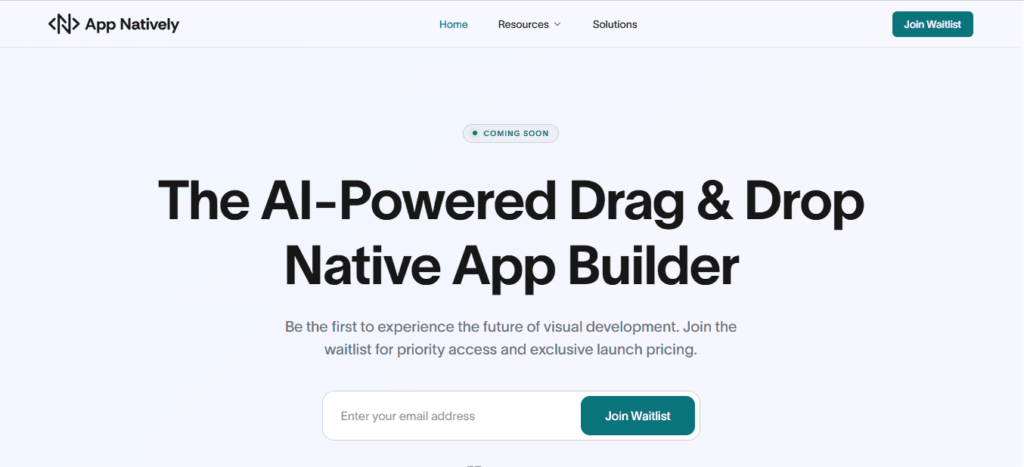
The goal is to give creators, startups, and agencies a single platform where they can build powerful web and mobile applications without the complexity, limitations, or high costs often associated with existing tools.
Many no-code developers today rely on multiple platforms to design interfaces, manage workflows, connect databases, and deploy applications. This fragmented process can slow down development and increase costs as projects grow.
App Natively is being built to eliminate that complexity by offering a streamlined ecosystem that brings everything together in one place.
Another major focus of the platform is affordability. While many popular no-code tools become expensive as applications scale, App Natively aims to provide one of the most affordable solutions for building scalable applications, making it especially attractive for startups, indie builders, and agencies working with limited budgets.
Although the platform is still under construction, early access is already being offered to builders who want to be among the first to experience it.
👉 Join the App Natively waitlist to get early access when the platform launches.
Best Bubble Alternatives for No-Code App Developers
The following platforms are some of the strongest alternatives for building apps without writing complex code.
1. FlutterFlow
FlutterFlow is one of the fastest growing no-code platforms for building mobile applications.
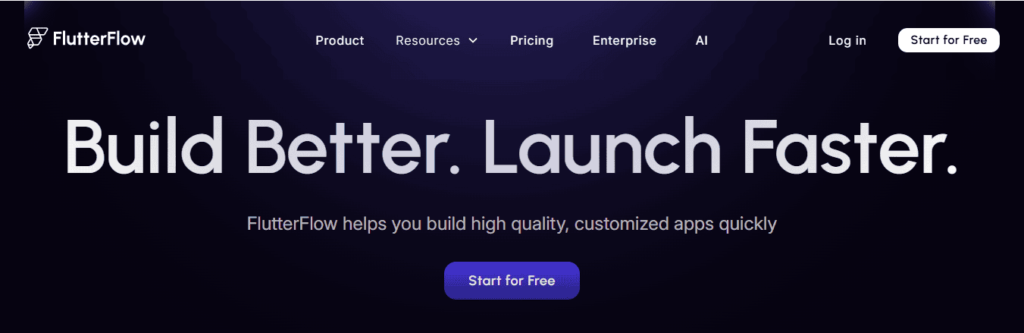
Built on Google’s Flutter framework, it allows developers to design fully functional mobile apps with a visual builder.
Key Features
- Drag-and-drop mobile UI builder
- Native mobile app support
- Integration with Firebase
- Custom API integrations
- Option to export Flutter code
Best For
FlutterFlow is ideal for developers who want to create high-performance mobile apps with the flexibility to extend their projects using real code if necessary.
Pros
- Native mobile performance
- Clean interface and visual builder
- Code export capability
- Strong developer community
Cons
- Less focused on web applications compared to Bubble
- Requires some understanding of mobile app structure
2. Glide
Glide is a popular no-code platform that allows users to build applications directly from spreadsheets or databases.
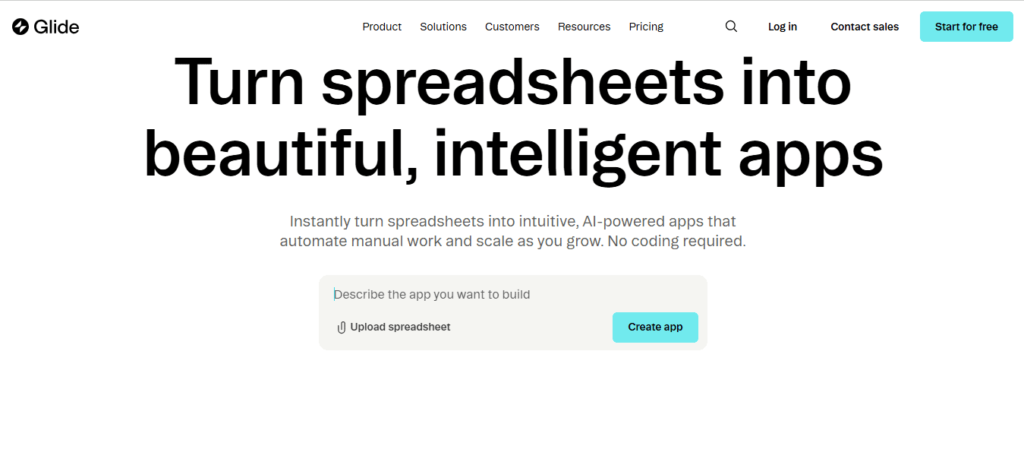
It focuses on simplicity and speed, making it one of the easiest platforms for beginners.
Key Features
- Spreadsheet-based app development
- Beautiful pre-built UI components
- Fast deployment
- Strong integrations with databases
Best For
Glide works well for internal tools, small apps, and business dashboards.
Pros
- Extremely easy to learn
- Fast development process
- Great for internal business applications
Cons
- Limited customization compared to Bubble
- Not ideal for highly complex applications
3. Adalo
Adalo is another popular no-code platform designed specifically for building mobile applications.
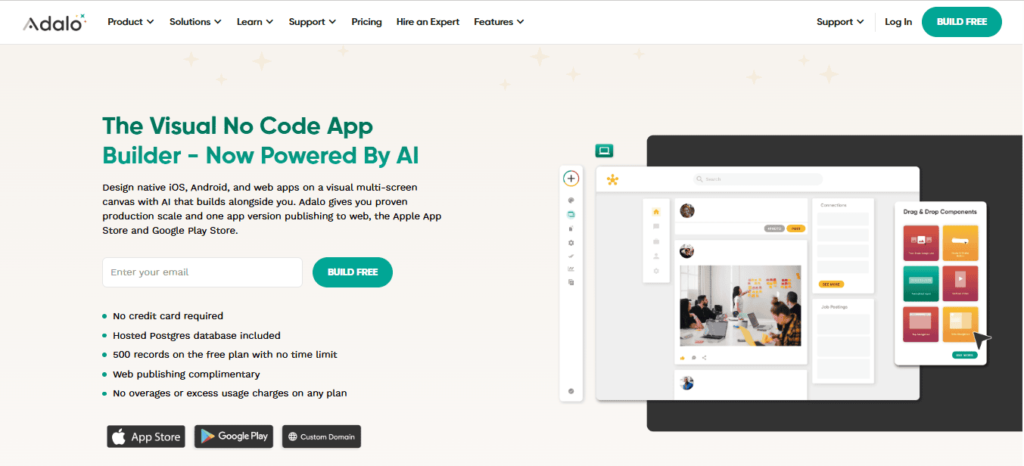
It allows developers to design mobile interfaces visually while also managing databases and workflows.
Key Features
- Drag-and-drop mobile app builder
- Built-in database system
- Integration with APIs
- One-click publishing for mobile apps
Best For
Adalo is a great option for beginners who want to build mobile apps without coding.
Pros
- Simple and beginner friendly
- Native mobile app support
- Visual design tools
Cons
- Limited scalability for large applications
- Some performance limitations
4. Draftbit
Draftbit is a powerful platform that focuses on building mobile applications using React Native.
Unlike many no-code tools, Draftbit gives developers more control and flexibility.
Key Features
- Visual mobile app builder
- React Native foundation
- Full code export capability
- API integrations
Best For
Draftbit is ideal for developers and agencies who want both no-code convenience and code flexibility.
Pros
- Code export for full control
- Professional mobile app development
- Strong customization capabilities
Cons
- Slightly steeper learning curve than beginner platforms
5. Softr
Softr focuses on building web applications and portals using Airtable or external data sources.
It is widely used for building marketplaces, membership sites, and client portals.
Key Features
- Pre-built templates
- Airtable integration
- Membership and user management
- Custom web apps without coding
Best For
Softr works well for marketplaces, directories, and internal portals.
Pros
- Fast setup
- Great for data-driven applications
- Strong integration with Airtable
Cons
- Less flexible than full development platforms
6. Thunkable
Thunkable is another no-code platform designed for cross-platform mobile app development.
It allows developers to build apps that run on both Android and iOS using a visual builder.
Key Features
- Drag-and-drop interface
- Cross-platform mobile development
- Built-in components
- API integrations
Best For
Thunkable is ideal for developers who want to create simple mobile apps quickly.
Pros
- Cross-platform deployment
- Beginner friendly interface
- Good for prototypes and MVPs
Cons
- Limited advanced customization options
Comparison of Top Bubble Alternatives
| Platform | Best For | Mobile Apps | Code Export | Difficulty |
|---|---|---|---|---|
| FlutterFlow | Native mobile apps | Yes | Yes | Medium |
| Glide | Internal tools | Limited | No | Easy |
| Adalo | Beginner mobile apps | Yes | No | Easy |
| Draftbit | Developers and agencies | Yes | Yes | Medium |
| Softr | Web portals and marketplaces | No | No | Easy |
| Thunkable | Simple mobile apps | Yes | No | Easy |
Best Platforms for Startups vs Agencies
Different types of builders have different needs. Choosing the right platform depends heavily on your goals.
Best platforms for startup founders
Startup founders usually prioritize speed and cost efficiency. Their main goal is to launch a minimum viable product quickly.
Best options include:
- Glide
- Adalo
These platforms allow founders to build functional apps quickly without deep technical knowledge.
Best platforms for agencies
Agencies often build applications for multiple clients. They require platforms that offer scalability, customization, and professional development flexibility.
Best options include:
- Draftbit
- FlutterFlow
These platforms allow developers to export code or customize applications more deeply.
However, App Natively is built with one goal in mind — to be the most affordable drag-and-drop AI native app builder for startups and agencies that want powerful results without the high development cost.
Conclusion
Bubble remains one of the most powerful no-code development platforms available, but it is not always the best fit for every project. Developers who need stronger mobile support, simpler workflows, or more flexible pricing may benefit from exploring other options.
Platforms like App Natively, FlutterFlow, Glide, Adalo, Draftbit, Softr, and Thunkable each offer unique advantages depending on your goals.
The best approach is to evaluate your project requirements, test a few platforms, and choose the one that aligns with your development workflow.
With the rapid growth of no-code technology, builders today have more opportunities than ever to turn ideas into real applications without writing complex code.
Frequently Asked Questions (FAQs)
What is the best Bubble alternative for mobile apps?
App Natively, FlutterFlow and Draftbit are among the best alternatives for building high-performance mobile applications.
However, App Natively is the most affordable option suitable both for startups and agencies.
Are there free no-code app builders like Bubble?
Yes, many platforms such as App Natively, Glide and Adalo offer free plans for building basic applications.
Can no-code platforms build scalable applications?
Yes. Many modern no-code tools are capable of supporting large applications when designed correctly.
Which no-code platform allows code export?
Platforms like FlutterFlow and Draftbit allow developers to export source code for further customization.
Leave a Reply