When choosing between Bubble and AppNatively for MVP development, the best option depends on your product goals.
Bubble is ideal for building complex web apps with advanced workflows, while AppNatively excels at quickly launching mobile-first MVPs without coding.
If your priority is speed and app store presence, AppNatively is the better choice. If you need flexibility and customization, Bubble stands out.
Building an MVP is all about validating your idea fast without wasting time or resources. But here’s the challenge: choosing the wrong no-code platform can delay your launch, increase costs, and limit scalability.
This is where the Bubble vs AppNatively comparison becomes crucial. Both tools promise fast development, no coding, and scalable solutions, but they serve very different purposes.
In this guide, you’ll discover which platform is better for MVPs based on speed, features, cost, scalability, and real-world use cases.
What Is Bubble?
Bubble is a powerful no-code platform that allows you to build fully functional web applications without writing code. It is widely used for SaaS platforms, marketplaces, CRMs, and complex dashboards.
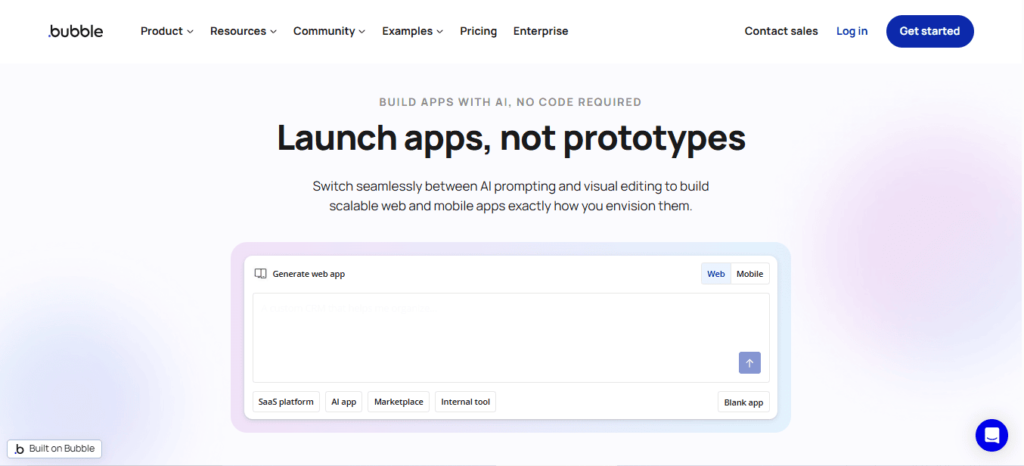
Bubble gives you full control over workflows, database structure, and UI design. This makes it a favorite among founders who want flexibility without hiring developers.
However, with great power comes complexity. Bubble has a learning curve, especially for beginners.
AppNatively: The AI-Powered Speed Advantage
AppNatively represents a new generation of no-code tools. Instead of focusing on maximum flexibility, it focuses on reducing friction and accelerating execution through AI.
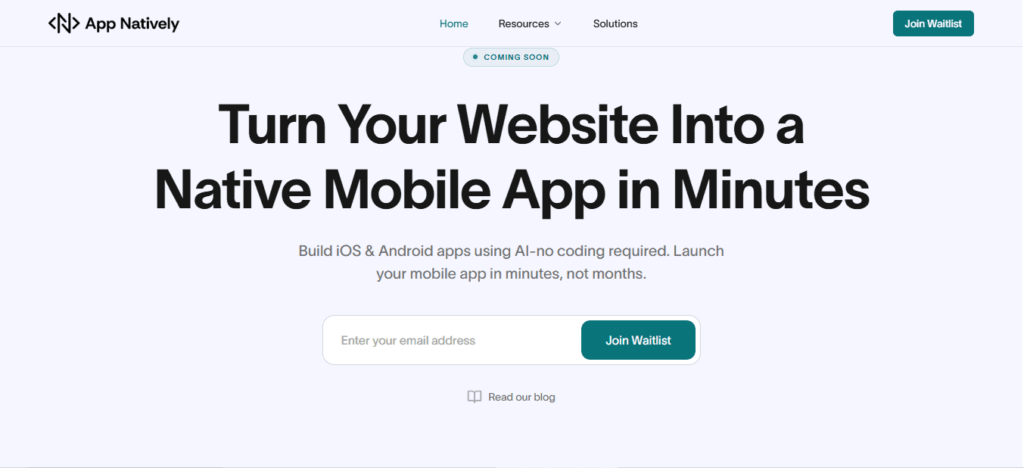
The core idea is simple but powerful. Instead of building everything manually, the platform assists you in creating apps faster by automating setup, simplifying decisions, and removing unnecessary complexity.
AppNatively allows founders to go from concept to working mobile app in a fraction of the time it would take using more traditional tools.
Another important distinction is its focus on native mobile apps. While many no-code platforms are web-first, AppNatively prioritizes mobile experiences, which aligns with how most users interact with products today.
Convert your website into an iOS & Android app in minutes (Join waitlist)
Bubble vs AppNatively: Core Differences
1. Speed of MVP launch
Speed is everything when building an MVP.
AppNatively allows you to launch a mobile app in days, not weeks. It eliminates complex setup and focuses on rapid deployment.
Bubble, on the other hand, requires time to design workflows, structure databases, and test features. While powerful, it’s not the fastest option for beginners.
Winner: AppNatively
2. Ease of use
AppNatively is built for simplicity. You don’t need technical knowledge to get started.
Bubble offers more control but comes with a steeper learning curve. Beginners often spend time understanding its interface and logic system.
Winner: AppNatively
3. Customization & flexibility
Bubble is unmatched in customization. You can build almost any type of web application with advanced logic.
AppNatively focuses on predefined structures, especially for directory and listing-based apps. While customizable, it’s not as flexible as Bubble.
Winner: Bubble
4. Mobile app capability
AppNatively shines here. It creates real mobile apps that can be published on app stores.
Bubble primarily builds web apps. While you can wrap Bubble apps into mobile apps, it requires additional tools and effort.
Winner: AppNatively
5. Scalability
Bubble is highly scalable for complex SaaS platforms.
AppNatively is scalable for directory apps and mobile-first platforms, especially when combined with powerful backends like Directorist.
Winner: Depends on use case
6. Cost efficiency
AppNatively is cost-effective for MVPs because it reduces development time and eliminates the need for developers.
Bubble can become expensive as your app scales due to workload units and infrastructure usage.
Winner: AppNatively (for MVP stage)
When Should You Choose Bubble?
Choose Bubble if you are building a complex MVP that requires custom workflows, user dashboards, or SaaS functionality.
It is ideal for startups that want full control over their product and are willing to invest time in development.
When Should You Choose AppNatively?
Choose AppNatively if your goal is to launch quickly and validate your idea through a mobile app.
It is perfect for directory apps, marketplaces, and local business platforms where speed and accessibility matter most.
Frequently Asked Questions (FAQs)
Is Bubble good for MVP development?
Yes, Bubble is excellent for MVPs that require complex features and custom workflows. However, it may take longer to launch compared to simpler tools.
Can AppNatively build a full mobile app?
Yes, AppNatively creates fully functional mobile native apps that can be published on app stores without coding.
Which platform is cheaper for MVPs?
AppNatively is generally more cost-effective for MVPs due to faster deployment and lower development complexity.
Is Bubble better than AppNatively?
Bubble is better for complex web applications, while AppNatively is better for fast mobile app MVPs.
Can I scale my startup with AppNatively?
Yes, especially for directory and mobile-first platforms. However, for highly complex systems, Bubble may offer more flexibility.
Do I need coding skills for these platforms?
No, both Bubble and AppNatively are no-code platforms designed for non-developers.
Can I build a SaaS MVP with Bubble?
Yes, Bubble is one of the best no-code tools for SaaS MVP development.
Is AppNatively good for startups?
Yes, especially for mobile-first startups and directory-based platforms.
Do both platforms require coding?
No, both Bubble and AppNatively are no-code platforms.
Which platform is faster to launch?
AppNatively is significantly faster for MVP deployment.
Can I scale after MVP?
Yes, both platforms support scaling, but Bubble offers more flexibility for complex systems.