Building an app without coding is no longer a dream. It’s a proven path used by startups and solo founders worldwide.
But while no-code tools make development easier, most apps still fail due to poor strategy, lack of validation, and weak user experience.
So, how do you actually build a successful app without writing code?
The secret lies in combining the right no-code tools with smart validation, user-focused design, and scalable growth tactics.
In this blog post, you’ll discover step-by-step strategies to launch, grow, and monetize your app without touching a single line of code.
What Does It Mean to Build an App Without Coding?
No-code app development allows you to create web or mobile apps using visual builders, drag-and-drop interfaces, and AI-powered automation without programming skills.
Instead of writing code, you:
- Design interfaces visually
- Connect workflows with logic builders
- Use APIs and integrations
- Launch apps faster and cheaper
Result: Faster time-to-market + lower development cost
🚀 Want to build your app in minutes instead of weeks?
Join the early access of App Natively — the AI-powered platform that turns your ideas (or even websites) into real mobile apps without coding.
👉 Join the waitlist now before public launch
7 Secrets to Building a Successful App Without Writing Code
Building an app no longer requires coding skills, just the right strategy and mindset.
Here are 7 powerful secrets founders and beginners can use to build a successful app without writing code.
1. Start with a painful, high-value problem
Founders often fail not because their app is bad, but because the problem isn’t important enough.
As a beginner, your biggest advantage is focusing on a specific, painful problem that people actively want solved.
Look for frustrations in everyday workflows, school tasks, small business operations, or online communities.
If people are already using messy solutions like spreadsheets, notes, or multiple apps, that’s a strong opportunity.
When your app removes friction and saves time, users immediately recognize its value, and adoption becomes much easier.
2. Validate demand before you build anything
Beginners often spend weeks building features no one ends up using. Smart founders validate first.
Talk to potential users, describe your idea, and pay attention to their reactions. If they ask when it will be ready or request specific features, that’s a strong sign of interest.
Validation helps you understand whether your idea solves a real need. This step also helps you refine your concept, making your first version more focused and impactful.
3. No-code tools let beginners move like startups
No-code platforms give founders and beginners the ability to build quickly without technical skills.
Instead of spending months learning programming, you can focus on solving problems and improving your product.
These tools allow you to test multiple ideas, pivot quickly, and launch faster than traditional development.
For beginners, this means lower risk and faster learning. For founders, it means validating business ideas before investing heavily in development.
4. Build a focused MVP that solves one core problem
Beginners often try to build too many features at once, which leads to delays and confusion.
A focused MVP helps you launch quickly and gather real feedback. Identify the core feature that delivers the most value and build around it.
This approach reduces complexity and helps users understand your app immediately.
Once users start using your app, you can expand gradually based on their needs instead of guessing.
5. Prioritize user experience from day one
Founders sometimes underestimate how important user experience is, especially for beginners.
If users struggle to understand your app, they won’t stay long enough to see its value.
Keep your design clean, your navigation simple, and your actions clear. A beginner-friendly app builds trust and encourages repeated use.
When users enjoy using your app, they naturally recommend it to others, helping you grow organically.
6. Start building an audience early
Successful founders don’t wait until launch day to find users. As a beginner, building an audience early gives you valuable feedback and momentum.
Share your progress, talk about the problem you’re solving, and involve potential users in your journey.
This builds trust and excitement. When your app launches, you already have interested users ready to try it and provide feedback.
7. Launch early, learn fast, and improve continuously
Many beginners delay launching because they want everything to be perfect.
Successful founders understand that improvement comes from real users. Launch early, collect feedback, and refine your app step by step.
Each improvement makes your app stronger and more valuable. Over time, consistent updates and learning create a successful product that evolves with user needs.
How to Monetize Your App With Ease
Turning your app into a revenue-generating product doesn’t have to be complicated.
Here are simple and proven monetization strategies that founders and beginners can implement with ease.
1. Start with freemium to attract more users
The freemium model is one of the easiest ways to monetize an app. Offer your core features for free while keeping advanced features behind a paid upgrade.
This lowers the barrier for new users and helps you grow quickly. Once users see value in your app, many will naturally upgrade to unlock premium features.
This strategy works especially well for beginners because it builds trust before asking users to pay.
2. Use subscription for consistent revenue
Subscriptions create a predictable monthly or yearly income. Instead of charging once, users pay regularly to keep using premium features.
This model works best for apps that provide ongoing value, like productivity tools, learning apps, or community platforms.
Even a small monthly fee can grow into steady revenue as your user base expands.
3. Offer one-time premium upgrades
Some users prefer paying once instead of subscribing. Offering a one-time upgrade unlocks additional features or removes limitations.
This approach is simple to implement and easy for beginners to manage. It also gives users flexibility while still allowing you to generate revenue.
4. Add in-app purchases for extra features
In-app purchases allow users to buy additional features, tools, or content inside your app.
This works especially well if your app has customizable options, templates, or extra functionality.
Users only pay for what they need, which makes this strategy user-friendly and effective.
5. Use ads carefully without hurting the experience
Advertising can be an easy way to monetize, especially if your app is free. However, too many ads can push users away.
The key is to keep ads minimal and place them where they don’t disrupt the experience.
You can also offer an ad-free premium version for users who prefer a cleaner experience.
6. Offer paid features for power users
Not all users need advanced features, but power users often do. You can create premium tools, analytics, customization, or automation features specifically for these users.
This allows you to monetize without affecting casual users while delivering extra value to those who need it most.
7. Start simple and optimize over time
You don’t need a perfect monetization strategy from day one. Start with one simple method and improve based on user behavior.
Pay attention to what users are willing to pay for and adjust your pricing accordingly. Over time, small improvements can significantly increase your revenue.
A successful app doesn’t just gain users — it builds sustainable income.
Start simple, focus on value, and let your monetization grow with your app.
Turn Your Website into a Native Mobile App in Minutes
One of the smartest shortcuts today is transforming your existing website into a mobile app without coding.
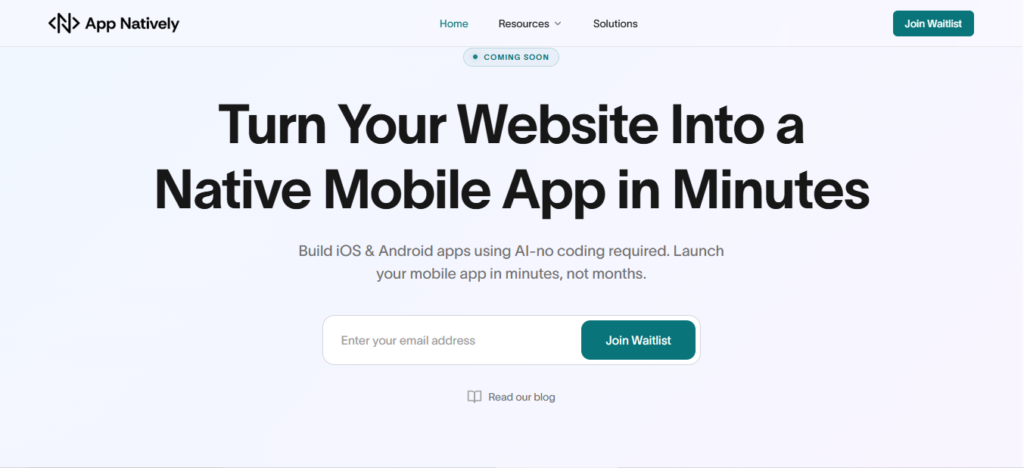
With modern AI-powered app builders (like upcoming tools such as App Natively), you can:
- Convert your website into Android & iOS apps instantly
- Skip traditional development
- Launch faster with minimal effort
- Reach mobile users effortlessly
If you’re building a SaaS, directory, or content platform—this is one of the fastest ways to scale.
Conclusion
Building a successful app without coding isn’t about tools. It’s about strategy, validation, and execution.
If you:
- Validate your idea
- Launch fast with MVP
- Focus on users
- Market early
You can build, grow, and monetize an app without ever hiring a developer.
Frequently Asked Questions (FAQs)
1. Can I really build an app without coding?
Yes. No-code and AI tools allow anyone to create fully functional apps using visual interfaces and automation.
2. What is the best no-code platform for beginners?
It depends on your needs. Glide is great for simple apps, while Bubble offers more advanced customization.
3. How long does it take to build a no-code app?
You can build a basic MVP in a few days to a few weeks, depending on complexity.
4. Can no-code apps make money?
Absolutely. Many successful startups generate revenue through no-code apps, including subscriptions and premium features.
5. Is no-code app development scalable?
Yes, but you must choose the right platform and optimize performance as you grow.
6. Do I need technical skills to use no-code tools?
No. Most tools are beginner-friendly, though a basic understanding of logic helps.
7. What are the biggest mistakes in no-code app building?
- Skipping validation
- Overbuilding features
- Ignoring UX
- Not marketing early
8. Can I convert my website into a mobile app without coding?
Yes, modern AI tools allow instant conversion of websites into mobile apps.