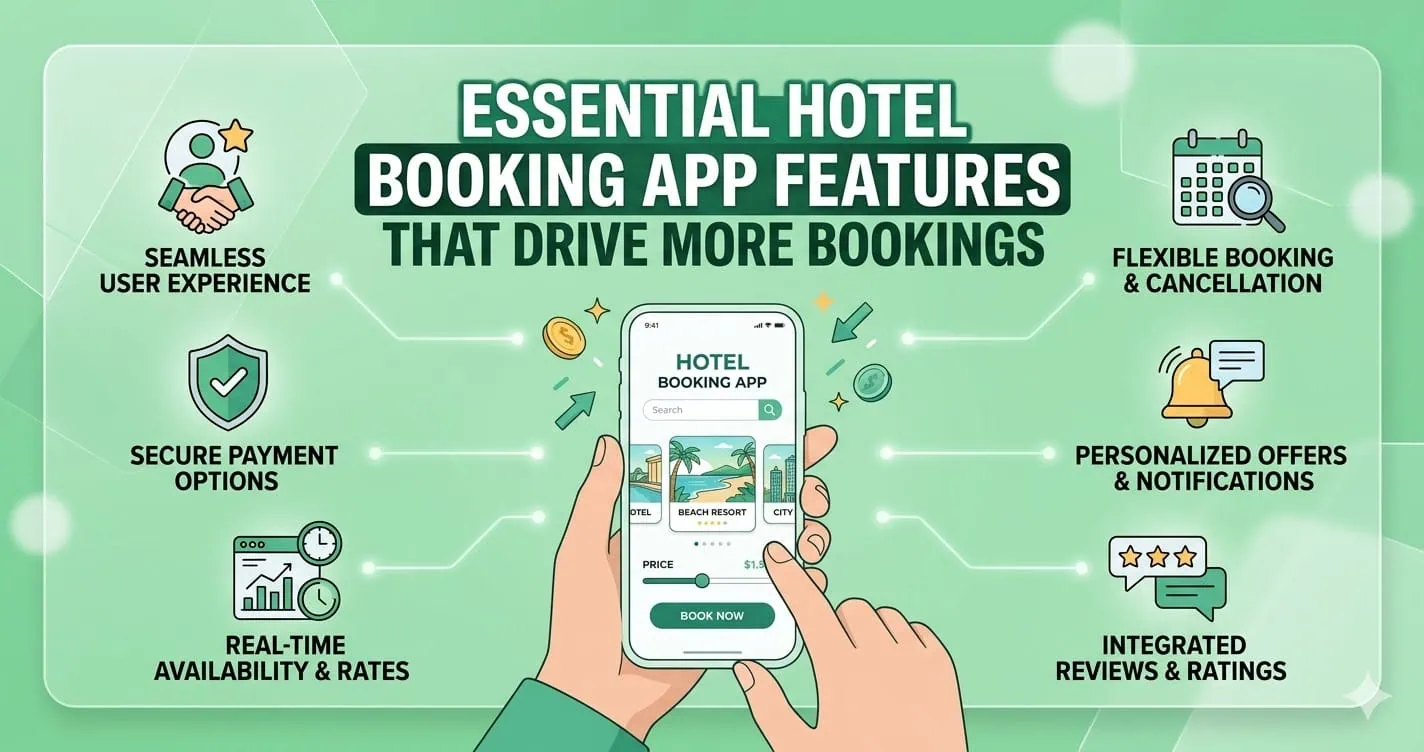
Finding the perfect hotel should be easy, but many booking apps still make it frustrating. Slow loading times, confusing interfaces, and a lack of trust signals often push users to abandon bookings before completion. This directly impacts revenue and user retention.
The truth is, users expect more than just listings. They want speed, personalization, transparency, and security in one seamless experience. Without the right features, even a well-designed app can fail to convert.
That’s why understanding the essential hotel booking app features is critical.
In this blog post, you’ll discover the 15 must-have features that improve user experience, increase conversions, and help your app stand out in a competitive travel market.
Why Hotel Booking App Features Matter More Than Ever
The modern traveler is mobile-first and decision-driven. A hotel booking app isn’t just a tool, but it’s a complete experience that influences whether a user books instantly or leaves for a competitor.
Apps that prioritize usability, speed, and trust see significantly higher conversion rates.
On the other hand, missing even a single critical feature like real-time availability or secure payment can result in lost bookings.
Building a high-performing app means combining functionality with user psychology.
15 Essential Hotel Booking App Features That Drive More Bookings
1. User interface that feels effortless
The design of your app should feel natural from the first tap. Users should not need instructions to navigate. Every element should have a clear purpose and a clear place.
A clean interface reduces cognitive load. When users do not have to think about where to go next, they focus entirely on choosing the right hotel.
That simplicity builds confidence and keeps them engaged throughout the process.
2. Advanced search that saves time
Search functionality is the backbone of any hotel booking app. Users come with specific needs, and they expect fast results.
An effective search system allows filtering by price, location, amenities, ratings, and more. It should respond instantly and refine results as users interact with it.
The faster users find relevant options, the closer they move toward booking.
3. Real-time availability that builds trust
Nothing breaks trust faster than outdated information. When users select a hotel only to find it unavailable, the entire experience feels unreliable.
Real-time availability ensures that listings are accurate and up to date. It removes uncertainty and allows users to book with confidence. This feature directly impacts both trust and conversion rates.
4. Transparent pricing that reduces drop off
Hidden costs are one of the biggest reasons users abandon bookings. If the final price is different from what was initially shown, users feel misled.
Clear pricing that includes taxes and fees upfront creates transparency. When users know exactly what they are paying, they are more likely to complete the transaction without hesitation.
5. Secure payment system that builds confidence
The payment stage is where users make a final decision. Any sign of risk can cause them to leave immediately.
A secure payment system with multiple options gives users flexibility and peace of mind.
Clear security indicators and a smooth checkout process reassure users that their information is protected.
6. High-quality images that influence decisions
Visual content plays a major role in hotel selection. Users want to see what they are paying for before making a commitment.
High-quality images help users imagine their stay. When visuals are clear and detailed, users feel more confident in their choice, which increases the likelihood of booking.
7. Reviews that provide social proof
Users rely heavily on the experiences of others. Reviews help them understand what to expect beyond the photos and descriptions.
Authentic feedback creates trust. When users see real opinions, both positive and negative, the platform feels more credible.
This credibility encourages them to move forward with their decision.
8. Booking management for flexibility
Plans can change, and users value flexibility. An app should allow easy modification or cancellation of bookings.
When users know they can adjust their plans if needed, they feel safer making a booking.
This sense of control increases overall satisfaction and reduces hesitation.
9. Personalized recommendations that feel relevant
Personalization transforms a generic experience into a tailored one. By analyzing user behavior, the app can suggest hotels that match preferences.
Relevant recommendations save time and make users feel understood. This emotional connection increases engagement and encourages repeat bookings.
10. Map integration for better decision making
Location plays a crucial role in hotel selection. Users want to understand where a property is in relation to attractions, transport, and key areas.
Map integration provides a visual context that helps users make informed decisions. It adds clarity and reduces uncertainty, especially for unfamiliar destinations.
11. Multi-language and currency support
Travel is global, and your app should reflect that. Supporting multiple languages and currencies makes the platform accessible to a wider audience.
When users can interact with the app in their preferred language and currency, the experience feels more comfortable and trustworthy.
12. Wishlist feature that encourages return visits
Not every user books instantly. Many prefer to explore options and decide later.
A wishlist feature allows users to save hotels for future consideration.
This keeps them connected to your app and increases the chances of them returning to complete a booking.
13. Push notifications that drive engagement
Timely communication keeps users engaged even when they are not actively using the app.
Notifications about price drops, special offers, or booking reminders create opportunities for conversions. When used thoughtfully, they bring users back at the right moment.
14. Loyalty programs that build retention
Acquiring users is important, but retaining them is even more valuable.
Loyalty programs reward users for repeat bookings and create long-term relationships.
When users feel appreciated, they are more likely to choose your app again instead of exploring alternatives.
15. Fast performance that keeps users engaged
Speed is not just a technical factor. It is a user experience factor. A slow app creates frustration and increases bounce rates.
Optimized performance ensures that pages load quickly and interactions feel smooth.
When users can move through the app without delays, they are more likely to complete bookings.
Final Thoughts
A successful hotel booking app is built on understanding user expectations and delivering a seamless experience at every step. Each feature plays a role in shaping how users feel and how they act.
When your app removes friction, builds trust, and guides decisions naturally, bookings become the outcome rather than the goal. By focusing on these 15 essential hotel booking app features, you position your platform for long-term success in an increasingly competitive travel market.
Frequently Asked Questions (FAQs)
What are the most important features of a hotel booking app
The most important features include advanced search, real-time availability, secure payments, user reviews, and a smooth user interface.
These elements work together to create a reliable and efficient booking experience.
How does real-time availability improve bookings?
Real-time availability ensures that users see accurate room options and pricing. This reduces confusion and builds trust, which increases the likelihood of completing a booking.
Why is user experience important in hotel booking apps
User experience determines how easily users can search, compare, and book hotels.
A smooth experience reduces frustration and encourages users to complete their bookings without leaving the app.
How do reviews influence booking decisions?
Reviews provide insights from other travelers. They help users evaluate the quality of a hotel and make informed decisions, which increases confidence and conversions.
What role does personalization play in booking apps
Personalization helps users discover relevant hotels based on their preferences. It saves time and creates a more engaging experience, leading to higher booking rates.
Why is mobile optimization essential for hotel apps
Most users book hotels through mobile devices. A well-optimized mobile app ensures smooth navigation, fast loading, and better usability, which directly impacts conversions.
What payment options should a hotel booking app include
A hotel booking app should support multiple payment methods, such as cards and digital wallets. Offering flexibility makes it easier for users to complete transactions.
How can a hotel booking app increase user retention
Features like loyalty programs, personalized recommendations, and seamless booking management encourage users to return and book again.
What makes a hotel booking app stand out from competitors
An app stands out when it combines speed, simplicity, trust, and personalization. These elements create a superior experience that users prefer over alternatives.
How does app performance affect bookings?
Faster performance reduces waiting time and frustration. When users can navigate quickly and smoothly, they are more likely to complete their bookings.