When choosing between Bubble and App Natively for MVP development, the best option depends on your product goals.
Bubble is ideal for building complex web apps with advanced workflows, while App Natively excels at quickly launching mobile-first MVPs without coding.
If your priority is speed and app store presence, App Natively is the better choice. If you need flexibility and customization, Bubble stands out.
Building an MVP is all about validating your idea fast without wasting time or resources. But here’s the challenge: choosing the wrong no-code platform can delay your launch, increase costs, and limit scalability.
This is where the Bubble vs App Natively comparison becomes crucial. Both tools promise fast development, no coding, and scalable solutions, but they serve very different purposes.
In this guide, you’ll discover which platform is better for MVPs based on speed, features, cost, scalability, and real-world use cases.
What Is Bubble?
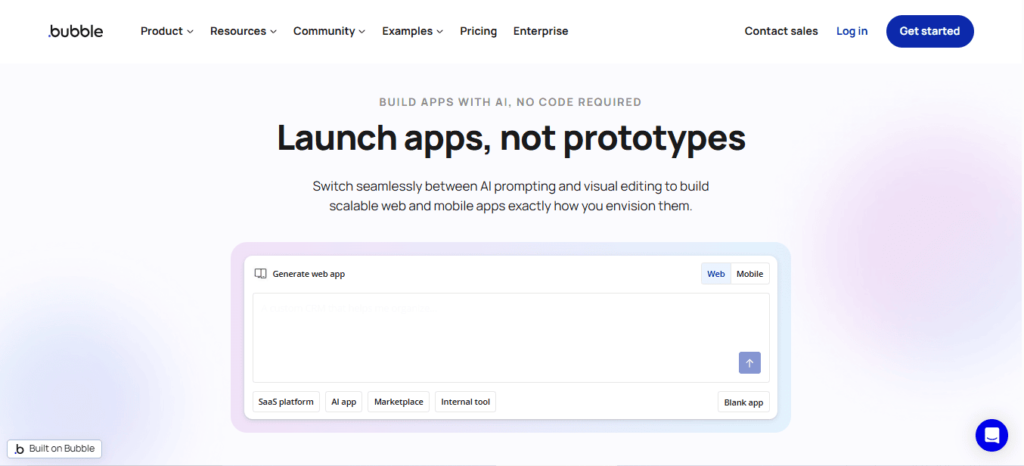
Bubble is a powerful no-code platform that allows you to build fully functional web applications without writing code. It is widely used for SaaS platforms, marketplaces, CRMs, and complex dashboards.
Bubble gives you full control over workflows, database structure, and UI design. This makes it a favorite among founders who want flexibility without hiring developers.
However, with great power comes complexity. Bubble has a learning curve, especially for beginners.
App Natively: The AI-Powered Speed Advantage
App Natively represents a new generation of no-code tools. Instead of focusing on maximum flexibility, it focuses on reducing friction and accelerating execution through AI.
The core idea is simple but powerful. Instead of building everything manually, the platform assists you in creating apps faster by automating setup, simplifying decisions, and removing unnecessary complexity.
App Natively allows founders to go from concept to working mobile app in a fraction of the time it would take using more traditional tools.
Another important distinction is its focus on native mobile apps. While many no-code platforms are web-first, App Natively prioritizes mobile experiences, which aligns with how most users interact with products today.
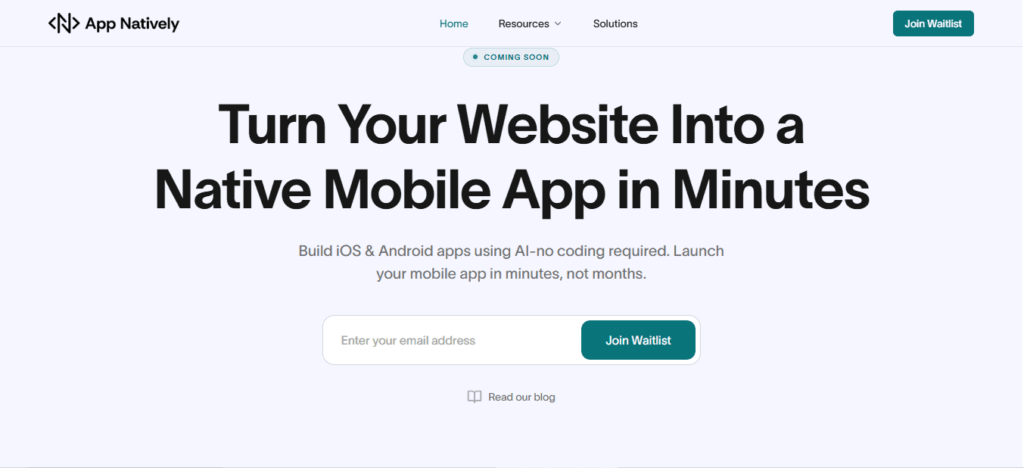
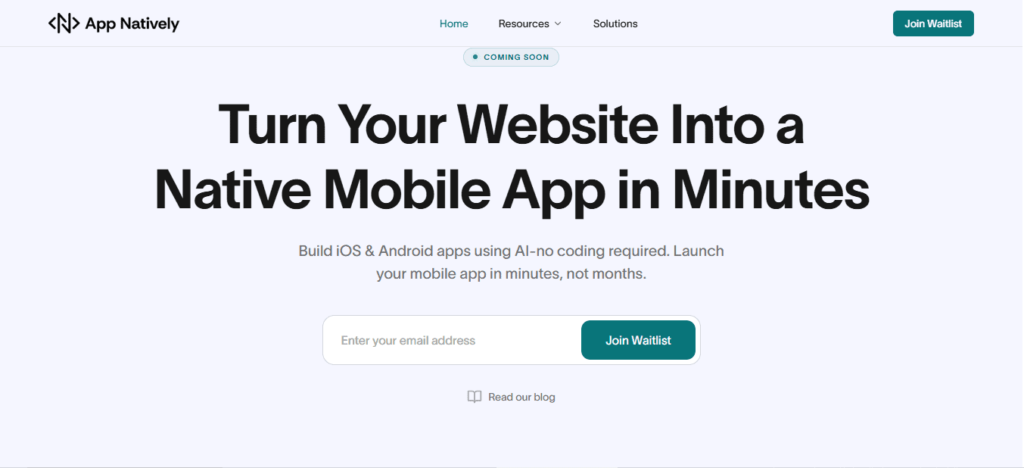
Convert your website into an iOS & Android app in minutes (Join waitlist)
Bubble vs App Natively: Core Differences
1. Speed of MVP launch
Speed is everything when building an MVP.
App Natively allows you to launch a mobile app in days, not weeks. It eliminates complex setup and focuses on rapid deployment.
Bubble, on the other hand, requires time to design workflows, structure databases, and test features. While powerful, it’s not the fastest option for beginners.
Winner: App Natively
2. Ease of use
App Natively is built for simplicity. You don’t need technical knowledge to get started.
Bubble offers more control but comes with a steeper learning curve. Beginners often spend time understanding its interface and logic system.
Winner: App Natively
3. Customization & flexibility
Bubble is unmatched in customization. You can build almost any type of web application with advanced logic.
App Natively focuses on predefined structures, especially for directory and listing-based apps. While customizable, it’s not as flexible as Bubble.
Winner: Bubble
4. Mobile app capability
App Natively shines here. It creates real mobile apps that can be published on app stores.
Bubble primarily builds web apps. While you can wrap Bubble apps into mobile apps, it requires additional tools and effort.
Winner: App Natively
5. Scalability
Bubble is highly scalable for complex SaaS platforms.
App Natively is scalable for directory apps and mobile-first platforms, especially when combined with powerful backends like Directorist.
Winner: Depends on use case
6. Cost efficiency
App Natively is cost-effective for MVPs because it reduces development time and eliminates the need for developers.
Bubble can become expensive as your app scales due to workload units and infrastructure usage.
Winner: App Natively (for MVP stage)
When Should You Choose Bubble?
Choose Bubble if you are building a complex MVP that requires custom workflows, user dashboards, or SaaS functionality.
It is ideal for startups that want full control over their product and are willing to invest time in development.
When Should You Choose App Natively?
Choose App Natively if your goal is to launch quickly and validate your idea through a mobile app.
It is perfect for directory apps, marketplaces, and local business platforms where speed and accessibility matter most.
Frequently Asked Questions (FAQs)
Is Bubble good for MVP development?
Yes, Bubble is excellent for MVPs that require complex features and custom workflows. However, it may take longer to launch compared to simpler tools.
Can App Natively build a full mobile app?
Yes, App Natively creates fully functional mobile native apps that can be published on app stores without coding.
Which platform is cheaper for MVPs?
App Natively is generally more cost-effective for MVPs due to faster deployment and lower development complexity.
Is Bubble better than App Natively?
Bubble is better for complex web applications, while App Natively is better for fast mobile app MVPs.
Can I scale my startup with App Natively?
Yes, especially for directory and mobile-first platforms. However, for highly complex systems, Bubble may offer more flexibility.
Do I need coding skills for these platforms?
No, both Bubble and App Natively are no-code platforms designed for non-developers.
Can I build a SaaS MVP with Bubble?
Yes, Bubble is one of the best no-code tools for SaaS MVP development.
Is App Natively good for startups?
Yes, especially for mobile-first startups and directory-based platforms.
Do both platforms require coding?
No, both Bubble and App Natively are no-code platforms.
Which platform is faster to launch?
App Natively is significantly faster for MVP deployment.
Can I scale after MVP?
Yes, both platforms support scaling, but Bubble offers more flexibility for complex systems.
Choosing the right no-code app builder can determine whether your startup launches an app in weeks or struggles with months of development.
Platforms like Bubble and Glide have made it possible for entrepreneurs to build software products without writing traditional code.
However, the no-code industry is evolving rapidly, with new platforms emerging to address limitations that earlier tools could not fully address.
One of the most promising newcomers is App Natively, a platform that makes native mobile app development affordable and accessible for startups.
Each of these platforms approaches app development differently. Bubble is designed for building complex web applications with deep customization, Glide focuses on rapid app creation using spreadsheet-based logic, and App Natively aims to simplify native mobile app development with faster and more affordable workflows.
In this complete guide on Bubble vs Glide vs App Natively, we will explore their features, customization capabilities, scalability, pricing models, performance, and ideal use cases.
By the end of this article, you will clearly understand which platform is best suited for entrepreneurs, startups, and businesses building apps in 2026.
The Rise of No-Code App Builders
Over the past decade, the no-code movement has completely transformed how software is created.
Previously, launching an app required hiring developers, building infrastructure, and spending thousands of dollars on development.
Today, no-code platforms allow founders to build applications using visual interfaces, drag-and-drop tools, and automation workflows. This shift has dramatically reduced the time and cost required to launch new products.
Platforms like Bubble and Glide helped pioneer this movement, making it possible for entrepreneurs to validate startup ideas quickly.
However, many founders still struggle with challenges such as complex learning curves, scalability concerns, and limited native mobile functionality.
As the demand for faster and more accessible development grows, the next generation of tools, including App Natively, aims to simplify the entire process while delivering better performance and lower costs.
What Is Bubble?
Bubble is one of the most powerful no-code development platforms available today. It allows users to build fully functional web applications without writing code by using visual programming tools.
Bubble includes a wide range of advanced capabilities such as database management, workflow automation, API integrations, and UI customization.
Because of this flexibility, the platform is often used to build SaaS platforms, marketplaces, internal tools, and complex web applications.
One of the biggest strengths of Bubble is its ability to replicate many features of traditional software development. Developers can create custom workflows, manage user authentication, and build complex logic within the platform.
However, this power also creates a steeper learning curve. Many beginners find it challenging to master Bubble quickly. Additionally, building true native mobile apps often requires additional tools or wrappers.
Despite these challenges, Bubble remains one of the most capable platforms for startups that want to build scalable web applications without hiring a full development team.
What Is Glide?
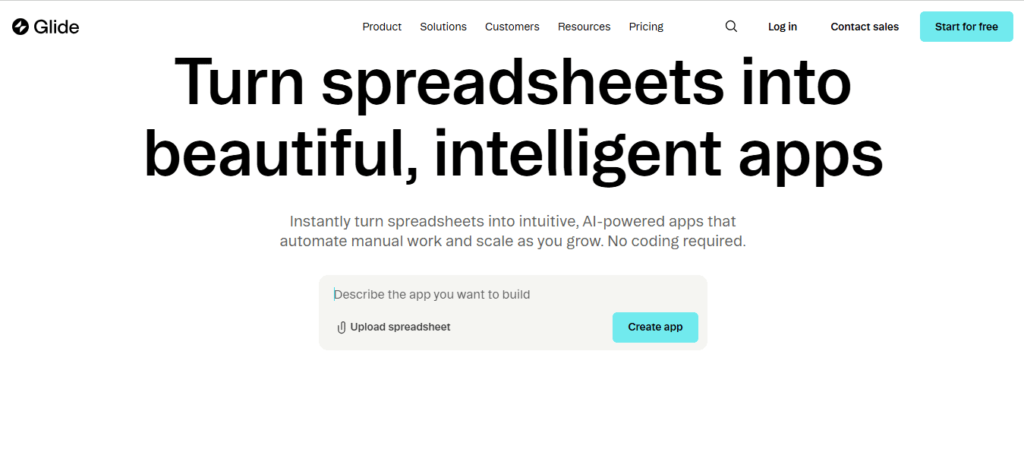
Glide is a no-code platform designed to make app development extremely simple. It allows users to create apps directly from spreadsheets such as Google Sheets or Airtable.
The platform transforms spreadsheet data into interactive applications using drag-and-drop components. This approach makes Glide particularly attractive for users who want to build apps quickly without learning complex workflows.
Glide is commonly used for internal business tools, directories, event apps, dashboards, and lightweight mobile applications. Because the platform is easy to use, many entrepreneurs choose it for rapid prototyping and MVP validation.
However, Glide has limitations when it comes to customization and complex application logic. Large-scale applications or advanced workflows may require more powerful platforms.
Still, Glide remains one of the most beginner-friendly solutions for anyone looking to build an app quickly using a simple and intuitive interface.
What Is App Natively?
App Natively is a modern no-code platform designed to simplify the creation of native mobile applications.
While many no-code tools focus primarily on web applications or progressive web apps, App Natively aims to deliver true mobile experiences with native performance and usability.
The platform is being developed with startups and entrepreneurs in mind. Its core goal is to eliminate the complexity and high costs traditionally associated with mobile app development.
Instead of requiring users to learn complicated workflows or technical processes, App Natively focuses on streamlined development, fast deployment, and affordable pricing.
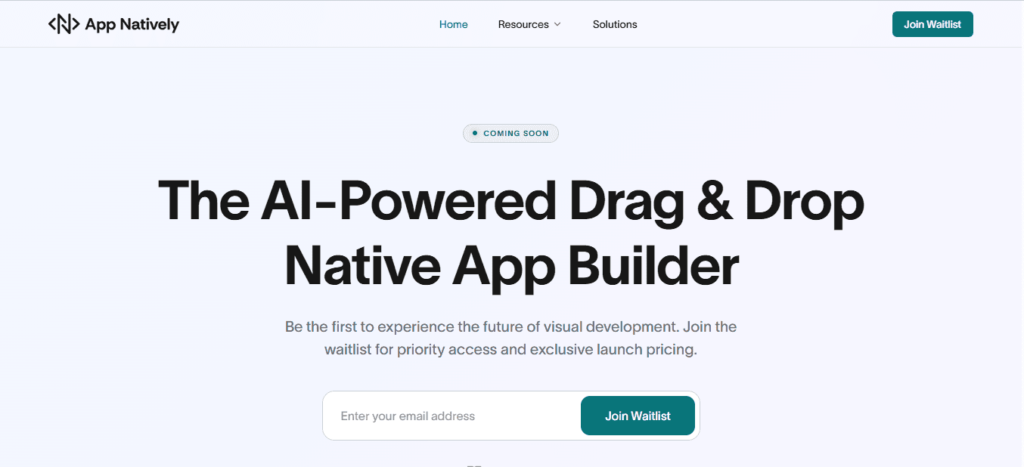
At the moment, the platform is preparing for launch and inviting users to join an exclusive early access waitlist. This allows early adopters to test the platform and build apps before the public release.
For startups looking for a cost-effective way to launch mobile apps, App Natively could become one of the most exciting new tools in the no-code ecosystem.
Bubble vs Glide vs App Natively: Feature Comparison
Understanding the key differences between these platforms is essential when choosing the right tool for your project.
1. Ease of use
Glide is widely considered the easiest platform to learn. Its spreadsheet-driven system allows users to build apps quickly with minimal technical knowledge.
Bubble offers far more flexibility, but the platform requires time to master. New users often need tutorials and practice before building complex applications.
App Natively aims to strike a balance between simplicity and capability. The platform focuses on providing powerful mobile app features while keeping the development process simple.
2. Customization and flexibility
Bubble stands out in terms of customization. Users can build complex workflows, advanced logic systems, and detailed interfaces that rival traditional coding environments.
Glide offers fewer customization options because its structure relies heavily on spreadsheet data models.
App Natively focuses on delivering essential customization features while maintaining ease of use. Its design prioritizes mobile performance and usability rather than complex backend workflows.
3. Performance and scalability
Bubble applications can scale effectively for web apps, but performance optimization becomes important as the application grows.
Glide works well for small to medium applications but may struggle with extremely complex logic or heavy data processing.
App Natively focuses on native mobile architecture, which allows apps to run faster and provide a smoother user experience compared to web-based apps.
4. Pricing and affordability
Pricing plays a major role in choosing a no-code platform.
Bubble can become expensive as applications scale because pricing is tied to server usage and workload.
Glide offers predictable pricing plans, but many advanced features are restricted to premium tiers.
App Natively is being developed with affordability as a core priority. Its goal is to enable startups to launch mobile apps without spending thousands of dollars on development.
Feature Comparison Table
Feature
Bubble
Glide
App Natively
Platform Type
Web App Builder
Spreadsheet App Builder
Native Mobile App Builder
Ease of Use
Moderate
Very Easy
Easy
Customization
Very High
Limited
Moderate
Best For
SaaS Platforms
Internal Tools
Mobile Startups
Native Apps
Requires Wrappers
Limited
Yes
Learning Curve
High
Very Low
Low
Startup Friendly
Moderate
Good
Excellent
Which Platform Is Best for Startups?
The best platform depends on the type of product you want to build.
Startups developing complex SaaS platforms or marketplaces may find Bubble to be the most suitable solution due to its advanced customization.
Entrepreneurs who want to quickly build simple business apps or internal tools may prefer Glide because of its simplicity.
However, founders planning to launch mobile-first startups may find App Natively more appealing due to its focus on native performance and affordable development.
Ultimately, the best platform is the one that allows founders to launch quickly, validate ideas, and scale efficiently.
The Future of No-Code App Development
The no-code ecosystem continues to evolve as more entrepreneurs embrace faster ways to build software.
Modern tools are increasingly focused on reducing technical barriers and enabling founders to bring ideas to market quickly.
Several major trends are shaping the future of the industry:
AI-assisted app development is making it easier to generate workflows and automate complex tasks.
Mobile-first development is becoming more important as smartphone usage continues to dominate global internet traffic.
Affordable development platforms are emerging to help startups launch products without large budgets.
Platforms like Bubble and Glide have already revolutionized the no-code landscape, while emerging tools such as App Natively are pushing the industry toward faster and more accessible mobile app development.
Why App Natively Could Become a Game-Changer
Many founders struggle to build mobile apps because traditional development requires significant technical expertise and large budgets.
App Natively aims to solve these challenges by providing a platform designed specifically for fast and affordable mobile app creation.
Instead of spending months working with developers, entrepreneurs can use the platform to design, build, and launch their applications much faster.
Because the platform focuses on native mobile performance, it can provide a smoother user experience compared to many web-based solutions.
For founders who want to validate startup ideas quickly, this type of platform could dramatically reduce development costs and accelerate product launches.
Join the App Natively Early Access Waitlist
As the next generation of no-code platforms continues to evolve, App Natively is positioning itself as a powerful tool for founders who want to build mobile apps without coding.
The platform is currently preparing for launch and inviting early adopters to join its exclusive waitlist.
Joining the waitlist allows entrepreneurs to gain early access to the platform, explore its features before the public release, and start building apps ahead of competitors.
For startups looking for a faster and more affordable way to launch mobile applications, getting early access could provide a significant advantage.
Frequently Asked Questions (FAQs)
What is the difference between Bubble, Glide, and App Natively?
The main difference is the type of applications they focus on. Bubble is best for building complex web applications and SaaS platforms, Glide is ideal for creating simple apps from spreadsheets, and App Natively focuses on building native mobile apps quickly and affordably.
Which platform is better for building a startup MVP?
For startup MVPs, the best platform depends on the product type. Bubble works well for complex web-based MVPs, Glide is great for quick prototypes and internal tools, while App Natively is promising for founders who want to launch a mobile-first MVP.
Can I build a SaaS product using Bubble?
Yes, Bubble is widely used to build SaaS platforms because it supports custom workflows, databases, user authentication, and API integrations.
Is Glide suitable for building customer-facing mobile apps?
Glide can build mobile-friendly apps, but they function more like progressive web apps rather than fully native mobile apps.
Is App Natively good for non-technical founders?
Yes, App Natively is designed to help non-technical founders create mobile apps without coding by simplifying the entire development process.
Which no-code platform is best for mobile apps?
Platforms focused on mobile development typically perform better for mobile-first startups. App Natively aims to provide a more optimized experience for building native mobile apps.
Can I scale a startup using Bubble?
Many startups have successfully scaled using Bubble. However, large applications may require performance optimization and infrastructure adjustments as they grow.
What are the limitations of Glide?
Glide is excellent for simple applications but may have limitations when building complex workflows, advanced logic systems, or large-scale apps.
Is Bubble harder to learn than Glide?
Yes, Bubble has a steeper learning curve because it includes advanced features such as workflow automation, database structures, and API integrations.
Do no-code platforms replace traditional developers?
No-code platforms do not fully replace developers, but they allow founders to build MVPs, validate ideas, and launch products without hiring large engineering teams.
What types of apps can be built with Glide?
Glide is commonly used for directories, dashboards, event apps, internal business tools, and data-driven applications.
Is App Natively cheaper than traditional app development?
Traditional mobile app development can cost thousands of dollars. App Natively aims to reduce those costs by enabling entrepreneurs to build apps using no-code tools.
Can I build marketplace apps with Bubble?
Yes, Bubble is often used to build marketplace platforms because it supports advanced workflows, payment integrations, and user management systems.
Which platform is best for beginners?
Glide is usually the easiest platform for beginners because its spreadsheet-based system is simple and intuitive.
Can I integrate APIs with Bubble?
Yes, Bubble supports API integrations, allowing developers to connect their applications with third-party tools and services.
What is the fastest way to build an app without coding?
Using a no-code platform like Glide, Bubble, or App Natively is currently one of the fastest ways to build applications without coding.
Are no-code apps secure?
Most modern no-code platforms include built-in security features such as authentication systems, data protection, and secure infrastructure.
Can I publish apps built with no-code tools on app stores?
Yes, some platforms allow apps to be deployed to app stores. Platforms focused on native development, such as App Natively, are designed to support this process.
What are the best alternatives to Glide?
Some alternatives include Bubble and newer platforms like App Natively that aim to provide different approaches to app development.
Which no-code platform is best for startups in 2026?
The best platform depends on the startup’s goals. Bubble is powerful for web applications, Glide is excellent for simple apps, and App Natively is emerging as a strong option for mobile-first startups.
Is Bubble better than Glide for building scalable apps?
For scalability and complex functionality, Bubble is generally more powerful than Glide. Bubble allows developers to create advanced workflows, database relationships, and integrations that support larger and more complex applications.
However, Glide can still work well for lightweight apps or internal tools where simplicity and speed are more important than deep customization.
Can no-code platforms build real startup products?
Yes, many successful startups have launched products using no-code tools.
Platforms like Bubble allow founders to build SaaS products, marketplaces, and internal platforms, while newer tools such as App Natively aim to make native mobile app development accessible to early-stage startups.
What is the fastest way to launch an MVP without coding?
The fastest way to launch an MVP is by using a no-code platform that allows rapid prototyping.
Glide is often used for quick internal apps, while Bubble enables more advanced product development. Mobile-focused platforms like App Natively are emerging as a faster way to launch mobile-first MVPs.
Are no-code apps good enough for production?
Modern no-code platforms are capable of supporting production-level applications.
Many businesses run fully operational products built on platforms like Bubble. The key is choosing the right platform based on your scalability and performance needs.
Which no-code platform is best for mobile-first startups?
Mobile-first startups often need platforms optimized for mobile performance.
While Bubble and Glide can support mobile-friendly apps, tools focused on native mobile development, such as App Natively aim to deliver a more optimized mobile experience.
Can I build an app like Uber or Airbnb using no-code tools?
Building a large platform like Uber or Airbnb entirely with no-code tools can be challenging, but it is possible to build MVP versions using platforms like Bubble.
Many founders start with no-code to validate their idea before moving to custom development later.
Do no-code platforms support integrations with third-party tools?
Yes, most modern no-code platforms support integrations with APIs and external services.
Bubble is particularly strong in this area because it allows developers to connect applications with many third-party tools and services.
Are no-code platforms suitable for long-term business growth?
Yes, many startups use no-code platforms for long-term growth. However, choosing a platform with strong scalability and performance capabilities is essential as the business expands.
How much money can startups save using no-code platforms?
Traditional app development can cost anywhere from $10,000 to $100,000, depending on complexity. No-code platforms dramatically reduce these costs by allowing founders to build apps without hiring large development teams.
What should founders consider before choosing a no-code platform?
Founders should evaluate several factors, including ease of use, customization options, scalability, pricing, and the type of app they want to build.
Comparing platforms like Bubble, Glide, and App Natively can help determine which tool best matches the project’s goals.
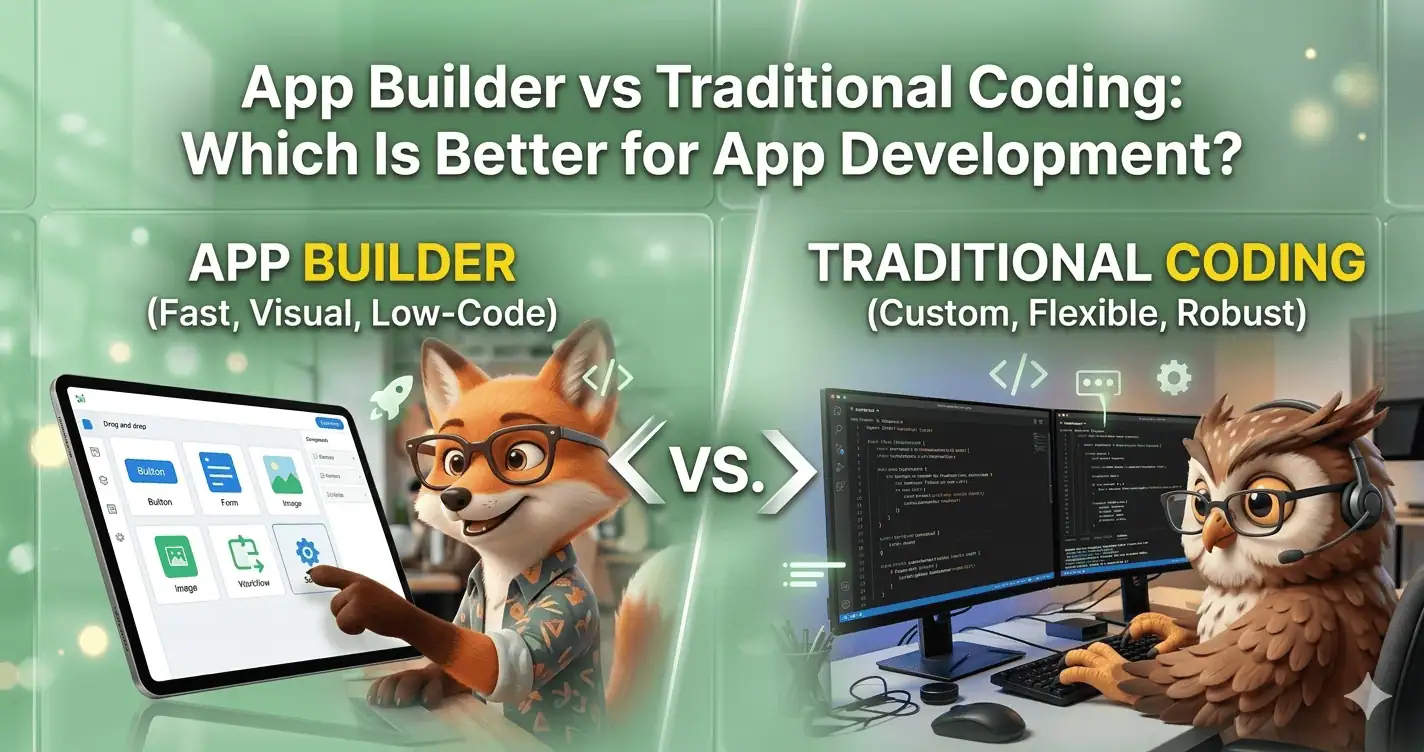
The debate between app builder vs traditional coding has become increasingly important as businesses look for faster and more cost-effective ways to build applications.
App builders allow users to create mobile or web apps using visual interfaces, drag-and-drop components, and minimal coding knowledge.
Traditional coding, however, requires developers to write custom code using programming languages such as JavaScript, Swift, or Kotlin.
Both approaches have distinct advantages. No-code and low-code app builders help startups launch apps faster and reduce development costs, while traditional coding offers full customization, scalability, and control over the application architecture.
The right choice depends on your budget, project complexity, development timeline, and technical expertise.
Understanding the pros and cons of app builders vs traditional coding can help businesses choose the best approach for building scalable and efficient applications.
What Is an App Builder in Modern App Development?
An app builder is a platform that allows users to build apps without coding by using visual development tools.
These platforms typically include drag-and-drop interfaces, pre-built templates, database integrations, and automation features.
The rise of no code app development tools has made it possible for entrepreneurs, marketers, and small businesses to build applications without hiring large development teams.
By simplifying the technical process, app builders help companies launch products faster and experiment with ideas more efficiently.
Modern no-code app development platforms can even generate native mobile apps for Android and iOS, making them a powerful alternative to traditional development.
What Is Traditional Coding in App Development?
Traditional coding refers to building applications by writing code manually using programming languages and development frameworks.
Developers create both the frontend and backend of the application using tools such as React, Flutter, Swift, Kotlin, and Node.js.
This approach allows for custom app development, where every element of the application can be designed according to specific requirements.
Businesses that need unique workflows, high performance, or advanced integrations often rely on traditional coding to achieve complete control over the product.
Although this method offers maximum flexibility, it usually requires experienced developers and longer development cycles.
App Builder vs Traditional Coding: Key Differences
Feature
App Builder
Traditional Coding
Development Speed
Very fast
Slower
Technical Skills
Minimal
Advanced programming required
Cost
Lower
Higher
Customization
Limited to platform features
Fully customizable
Scalability
Moderate
High
Ownership
Platform dependent
Full ownership
This comparison highlights why no code vs traditional development has become a major discussion in the app development industry.
Pros of App Builders
i. Faster Time to Market
One of the biggest app builder advantages is the ability to launch applications quickly. Instead of building everything from scratch, users can assemble apps using ready-made components and integrations.
This allows startups to test ideas quickly and release products in weeks instead of months.
ii. Lower Development Costs
App builders significantly reduce development expenses. Businesses can build apps without hiring large development teams, which makes app development without coding accessible to smaller organizations.
Many platforms offer affordable monthly plans that replace expensive development contracts.
iii. Accessibility for Non-Developers
With visual development tools, even non-technical founders can create functional applications.
This democratization of technology has helped many startups build digital products without relying heavily on engineers.
Cons of App Builders
i. Limited Flexibility
Although modern app builders offer many features, they may not support extremely complex workflows or unique product requirements.
Companies that require specialized functionality may eventually need custom development.
ii. Platform Dependency
Using an app builder often means relying on the platform’s infrastructure, which can limit portability and control over the application.
Pros of Traditional Coding
1. Complete customization
One of the biggest traditional coding benefits is the ability to build applications exactly as required.
Developers can create custom features, unique user experiences, and specialized integrations.
2. High Scalability
Applications built through traditional coding can scale more efficiently because developers control the architecture and infrastructure.
This is particularly important for large SaaS platforms or enterprise-level software.
Cons of Traditional Coding
Higher Costs
Custom development requires skilled engineers, designers, and infrastructure resources. This makes traditional coding significantly more expensive than no-code development.
Longer Development Timeline
Building an app from scratch takes time. Development, testing, debugging, and deployment can take several months before the product becomes market ready.
App Builder vs Traditional Coding: Real Cost Breakdown (2026)
One of the biggest factors when choosing between app builders and traditional coding is development cost.
Businesses and startups often struggle to estimate how much it actually costs to build an app using different development methods.
Understanding the true cost difference between no-code app builders and traditional development can help companies choose the most practical solution for their project.
Cost of building an app with an App Builder
Modern no-code app builders dramatically reduce development costs because they eliminate the need for large engineering teams.
Instead of building infrastructure and code from scratch, users assemble apps using pre-built components and visual interfaces.
For most startups, the cost of using an app builder typically ranges between $20 and $200 per month, depending on the platform and features included.
Because development happens much faster, businesses can launch apps in weeks instead of months. This also reduces opportunity cost and allows teams to test their ideas earlier.
Cost of traditional App development
Traditional coding is significantly more expensive because it involves hiring developers, designers, testers, and sometimes DevOps engineers.
The total cost can vary depending on app complexity, platform requirements, and development timeline.
A basic mobile application built through traditional coding can cost anywhere between $20,000 and $80,000.
More complex apps with advanced integrations, custom backend systems, and scalability requirements can easily exceed $150,000 or more.
Additionally, companies must consider ongoing costs such as server infrastructure, maintenance, updates, and security management.
App Builder vs Traditional Coding Cost Comparison
Factor
App Builder
Traditional Coding
Initial Cost
Very Low
High
Development Time
Weeks
Months
Maintenance
Mostly handled by platform
Managed by development team
Infrastructure
Included in platform
Requires custom setup
Scaling Cost
Predictable subscription
Increasing engineering cost
This comparison shows why many startups now prefer no-code app development platforms for launching MVPs and early-stage products.
Which Option Is More Cost-Effective?
For early-stage startups and entrepreneurs, app builders are usually the most cost-effective option. They allow businesses to launch products quickly, validate ideas, and avoid large upfront investments.
However, companies building highly customized platforms or enterprise-grade software may eventually require traditional coding to achieve deeper flexibility and advanced scalability.
In many cases, successful companies start with no-code app builders to validate their product and later transition to custom development as their business grows.
When Should You Choose an App Builder?
App builders are ideal for startups, entrepreneurs, and businesses that want to launch apps quickly with limited budgets.
They are particularly useful for:
MVP development
business tools
marketplace apps
booking systems
content apps
If speed and affordability are top priorities, no code app development can be the best option.
When Should You Choose Traditional Coding?
Traditional coding is best suited for complex products that require advanced features, high scalability, and full control over the application infrastructure.
Large SaaS platforms, enterprise software, and advanced mobile applications typically rely on traditional development.
The Future of No-Code vs Traditional Development
The rise of native app builder platforms is changing how businesses approach software development.
Many modern tools now allow users to build fully functional mobile apps without extensive coding.
However, traditional coding will continue to play an important role in building highly customized and performance-driven applications.
The future of app development will likely involve a hybrid approach that combines visual app development platforms with custom coding capabilities.
The Benefits of Modern App Development
Here are the aspects of modern app development that you, as a smart user, should know about.
1. Developer productivity and workflow
One major advantage of modern app development platforms is improved developer productivity.
Visual development environments reduce repetitive coding tasks, allowing teams to focus on building product features instead of writing boilerplate code.
Traditional coding still provides more control, but it often requires managing complex development environments, frameworks, and dependencies.
2. Maintenance and long-term updates
Maintenance is another critical factor when choosing between no-code app development and traditional coding. App builders often handle updates, security patches, and infrastructure management automatically.
With traditional development, companies must maintain servers, update frameworks, and manage security vulnerabilities themselves.
3. Integration ecosystems
Modern businesses rely heavily on integrations with CRM systems, payment gateways, analytics tools, and marketing platforms.
Many modern app builders and native app builder platforms provide pre-built integrations that simplify connecting with external services.
Traditional coding can achieve the same results but usually requires building custom APIs and integrations manually.
4. Speed of experimentation
Startups often need to test multiple ideas quickly. App builders enable rapid experimentation by allowing teams to launch prototypes or MVPs without investing months into development.
This makes no-code development particularly valuable for early-stage startups and product validation.
Why Modern Startups Prefer AI-Powered App Builders Like App Natively
As the demand for faster product launches continues to grow, many startups are turning toward AI-powered app builders that combine simplicity with powerful development capabilities.
Instead of spending months building apps through traditional coding, founders can now design and launch mobile applications using intelligent visual tools that automate much of the development process.
Modern platforms are evolving beyond basic no-code builders. With the help of AI, these tools can now assist with layout creation, workflow automation, and feature configuration, making it possible to generate fully functional native mobile apps with minimal technical effort.
One example of this next generation of tools is App Natively. It is an AI-powered no-code native app builder currently under development, designed to help entrepreneurs, startups, and creators build professional mobile apps without writing code.
Instead of requiring deep programming knowledge, users can visually design their apps while AI helps streamline the development process.
For early-stage startups and founders, this approach offers several key advantages.
1. Faster product launches
Speed is critical for startups. With AI-assisted no-code development, founders can design and launch mobile apps significantly faster than traditional coding cycles that often take months.
This allows teams to validate ideas quickly and reach users earlier.
2. Lower development costs
Traditional app development often requires hiring multiple developers, designers, and infrastructure specialists.
With AI-powered no-code platforms, startups can dramatically reduce development costs and invest more resources into marketing, growth, and product improvement.
3. Accessible app development
AI-driven visual builders make app creation accessible to entrepreneurs, creators, and small businesses.
Instead of depending entirely on engineering teams, founders can build and iterate on their apps themselves.
4. Built for native mobile apps
Unlike many traditional no-code tools that create web apps or hybrid apps, platforms like App Natively focus on generating real native mobile apps, giving users better performance and user experience.
5. Built for affordability
One of the key goals behind App Natively is affordability. The platform aims to offer one of the most accessible pricing models in the no-code app builder market, including a free version so that creators and startups can start building without financial barriers.
Join the App Natively Waitlist
App Natively is currently under development, and early users now have the opportunity to join the exclusive waitlist.
By joining the waitlist, you can:
Get early access to the platform
Try the free version when it launches
Be among the first to build AI-powered native mobile apps without coding
If you’re a startup founder, entrepreneur, or creator looking to build your own app faster and more affordably, joining the App Natively waitlist is the best way to stay ahead of the next wave of app development.
Conclusion
Choosing between app builder vs traditional coding depends on your project goals, technical requirements, and available resources.
App builders offer speed, affordability, and accessibility, making them perfect for startups and rapid product launches.
Traditional coding, on the other hand, provides full flexibility and scalability for complex applications.
By understanding the strengths of both approaches, businesses can choose the development strategy that best supports their growth and innovation.
Frequently Asked Questions (FAQs)
Is no-code better than traditional coding?
No-code platforms are better for speed, affordability, and accessibility. Traditional coding is better for complex and highly customized applications.
Can you build professional apps without coding?
Yes. Many modern app builders allow users to create professional mobile and web applications without writing code.
Are no-code apps scalable?
No-code apps can scale for many use cases, but extremely complex or high-traffic applications may require custom development.
Do companies use no-code platforms?
Yes. Many startups and businesses use no-code tools to build MVPs, internal tools, and customer-facing applications.
Why startups prefer no-code app builders?
Many startups prefer no-code app builders because they significantly reduce development time and cost.
Instead of hiring large engineering teams, founders can build MVPs quickly, test their ideas, and launch products faster using visual development platforms.
How long does it take to build an app?
The time required to build an app depends on the development method. Using an app builder, a basic application can be created in a few days or weeks.
With traditional coding, development may take several months due to custom programming, testing, and deployment.
Building a mobile app traditionally requires high development costs and long timelines. No-code platforms have changed that by allowing founders and businesses to create apps without coding.
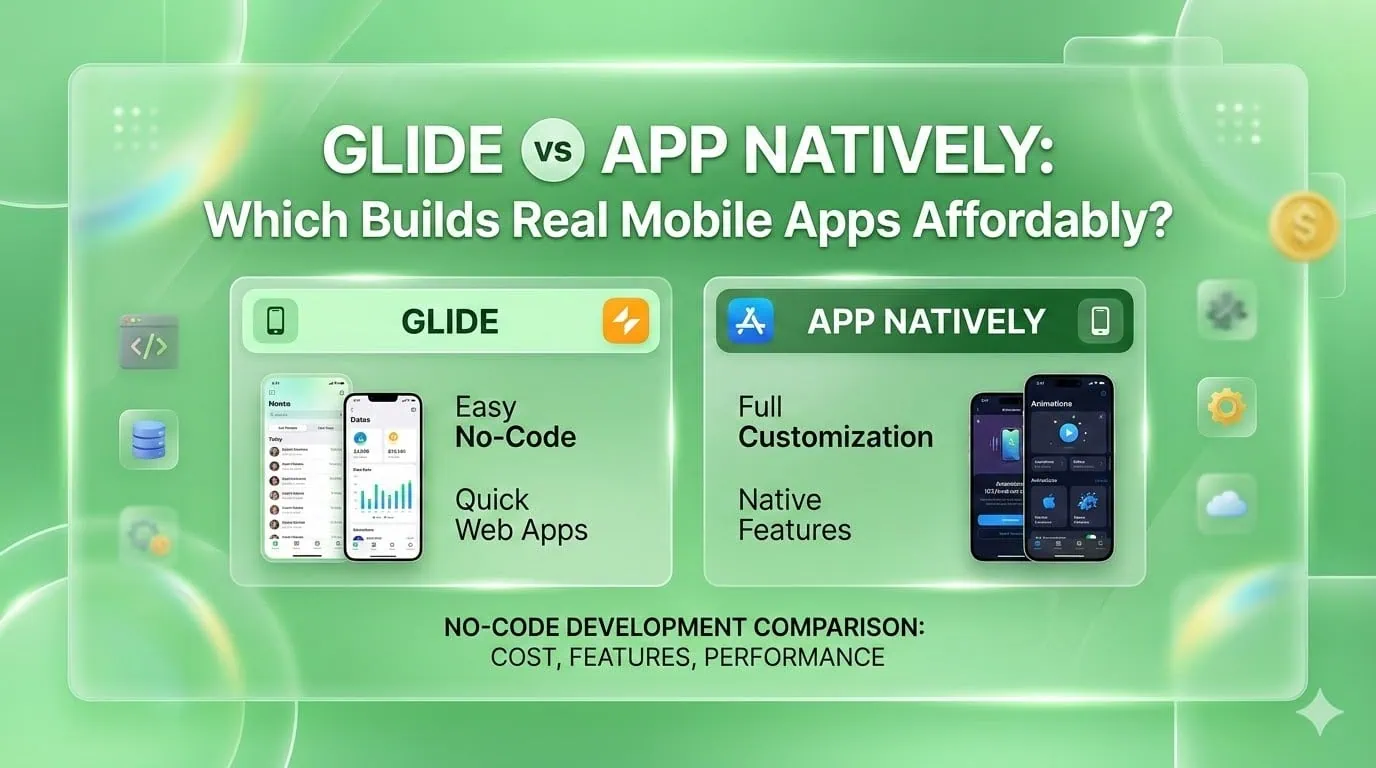
In this comparison of Glide vs App Natively, we explore which platform helps users build real mobile apps at a lower cost. Glide is known for transforming data into functional apps quickly.
Meanwhile, App Natively is being developed as a powerful drag-and-drop platform focused on creating true native mobile apps with advanced features at an affordable price.
The platform is currently under development, and early users can join the waitlist to get access when it launches.
What Is Glide?
Glide is a well-known no-code platform that allows users to create apps using data sources such as spreadsheets and databases.
It became popular because it offers a fast way to transform structured data into functional applications.
Many teams use Glide for internal tools, dashboards, and lightweight applications where speed matters more than deep customization.
The platform focuses on simplicity. Users can connect data sources, design app layouts visually, and publish apps quickly without technical complexity.
What Is App Natively?
App Natively is a new no-code platform designed with a different vision: making real native mobile app development affordable and accessible for everyone.
Instead of focusing primarily on web-based app experiences, App Natively aims to provide a powerful drag-and-drop environment for building true native mobile applications.
The goal is simple: remove the traditional complexity and cost associated with mobile app development while still delivering powerful functionality.
App Natively is currently under development and is accepting users for its early access waitlist.
Glide vs App Natively: Side-by-Side Comparison
Feature
Glide
App Natively
Primary Focus
Spreadsheet-based apps
Native mobile app builder
App Type
Web apps optimized for mobile
Real native iOS & Android apps
Ease of Use
Beginner friendly
Drag-and-drop builder
Customization
Moderate
Designed for flexibility
Scalability
Best for internal tools
Built for production apps
Pricing Philosophy
Tier-based pricing
Startup-friendly affordability
Glide vs App Natively: Key Differences
Understanding the differences between Glide and App Natively helps founders choose the right platform based on their goals.
1. App Type
Glide primarily focuses on apps that function similarly to web applications.
They work well for data-driven workflows but may not always deliver a fully native mobile experience.
App Natively is designed specifically for building native mobile apps, which typically provide better performance and deeper device integration.
2. Performance
Web-based applications rely on browsers to function. While modern browsers are powerful, they may still have performance limitations.
Native apps run directly on the device’s operating system, which can result in smoother interactions and faster performance.
3. Customization Flexibility
Glide offers predefined components that work well for many use cases. However, complex app experiences may require additional flexibility.
App Natively aims to provide a builder that allows greater freedom when designing mobile applications.
4. Scalability
Glide works well for internal tools, lightweight apps, and early prototypes.
App Natively is being designed to support production-ready mobile apps that businesses can grow and scale.
5. Pricing Philosophy
Glide offers different pricing tiers depending on features and usage.
App Natively aims to position itself as an affordable solution for founders who want to build real mobile apps without massive costs.
When Glide Might Be the Right Choice
Glide remains a strong option for many scenarios.
Businesses may prefer Glide when they need to:
Build internal productivity tools quickly
Create simple workflow apps
Turn spreadsheets into lightweight dashboards
Launch quick prototypes
For teams that want to organize data or automate workflows, Glide can be an efficient solution.
However, if the goal is to launch a full mobile product for customers, founders may want to explore tools focused on native development.
Why App Natively Could Be the Future of No-Code App Development
The no-code ecosystem continues to evolve rapidly. Early tools focused on building simple applications, but the next generation of platforms aims to support real product development.
App Natively is being built with that future in mind.
By focusing on native mobile experiences and affordable pricing, the platform attempts to remove two of the biggest barriers founders face: technical complexity and development cost.
For startups, this could mean the ability to:
Launch mobile apps faster
Test new product ideas quickly
Build scalable mobile products
Reduce dependency on expensive development teams
If these goals are achieved, App Natively could become an attractive option for entrepreneurs who want the benefits of native apps without traditional development challenges.
Who Should Consider App Natively
Several groups may benefit from the platform.
Startup founders
Entrepreneurs who want to launch mobile products without heavy development costs.
Indie makers
Creators who want to validate new app ideas quickly.
Agencies
Digital agencies building apps for clients may use no-code tools to accelerate delivery.
SaaS creators
Product builders looking to extend their platforms into mobile applications.
Business owners
Companies that want custom mobile apps without hiring large engineering teams.
For these users, an affordable native app builder could unlock new opportunities.
Why Most No-Code Apps Fail to Become Real Products
The no-code movement has made app creation easier than ever. However, many projects built with no-code platforms struggle when they try to grow beyond simple prototypes.
One major reason is that many builders generate web apps wrapped as mobile apps.
While this works for internal tools or quick MVPs, it often creates limitations in performance, user experience, and scalability when the product starts gaining real users.
As startups move from validation to growth, they usually need true native mobile apps, better performance, and more control over features.
That shift often forces founders to rebuild their product using traditional development, which increases cost and delays progress.
This is exactly the problem new platforms like App Natively aim to solve, allowing creators to build real native mobile apps from the start without the traditional development complexity or cost.
Why App Natively Is Built for the Next Generation of App Creators
Many no-code tools were originally designed for internal dashboards or simple workflow apps.
But modern founders want something bigger: the ability to launch real mobile products that users download from app stores.
App Natively is being developed with this exact vision in mind.
Instead of focusing only on simple app prototypes, the platform is designed to help creators build production-ready native apps using an intuitive drag-and-drop experience.
The goal is to combine the simplicity of no-code with the performance and flexibility of native development.
Another key focus is affordability. Many platforms become expensive as your app grows.
App Natively aims to make powerful mobile app creation accessible to startups, indie makers, and small teams who want to launch apps without massive budgets.
By lowering both the technical and financial barriers, App Natively is positioning itself as a new generation app builder for founders who want to move fast.
Join the App Natively Early Access Waitlist
App Natively is currently under development, and the team is inviting early adopters to join the waitlist.
Early access users will have the opportunity to explore the platform before public release and help shape the future of the product.
This also allows founders and creators to stay ahead by preparing their mobile apps using a platform designed for real native performance and startup-friendly pricing.
If you are planning to launch a mobile app without the traditional development cost, joining the waitlist could be the perfect opportunity to get early access.
Join the App Natively waitlist today and be among the first creators building powerful native mobile apps without coding.
Final Verdict: Glide vs App Natively
Glide has established itself as a useful platform for building quick apps powered by data. It works particularly well for internal tools, simple workflows, and lightweight applications.
App Natively is approaching the problem from a different direction. The platform aims to make real native mobile app development accessible and affordable for startups and creators.
If your goal is to build simple data-driven apps quickly, Glide may be a practical solution.
If you are looking for a platform focused on building scalable native mobile apps without traditional development complexity, App Natively could become a compelling option to watch.
Frequently Asked Questions (FAQs)
1. Is Glide a no-code app builder?
Yes, Glide is a no-code platform that allows users to build apps from spreadsheets or databases without writing code. It is commonly used for internal tools, directories, and lightweight business apps.
2. Can App Natively publish apps to both iOS and Android?
Yes, App Natively can convert a web app or website into a native mobile application that can be published on both the Apple App Store and Google Play Store.
3. Do Glide apps require coding knowledge?
No, Glide is designed for non-developers. Users can build functional apps using drag-and-drop components and data from Google Sheets, Excel, or Glide Tables.
4. Is App Natively a no-code platform?
Yes, App Natively is a drag & drop no-code native app builder.
5. Are Glide apps SEO friendly?
Glide apps are primarily web apps, so SEO capabilities are limited compared to traditional websites, though they can still be indexed depending on configuration.
6. Can Glide apps send push notifications?
Glide supports basic push notifications, but native mobile apps typically provide more advanced notification features.
7. What type of apps can you build with Glide?
Glide is commonly used to build internal tools, marketplaces, directories, dashboards, CRMs, and community apps.
8. Which option is better for launching a public mobile app?
If your goal is to launch an app on Apple App Store or Google Play, a native solution like App Natively is typically required since Glide apps are mainly web-based.