No-code directory app builders are platforms that allow you to create fully functional mobile apps for directory websites without writing any code.
These tools provide drag-and-drop interfaces, integrations with directory plugins, and features like push notifications, monetization, and real-time syncing.
The best no-code directory app builders include solutions that support WordPress directories, marketplace apps, and scalable business listings with minimal effort and cost.
What is a No-Code Directory App Builder? (Deep Dive)
A no-code directory app builder is a platform designed to transform structured data (like listings, categories, locations, and user profiles) into a fully functional mobile application without requiring programming knowledge.
But to truly understand their power, you need to look beyond the surface definition.
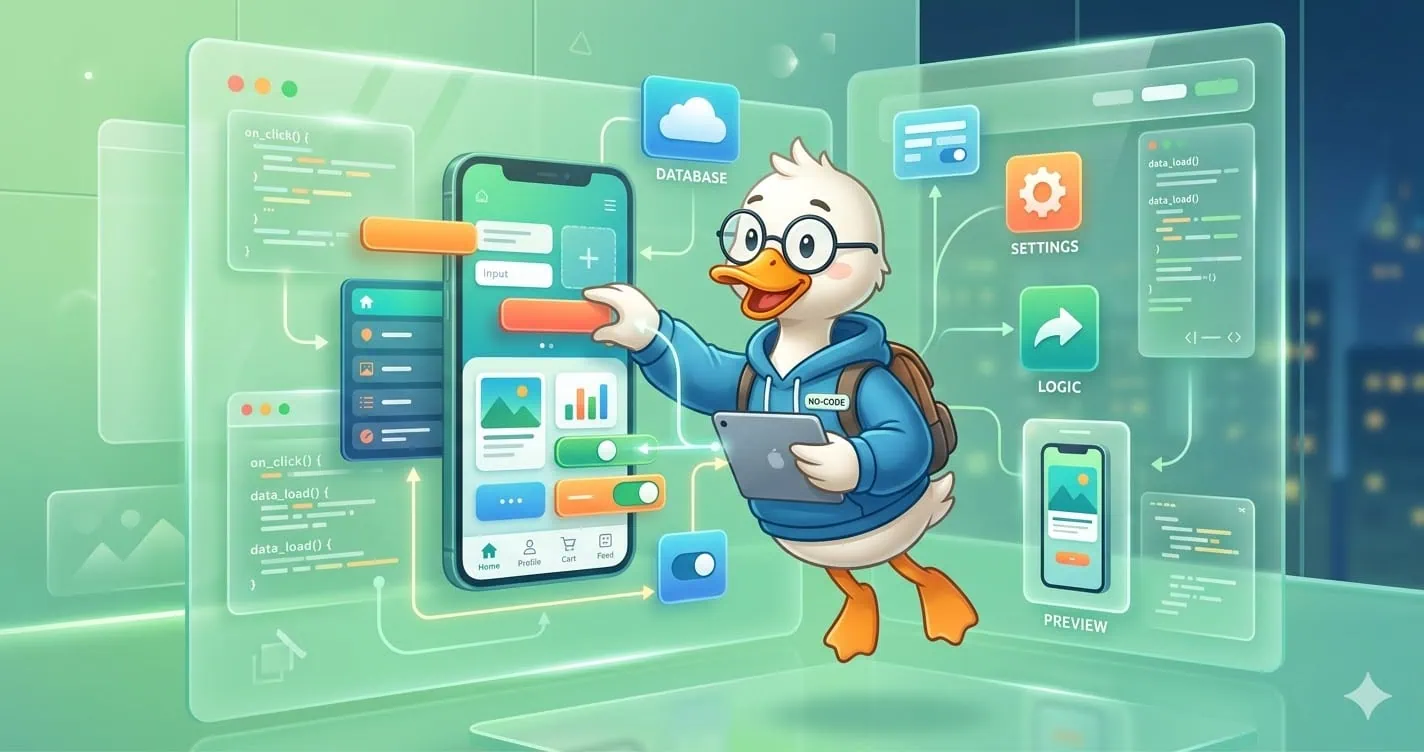
The core architecture behind no-code builders
At their core, these platforms operate on three essential layers:
1. Data layer
This is where your directory content lives—listings, user data, categories, reviews, and more. Most builders either:
Connect directly to your existing website database (e.g., WordPress) Provide a built-in database
Sync with external data sources like APIs or spreadsheets
2. Logic layer
This defines how your app behaves:
User authentication
Search and filtering logic
Booking or messaging systems
Payment and monetization workflows
3. Presentation layer
This is what users interact with:
UI design
Navigation structure
Listing pages
User dashboards
No-code builders give you visual control over all three layers—something that previously required multiple developers and tools.
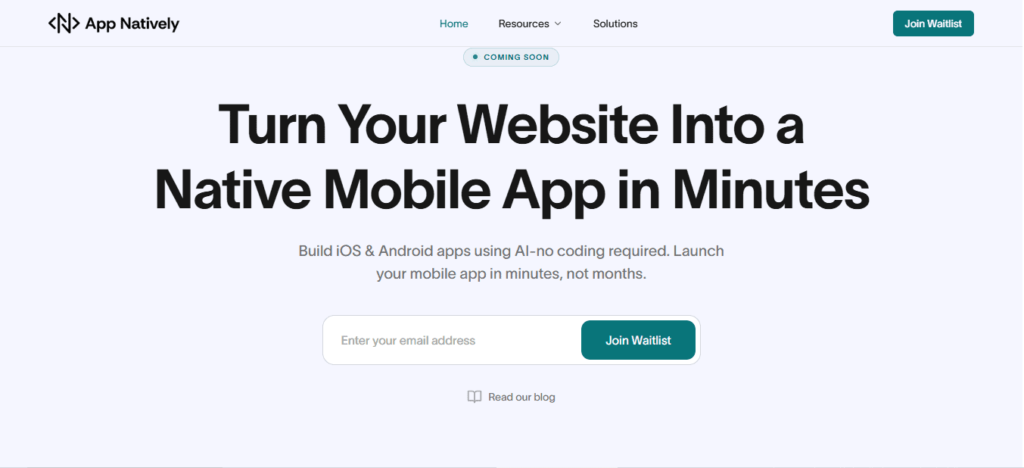
Convert your website into an iOS & Android app in 60 seconds (Join waitlist)
Why You Should Use a No-Code App Builder for Directory Apps
i. Faster time to market
Traditional app development can take months. No-code tools reduce this to days or even hours, allowing you to launch quickly and validate your idea.
ii. Cost efficiency
Hiring developers is expensive. No-code platforms eliminate development costs while still offering professional-grade results.
iii. Scalability
Modern no-code tools are built for growth. You can handle thousands of listings, users, and transactions without performance issues.
iv. Easy customization
You can customize layouts, colors, features, and user experience without needing technical skills.
v. Seamless integration
Most builders integrate with popular directory plugins, enabling smooth data synchronization between your website and mobile app.
Best No-Code Directory App Builders (Latest Edition)
Here are some of the best no-code directory app builders right now — each with different strengths depending on whether you’re building a startup directory, business listing app, or marketplace.
1. Softr
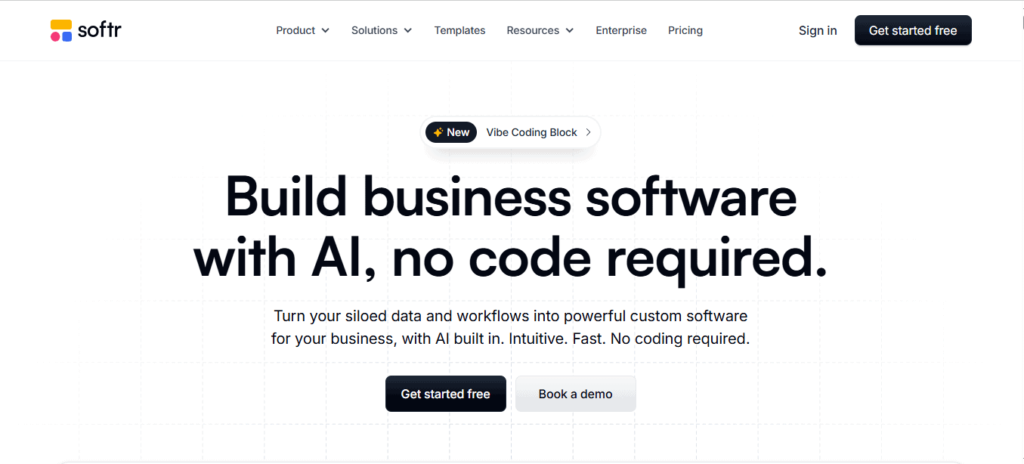
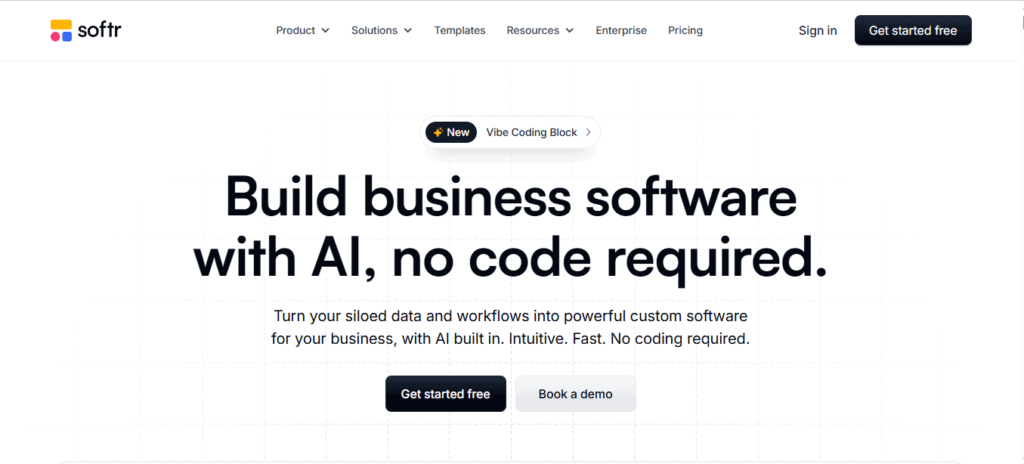
Softr is one of the easiest ways to build a directory app quickly. It connects directly to data sources like Airtable, Google Sheets, and Notion, then turns that data into a polished web app with search, filters, categories, and user accounts.
The interface is block-based, so you can drag components like listing grids, profiles, maps, and forms onto your page without touching code.
What makes Softr especially strong for directories is how fast you can go from spreadsheet to working product.
You can also add paid listings, memberships, and gated content, which makes it useful if you’re planning to monetize your directory later.
Many founders use Softr to launch startup directories, SaaS directories, and niche community directories within a day or two. ✨
2. Glide
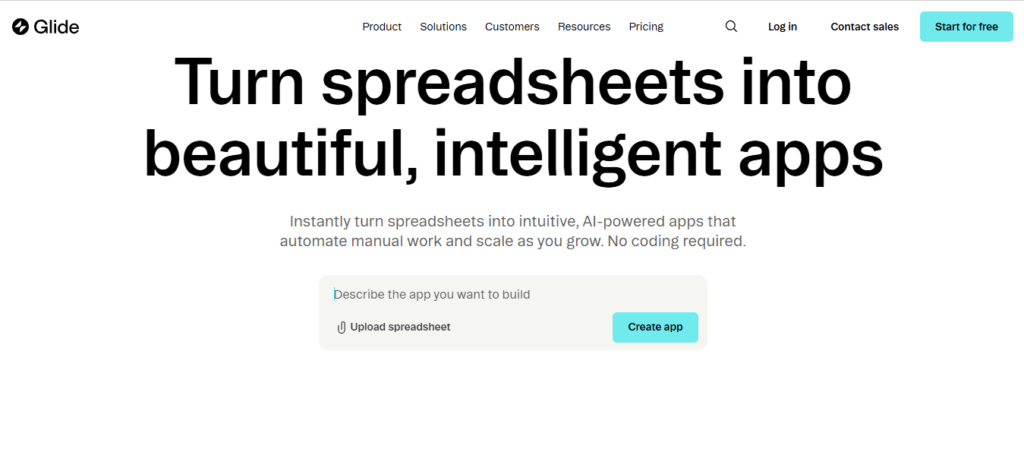
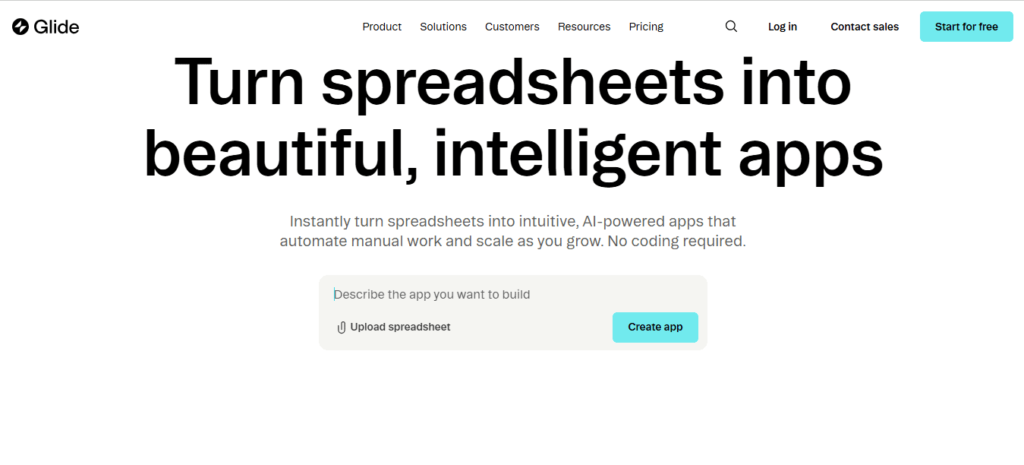
Glide is particularly strong if you want your directory to feel like a mobile app. It builds clean, fast interfaces automatically and syncs with Google Sheets, Airtable, or Glide’s built-in database.
The UI components are very polished, and adding filters, search, and categories is straightforward.
Glide works really well for local directories, community listings, school directories, and internal company directories.
It’s also beginner-friendly, so if you’re new to no-code tools, Glide is one of the easiest places to start.
The downside is that deep customization is more limited compared to more advanced platforms, but for most directory apps, it’s more than enough.
3. Bubble
Bubble is the most powerful option if you’re planning something more complex.
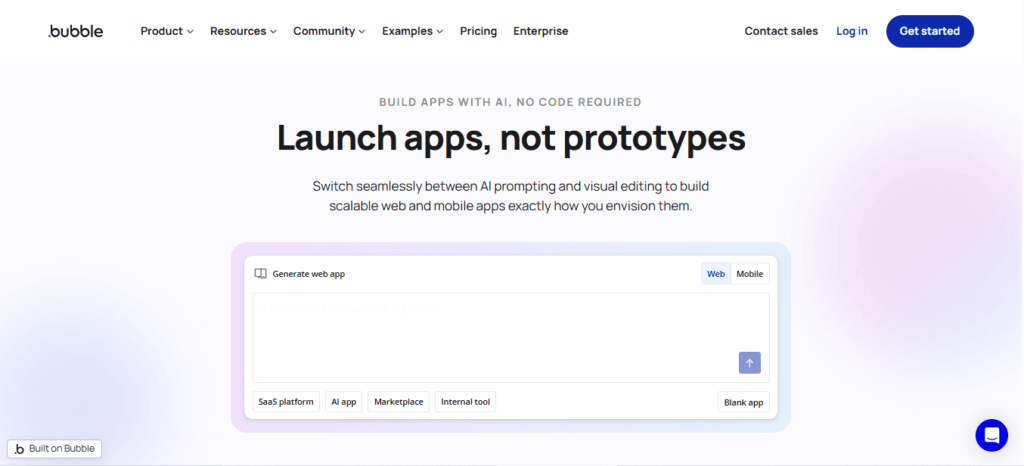
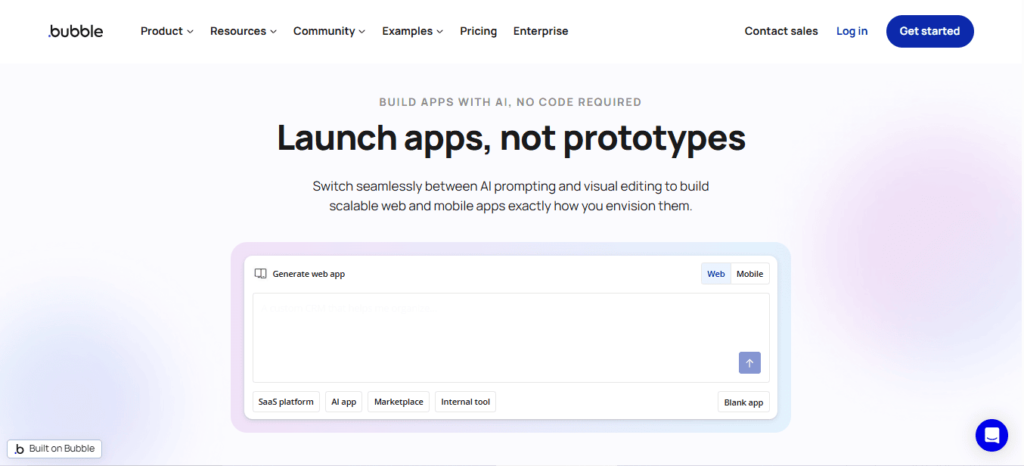
Instead of just building a directory, you can build a full platform with user dashboards, payments, messaging, and advanced filtering. Bubble uses a visual programming system that lets you create workflows and logic without writing code.
This makes Bubble ideal for marketplace directories, paid listing platforms, or startup directories that may evolve into full products.
The learning curve is steeper than Softr or Glide, but the flexibility is unmatched. If you’re thinking long-term and want full control, Bubble is often the best choice.
4. Adalo
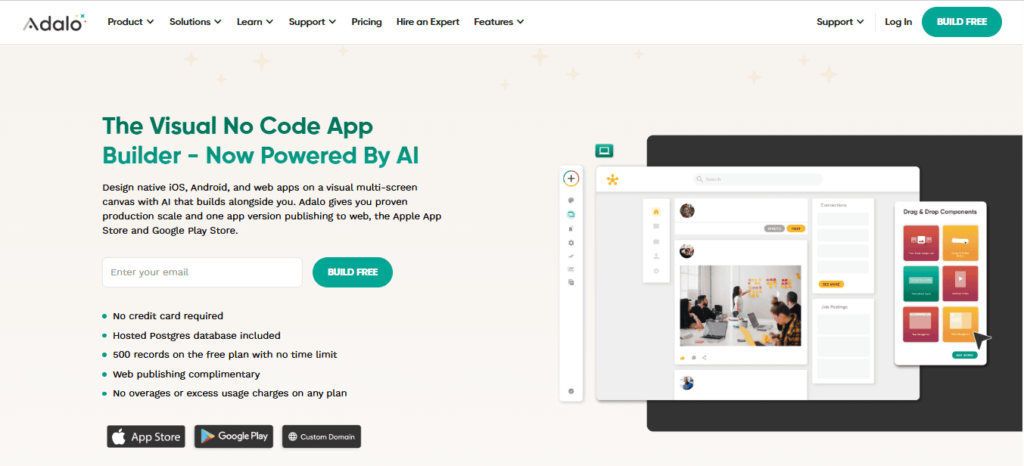
Adalo is designed for building real mobile apps without code. If your directory needs to be published on the App Store or Google Play, Adalo is a strong option.
You can create listings, categories, profiles, and user accounts, all with drag-and-drop components.
Adalo is commonly used for local business directories, service marketplaces, and community apps.
It’s not as powerful as Bubble, but it’s easier to learn and better suited for mobile-first directories.
AppNatively — The Premium Choice for Native Directory Apps (Join Waitlist)
AppNatively sits in a category of its own. Unlike most no-code builders that create web apps or hybrid apps, AppNatively focuses on true native mobile apps, meaning your directory feels faster, smoother, and more professional right out of the box.
This makes it especially appealing if you’re building something premium, such as an exclusive startup directory, luxury business directory, or private membership directory.
What makes AppNatively stand out is its performance-first approach. You’re not just creating listings, but you’re building a real mobile experience with native navigation, push notifications, offline support, and smooth UI interactions.
This is particularly valuable if your directory relies on user engagement, repeat visits, or a curated community.
AppNatively also works well for founders who want to position their directory as high-end or invite-only.
The platform supports gated access, user authentication, and custom onboarding flows, which allows you to create that “exclusive club” feel rather than just another public listing website.
If you’re building something that needs to feel exclusive, polished, and mobile-native at an affordable price, AppNatively becomes one of the most compelling choices in the market.
Frequently Asked Questions (FAQs)
What is the best no-code directory app builder in 2026?
App Natively is one of the best options for converting directory websites into mobile apps, while Adalo and Bubble are good ones.
Can I convert my WordPress directory into an app?
Yes, tools like App Natively allow seamless conversion with real-time syncing.
How long does it take to build a directory app?
With no-code tools, you can launch within days instead of months.
Is no-code scalable for large directories?
Yes, modern platforms support thousands of listings and users.
How do directory apps make money?
Through subscriptions, featured listings, ads, and lead generation.
Building an app from scratch can take months, cost thousands of dollars, and require technical expertise you may not have.
Every day that passes without launching your app is a missed opportunity. Your competitors might already be capturing your target audience, while your idea sits on a notepad, waiting.
AI is changing the game. AI-driven no-code platforms let anyone, from entrepreneurs to marketers, build functional, sleek apps in a fraction of the time.
With AI, app creation is no longer limited by coding skills, making innovation accessible and fast.
How AI-Powered No-Code Platforms Are Changing App Development
AI no-code platforms are not just a trend. They’re a revolution. These tools combine the intelligence of artificial intelligence with intuitive drag-and-drop interfaces to streamline the app creation process.
Traditional coding requires writing thousands of lines of complex code.
In contrast, AI-driven platforms can analyze your idea, suggest workflows, generate app screens, and even automate backend integrations—all without writing a single line of code.
This means businesses can launch apps faster, iterate quickly, and respond to market demands in real-time.
Automated app design suggestions based on your business type.
Pre-built AI modules for authentication, payments, or analytics.
Smart workflows that adapt to user interactions.
Integration with popular services like Stripe, PayPal, Google Maps, and more.
The result? Faster development, lower costs, and apps that are ready for launch in days, not months.
Benefits of Building Apps Without Coding Using AI
1. Speed and efficiency
AI no-code platforms dramatically reduce development time. What used to take weeks or months can now be done in days.
Entrepreneurs no longer have to wait for developers to code each feature.
Instead, AI accelerates everything from UI design to backend setup, allowing for rapid prototyping and testing.
2. Cost-effective development
Hiring developers is expensive. Freelancers and agencies charge thousands for a single app.
AI-driven no-code platforms remove this barrier by offering affordable subscriptions with all features included.
You get high-quality apps at a fraction of the traditional cost.
3. Accessibility for non-technical users
You don’t need coding experience to build an app anymore. With AI, users can input their requirements, and the platform translates them into fully functional apps.
Entrepreneurs, marketers, and small business owners can now turn ideas into reality independently.
4. Smart AI suggestions and automation
AI doesn’t just build apps; it improves them. By analyzing user behavior, AI can suggest workflow optimizations, recommend design improvements, and automate repetitive tasks.
This results in apps that are more user-friendly and effective in achieving business goals.
5. Easy iteration and scaling
One of the biggest advantages of AI no-code platforms is adaptability. You can test features, gather user feedback, and iterate instantly.
Whether adding new modules, expanding to new platforms, or integrating additional APIs, AI makes scaling painless.
Key Features of AI No-Code App Builders
To truly understand the revolution, it’s essential to know what these platforms offer. Here’s what sets AI no-code app builders apart:
Drag-and-Drop Interface: Build your app visually without touching code.
AI-Powered Screen Generation: Type your app idea, and AI generates screens, layouts, and flows.
Prebuilt Templates: Launch apps quickly using predesigned templates for e-commerce, SaaS, healthcare, travel, and more.
Automated Testing: AI can simulate user interactions to detect issues before launch.
Seamless Integrations: Connect with payment gateways, analytics tools, CRMs, and social platforms.
Cross-Platform Deployment: Publish on iOS, Android, and the web simultaneously without separate development.
These features eliminate the technical bottleneck, enabling entrepreneurs to focus on strategy, marketing, and customer experience instead of code.
Real-World Applications: Who Benefits the Most?
AI no-code app builders are versatile. Here’s who benefits most:
Startups: Launch MVPs faster to test ideas without massive investment.
Marketers: Build apps for campaigns, lead generation, or customer engagement without hiring developers.
Small Businesses: Create apps for e-commerce, appointments, or loyalty programs efficiently.
Freelancers & Agencies: Deliver apps to clients in days instead of months, improving client satisfaction and profitability.
Top AI-Powered No-Code Platforms to Explore
Some of the most powerful AI no-code platforms include:
Base44 – Known for intuitive AI app creation and smart backend automation.
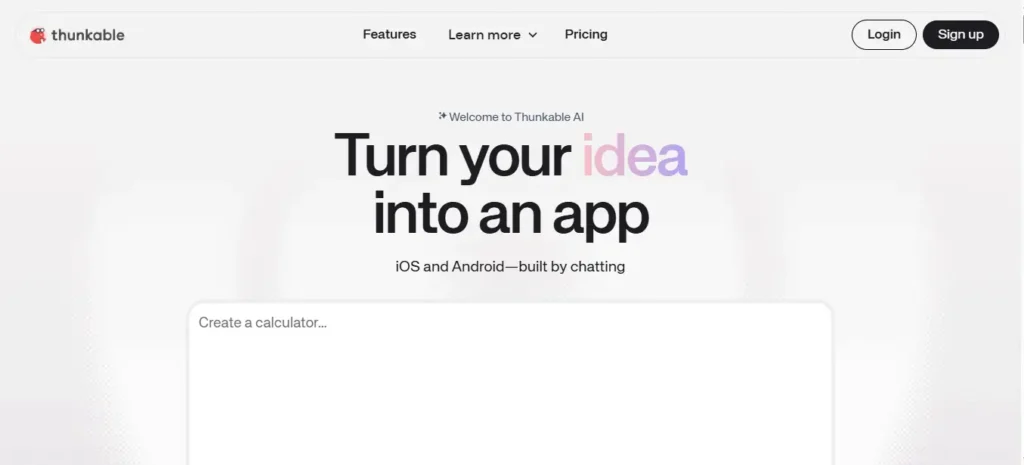
Thunkable AI – Allows drag-and-drop mobile app building with AI-generated suggestions.
Adalo + AI integration – Simplifies app creation with AI-driven design enhancements.
Glide AI – Turns spreadsheets into functional apps automatically.
Each platform has unique advantages, but the common theme is AI-driven acceleration, simplicity, and cost reduction.
Overcoming Challenges in AI-Powered App Development
While AI no-code platforms are game-changing, they’re not without challenges:
Limited Customization: Some platforms may not allow deep customization for highly complex apps.
Platform Dependency: Apps built on proprietary platforms may face vendor lock-in.
Learning Curve: Although coding is eliminated, users still need to understand app logic and user experience principles.
These challenges are manageable. Choosing the right platform, starting small, and leveraging AI recommendations can ensure success.
Future Trends: Where AI No-Code App Development is Heading
The future of app development is bright. AI is expected to:
Automate end-to-end development from idea to deployment.
Predict user behavior and dynamically adjust apps for better engagement.
Integrate with AI-generated content to create personalized experiences.
Enable voice and gesture-controlled apps without coding expertise.
The line between app users and developers is blurring, empowering anyone to create innovative solutions.
Turn Your Website into a Native Mobile App in a Flash
Imagine transforming your website into a fully functional native mobile app without writing a single line of code.
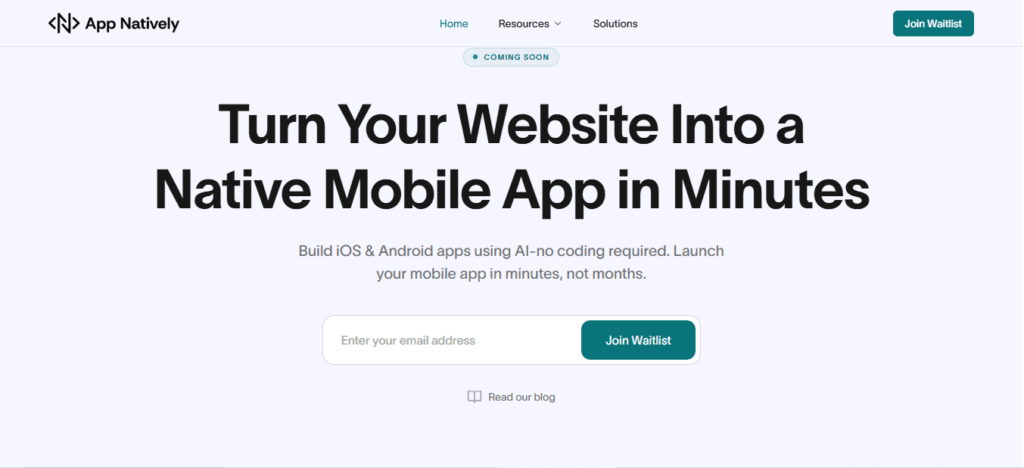
That’s exactly what App Natively enables. Currently under development, this AI-powered no-code platform is designed to take your online presence and instantly convert it into an app that runs seamlessly on both iOS and Android.
By joining the exclusive waitlist today, you’ll be among the first to experience features like automated app conversion, smart workflow optimization, and effortless integrations with your favorite tools.
No coding, no delays—just a fast, reliable path from website to app.
Don’t wait for months of traditional app development. Reserve your spot on the App Natively waitlist now and be ready to launch your app in a flash.
Conclusion: How AI Is Revolutionizing App Development Without Coding
AI is democratizing app creation. Entrepreneurs, marketers, and businesses no longer need technical expertise or massive budgets to bring ideas to life.
With AI-powered no-code platforms, apps can be conceptualized, designed, and launched faster than ever before.
By embracing AI, you not only save time and money but also gain the flexibility to innovate continuously.
Whether you’re a startup founder or a marketer looking to engage your audience, AI is your secret weapon for app development without coding.
Start your AI-powered app journey today and turn ideas into fully functional apps faster than ever.
FAQs: Frequently Asked Questions
1. Can I really build an app without coding?
Yes. AI no-code platforms allow users to create fully functional apps without any coding experience. AI handles design, workflows, and backend setup.
2. How fast can I launch my app using AI?
Depending on complexity, apps can be launched in days or weeks instead of months. AI accelerates prototyping, testing, and deployment.
3. Are AI-built apps scalable?
Absolutely. Modern AI no-code platforms support scaling features, integrations, and cross-platform deployment.
4. Do I need a technical background to use the AI app builders?
No. AI handles technical complexity. Users only need a clear idea and some understanding of user experience.
5. What types of apps can I build?
From e-commerce, healthcare, and SaaS apps to travel, education, and service booking apps, AI can support a wide range of app types.
Choosing the right no-code app builder can determine whether your startup launches an app in weeks or struggles with months of development.
Platforms like Bubble and Glide have made it possible for entrepreneurs to build software products without writing traditional code.
However, the no-code industry is evolving rapidly, with new platforms emerging to address limitations that earlier tools could not fully address.
One of the most promising newcomers is App Natively, a platform that makes native mobile app development affordable and accessible for startups.
Each of these platforms approaches app development differently. Bubble is designed for building complex web applications with deep customization, Glide focuses on rapid app creation using spreadsheet-based logic, and App Natively aims to simplify native mobile app development with faster and more affordable workflows.
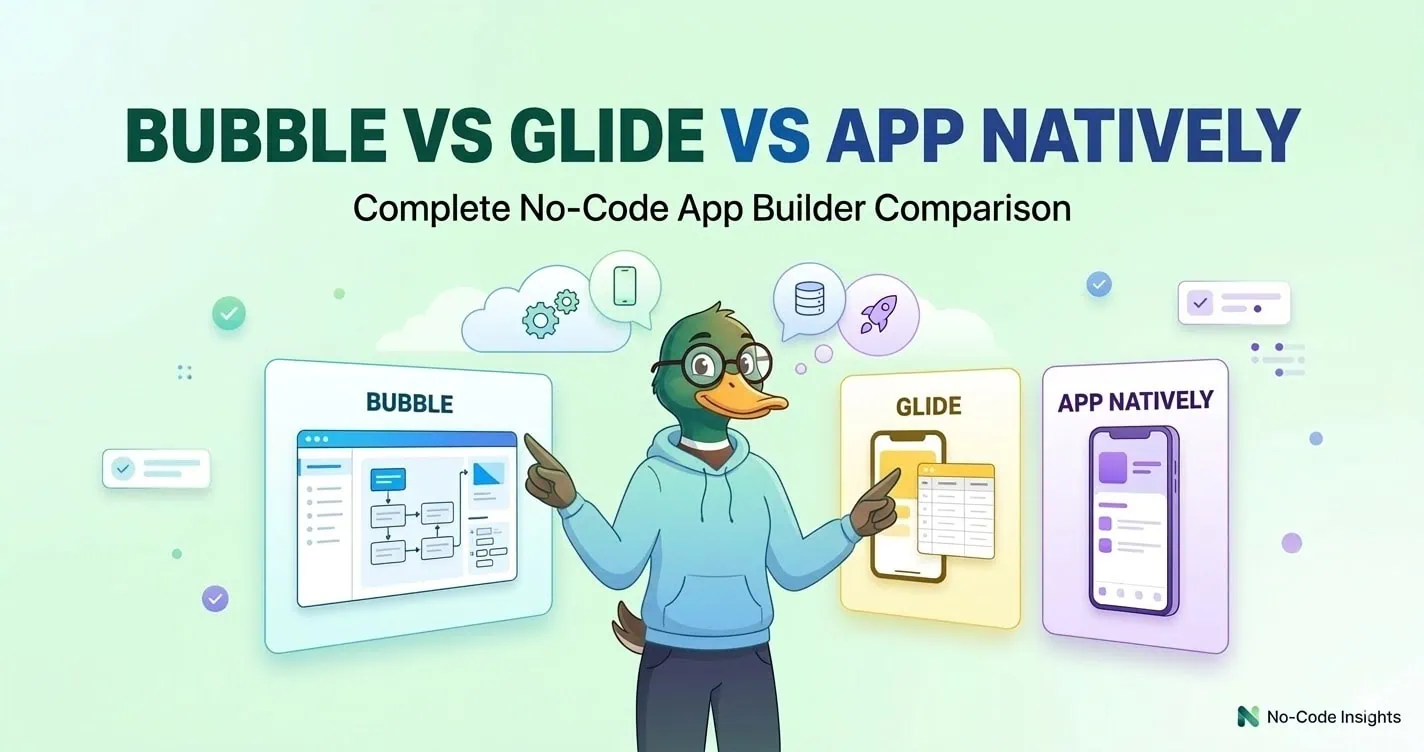
In this complete guide on Bubble vs Glide vs App Natively, we will explore their features, customization capabilities, scalability, pricing models, performance, and ideal use cases.
By the end of this article, you will clearly understand which platform is best suited for entrepreneurs, startups, and businesses building apps in 2026.
The Rise of No-Code App Builders
Over the past decade, the no-code movement has completely transformed how software is created.
Previously, launching an app required hiring developers, building infrastructure, and spending thousands of dollars on development.
Today, no-code platforms allow founders to build applications using visual interfaces, drag-and-drop tools, and automation workflows. This shift has dramatically reduced the time and cost required to launch new products.
Platforms like Bubble and Glide helped pioneer this movement, making it possible for entrepreneurs to validate startup ideas quickly.
However, many founders still struggle with challenges such as complex learning curves, scalability concerns, and limited native mobile functionality.
As the demand for faster and more accessible development grows, the next generation of tools, including App Natively, aims to simplify the entire process while delivering better performance and lower costs.
What Is Bubble?
Bubble is one of the most powerful no-code development platforms available today. It allows users to build fully functional web applications without writing code by using visual programming tools.
Bubble includes a wide range of advanced capabilities such as database management, workflow automation, API integrations, and UI customization.
Because of this flexibility, the platform is often used to build SaaS platforms, marketplaces, internal tools, and complex web applications.
One of the biggest strengths of Bubble is its ability to replicate many features of traditional software development. Developers can create custom workflows, manage user authentication, and build complex logic within the platform.
However, this power also creates a steeper learning curve. Many beginners find it challenging to master Bubble quickly. Additionally, building true native mobile apps often requires additional tools or wrappers.
Despite these challenges, Bubble remains one of the most capable platforms for startups that want to build scalable web applications without hiring a full development team.
What Is Glide?
Glide is a no-code platform designed to make app development extremely simple. It allows users to create apps directly from spreadsheets such as Google Sheets or Airtable.
The platform transforms spreadsheet data into interactive applications using drag-and-drop components. This approach makes Glide particularly attractive for users who want to build apps quickly without learning complex workflows.
Glide is commonly used for internal business tools, directories, event apps, dashboards, and lightweight mobile applications. Because the platform is easy to use, many entrepreneurs choose it for rapid prototyping and MVP validation.
However, Glide has limitations when it comes to customization and complex application logic. Large-scale applications or advanced workflows may require more powerful platforms.
Still, Glide remains one of the most beginner-friendly solutions for anyone looking to build an app quickly using a simple and intuitive interface.
What Is App Natively?
App Natively is a modern no-code platform designed to simplify the creation of native mobile applications.
While many no-code tools focus primarily on web applications or progressive web apps, App Natively aims to deliver true mobile experiences with native performance and usability.
The platform is being developed with startups and entrepreneurs in mind. Its core goal is to eliminate the complexity and high costs traditionally associated with mobile app development.
Instead of requiring users to learn complicated workflows or technical processes, App Natively focuses on streamlined development, fast deployment, and affordable pricing.
At the moment, the platform is preparing for launch and inviting users to join an exclusive early access waitlist. This allows early adopters to test the platform and build apps before the public release.
For startups looking for a cost-effective way to launch mobile apps, App Natively could become one of the most exciting new tools in the no-code ecosystem.
Bubble vs Glide vs App Natively: Feature Comparison
Understanding the key differences between these platforms is essential when choosing the right tool for your project.
1. Ease of use
Glide is widely considered the easiest platform to learn. Its spreadsheet-driven system allows users to build apps quickly with minimal technical knowledge.
Bubble offers far more flexibility, but the platform requires time to master. New users often need tutorials and practice before building complex applications.
App Natively aims to strike a balance between simplicity and capability. The platform focuses on providing powerful mobile app features while keeping the development process simple.
2. Customization and flexibility
Bubble stands out in terms of customization. Users can build complex workflows, advanced logic systems, and detailed interfaces that rival traditional coding environments.
Glide offers fewer customization options because its structure relies heavily on spreadsheet data models.
App Natively focuses on delivering essential customization features while maintaining ease of use. Its design prioritizes mobile performance and usability rather than complex backend workflows.
3. Performance and scalability
Bubble applications can scale effectively for web apps, but performance optimization becomes important as the application grows.
Glide works well for small to medium applications but may struggle with extremely complex logic or heavy data processing.
App Natively focuses on native mobile architecture, which allows apps to run faster and provide a smoother user experience compared to web-based apps.
4. Pricing and affordability
Pricing plays a major role in choosing a no-code platform.
Bubble can become expensive as applications scale because pricing is tied to server usage and workload.
Glide offers predictable pricing plans, but many advanced features are restricted to premium tiers.
App Natively is being developed with affordability as a core priority. Its goal is to enable startups to launch mobile apps without spending thousands of dollars on development.
Feature Comparison Table
Feature
Bubble
Glide
App Natively
Platform Type
Web App Builder
Spreadsheet App Builder
Native Mobile App Builder
Ease of Use
Moderate
Very Easy
Easy
Customization
Very High
Limited
Moderate
Best For
SaaS Platforms
Internal Tools
Mobile Startups
Native Apps
Requires Wrappers
Limited
Yes
Learning Curve
High
Very Low
Low
Startup Friendly
Moderate
Good
Excellent
Which Platform Is Best for Startups?
The best platform depends on the type of product you want to build.
Startups developing complex SaaS platforms or marketplaces may find Bubble to be the most suitable solution due to its advanced customization.
Entrepreneurs who want to quickly build simple business apps or internal tools may prefer Glide because of its simplicity.
However, founders planning to launch mobile-first startups may find App Natively more appealing due to its focus on native performance and affordable development.
Ultimately, the best platform is the one that allows founders to launch quickly, validate ideas, and scale efficiently.
The Future of No-Code App Development
The no-code ecosystem continues to evolve as more entrepreneurs embrace faster ways to build software.
Modern tools are increasingly focused on reducing technical barriers and enabling founders to bring ideas to market quickly.
Several major trends are shaping the future of the industry:
AI-assisted app development is making it easier to generate workflows and automate complex tasks.
Mobile-first development is becoming more important as smartphone usage continues to dominate global internet traffic.
Affordable development platforms are emerging to help startups launch products without large budgets.
Platforms like Bubble and Glide have already revolutionized the no-code landscape, while emerging tools such as App Natively are pushing the industry toward faster and more accessible mobile app development.
Why App Natively Could Become a Game-Changer
Many founders struggle to build mobile apps because traditional development requires significant technical expertise and large budgets.
App Natively aims to solve these challenges by providing a platform designed specifically for fast and affordable mobile app creation.
Instead of spending months working with developers, entrepreneurs can use the platform to design, build, and launch their applications much faster.
Because the platform focuses on native mobile performance, it can provide a smoother user experience compared to many web-based solutions.
For founders who want to validate startup ideas quickly, this type of platform could dramatically reduce development costs and accelerate product launches.
Join the App Natively Early Access Waitlist
As the next generation of no-code platforms continues to evolve, App Natively is positioning itself as a powerful tool for founders who want to build mobile apps without coding.
The platform is currently preparing for launch and inviting early adopters to join its exclusive waitlist.
Joining the waitlist allows entrepreneurs to gain early access to the platform, explore its features before the public release, and start building apps ahead of competitors.
For startups looking for a faster and more affordable way to launch mobile applications, getting early access could provide a significant advantage.
Frequently Asked Questions (FAQs)
What is the difference between Bubble, Glide, and App Natively?
The main difference is the type of applications they focus on. Bubble is best for building complex web applications and SaaS platforms, Glide is ideal for creating simple apps from spreadsheets, and App Natively focuses on building native mobile apps quickly and affordably.
Which platform is better for building a startup MVP?
For startup MVPs, the best platform depends on the product type. Bubble works well for complex web-based MVPs, Glide is great for quick prototypes and internal tools, while App Natively is promising for founders who want to launch a mobile-first MVP.
Can I build a SaaS product using Bubble?
Yes, Bubble is widely used to build SaaS platforms because it supports custom workflows, databases, user authentication, and API integrations.
Is Glide suitable for building customer-facing mobile apps?
Glide can build mobile-friendly apps, but they function more like progressive web apps rather than fully native mobile apps.
Is App Natively good for non-technical founders?
Yes, App Natively is designed to help non-technical founders create mobile apps without coding by simplifying the entire development process.
Which no-code platform is best for mobile apps?
Platforms focused on mobile development typically perform better for mobile-first startups. App Natively aims to provide a more optimized experience for building native mobile apps.
Can I scale a startup using Bubble?
Many startups have successfully scaled using Bubble. However, large applications may require performance optimization and infrastructure adjustments as they grow.
What are the limitations of Glide?
Glide is excellent for simple applications but may have limitations when building complex workflows, advanced logic systems, or large-scale apps.
Is Bubble harder to learn than Glide?
Yes, Bubble has a steeper learning curve because it includes advanced features such as workflow automation, database structures, and API integrations.
Do no-code platforms replace traditional developers?
No-code platforms do not fully replace developers, but they allow founders to build MVPs, validate ideas, and launch products without hiring large engineering teams.
What types of apps can be built with Glide?
Glide is commonly used for directories, dashboards, event apps, internal business tools, and data-driven applications.
Is App Natively cheaper than traditional app development?
Traditional mobile app development can cost thousands of dollars. App Natively aims to reduce those costs by enabling entrepreneurs to build apps using no-code tools.
Can I build marketplace apps with Bubble?
Yes, Bubble is often used to build marketplace platforms because it supports advanced workflows, payment integrations, and user management systems.
Which platform is best for beginners?
Glide is usually the easiest platform for beginners because its spreadsheet-based system is simple and intuitive.
Can I integrate APIs with Bubble?
Yes, Bubble supports API integrations, allowing developers to connect their applications with third-party tools and services.
What is the fastest way to build an app without coding?
Using a no-code platform like Glide, Bubble, or App Natively is currently one of the fastest ways to build applications without coding.
Are no-code apps secure?
Most modern no-code platforms include built-in security features such as authentication systems, data protection, and secure infrastructure.
Can I publish apps built with no-code tools on app stores?
Yes, some platforms allow apps to be deployed to app stores. Platforms focused on native development, such as App Natively, are designed to support this process.
What are the best alternatives to Glide?
Some alternatives include Bubble and newer platforms like App Natively that aim to provide different approaches to app development.
Which no-code platform is best for startups in 2026?
The best platform depends on the startup’s goals. Bubble is powerful for web applications, Glide is excellent for simple apps, and App Natively is emerging as a strong option for mobile-first startups.
Is Bubble better than Glide for building scalable apps?
For scalability and complex functionality, Bubble is generally more powerful than Glide. Bubble allows developers to create advanced workflows, database relationships, and integrations that support larger and more complex applications.
However, Glide can still work well for lightweight apps or internal tools where simplicity and speed are more important than deep customization.
Can no-code platforms build real startup products?
Yes, many successful startups have launched products using no-code tools.
Platforms like Bubble allow founders to build SaaS products, marketplaces, and internal platforms, while newer tools such as App Natively aim to make native mobile app development accessible to early-stage startups.
What is the fastest way to launch an MVP without coding?
The fastest way to launch an MVP is by using a no-code platform that allows rapid prototyping.
Glide is often used for quick internal apps, while Bubble enables more advanced product development. Mobile-focused platforms like App Natively are emerging as a faster way to launch mobile-first MVPs.
Are no-code apps good enough for production?
Modern no-code platforms are capable of supporting production-level applications.
Many businesses run fully operational products built on platforms like Bubble. The key is choosing the right platform based on your scalability and performance needs.
Which no-code platform is best for mobile-first startups?
Mobile-first startups often need platforms optimized for mobile performance.
While Bubble and Glide can support mobile-friendly apps, tools focused on native mobile development, such as App Natively aim to deliver a more optimized mobile experience.
Can I build an app like Uber or Airbnb using no-code tools?
Building a large platform like Uber or Airbnb entirely with no-code tools can be challenging, but it is possible to build MVP versions using platforms like Bubble.
Many founders start with no-code to validate their idea before moving to custom development later.
Do no-code platforms support integrations with third-party tools?
Yes, most modern no-code platforms support integrations with APIs and external services.
Bubble is particularly strong in this area because it allows developers to connect applications with many third-party tools and services.
Are no-code platforms suitable for long-term business growth?
Yes, many startups use no-code platforms for long-term growth. However, choosing a platform with strong scalability and performance capabilities is essential as the business expands.
How much money can startups save using no-code platforms?
Traditional app development can cost anywhere from $10,000 to $100,000, depending on complexity. No-code platforms dramatically reduce these costs by allowing founders to build apps without hiring large development teams.
What should founders consider before choosing a no-code platform?
Founders should evaluate several factors, including ease of use, customization options, scalability, pricing, and the type of app they want to build.
Comparing platforms like Bubble, Glide, and App Natively can help determine which tool best matches the project’s goals.
No-code development has transformed the way startups, entrepreneurs, and creators build software. Instead of spending months writing code or hiring expensive development teams, modern builders can now launch web and mobile applications using visual platforms and drag-and-drop tools.
One of the most well-known platforms in this space is Bubble, which has helped thousands of founders build SaaS products, marketplaces, and internal tools without coding.
However, while Bubble is powerful, it is not always the perfect solution for every project. Many no-code developers begin searching for alternatives as their needs grow or change. Some want stronger native mobile capabilities, others want simpler workflows, and many are looking for tools with more flexible pricing or better scalability.
Fortunately, the no-code ecosystem has evolved rapidly over the past few years. Today, there are several powerful platforms that allow developers to build applications faster, launch mobile apps more easily, and maintain greater flexibility when scaling their products.
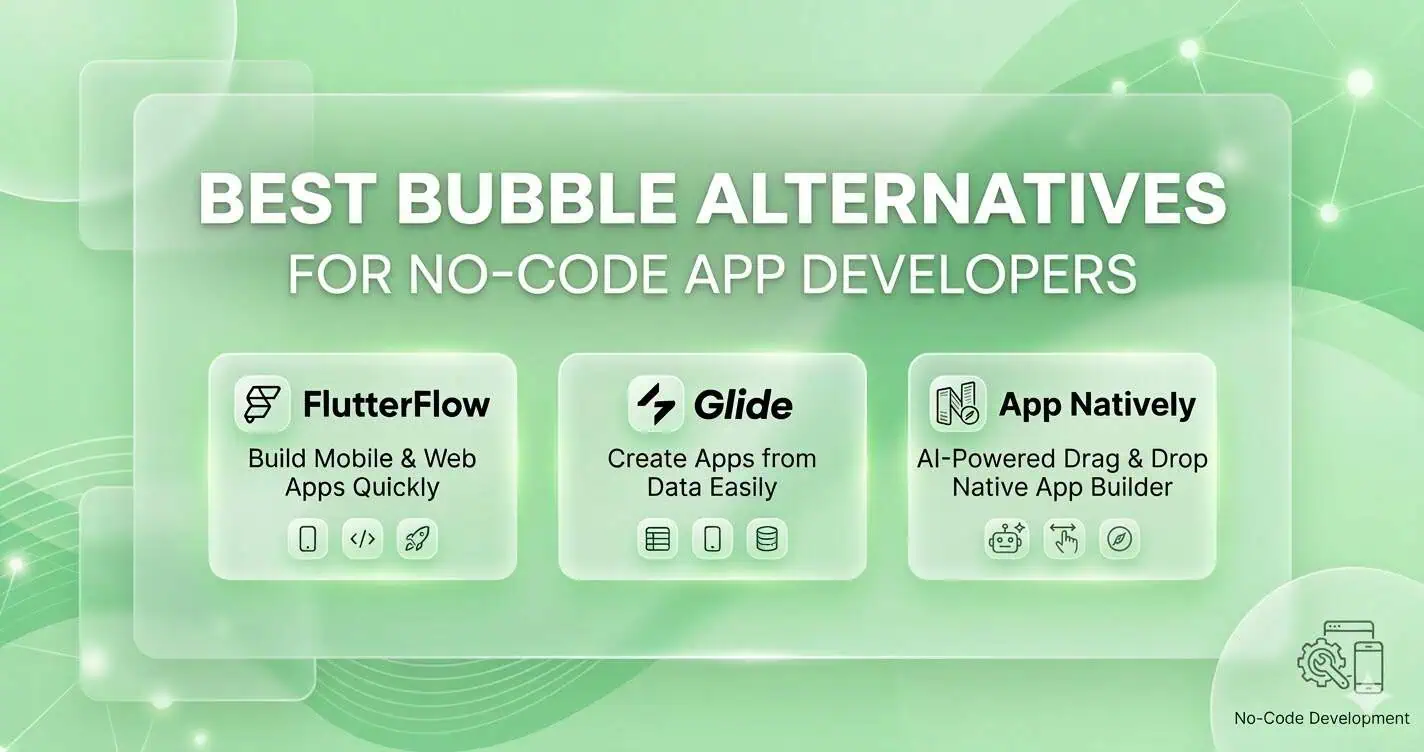
In this blog post, we will explore the best Bubble alternatives for no-code app developers, compare their strengths and weaknesses, and help you choose the right platform for your next project.
Why No-Code Developers Look for Bubble Alternatives
Bubble remains one of the most advanced no-code platforms available, but it does come with certain limitations that lead some developers to explore other options.
Understanding these limitations can help you decide whether switching platforms makes sense for your project.
Limited native mobile support
One of the most common reasons developers search for Bubble alternatives is mobile app development.
Bubble is primarily designed for building web applications, which means creating native iOS and Android apps often requires third-party tools or wrappers.
For developers who want to launch mobile apps quickly, platforms designed specifically for mobile development may provide a better experience.
Complex learning curve
Bubble offers extensive customization and workflow capabilities. While this power is useful, it can also make the platform difficult for beginners to learn.
Many no-code developers prefer tools with simpler interfaces and faster onboarding.
Pricing concerns
As applications grow and attract more users, Bubble’s pricing structure can become more expensive. For startups operating on tight budgets, finding a platform with more predictable pricing is often important.
Performance and scalability
Large applications built on Bubble sometimes experience performance issues as complexity increases.
Developers building scalable products or client projects may want platforms that provide better optimization and infrastructure flexibility.
What to Look for in a Bubble Alternative
Before choosing a new platform, it is important to understand which features matter most for your project.
Not every no-code builder is designed for the same use cases.
Here are the key factors to consider.
Ease of use
A good no-code platform should allow developers to design, build, and launch applications without extensive training. Visual builders, drag-and-drop components, and clear workflows make development much faster.
Mobile app capabilities
If your goal is to build mobile apps, look for platforms that support native mobile development or easy deployment to both iOS and Android.
Integrations and APIs
Modern applications depend on integrations with other tools such as payment processors, databases, and automation platforms. The best no-code tools support strong API integrations.
Scalability
A platform should allow your application to grow as your user base increases. Reliable infrastructure and flexible backend options are essential for long-term success.
Pricing structure
Startups and indie developers should consider platforms that offer flexible plans and predictable costs as projects grow.
A Smarter Alternative Is Coming: App Natively
Before exploring the best Bubble alternatives available today, it is worth mentioning a new platform that aims to completely redefine how no-code app development works.
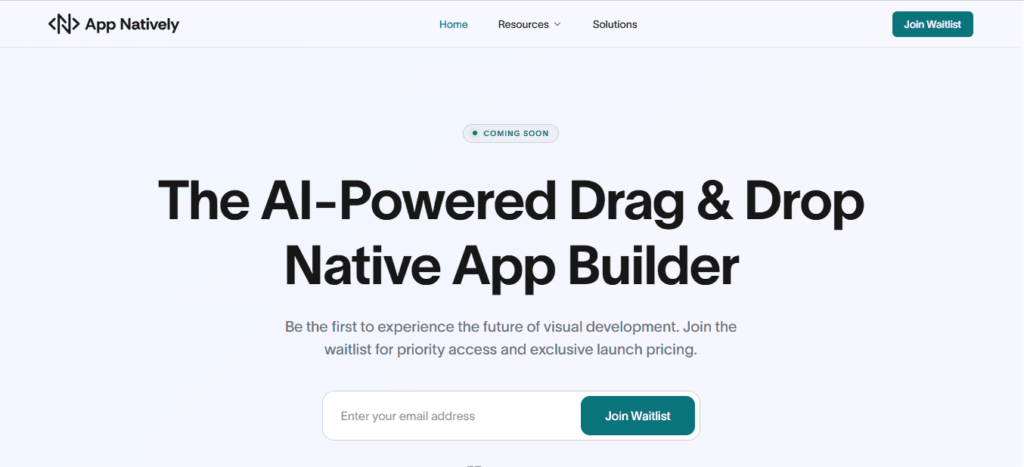
App Natively is an upcoming AI no-code platform currently under development that is being designed to simplify and improve the entire app-building experience.
The goal is to give creators, startups, and agencies a single platform where they can build powerful web and mobile applications without the complexity, limitations, or high costs often associated with existing tools.
Many no-code developers today rely on multiple platforms to design interfaces, manage workflows, connect databases, and deploy applications. This fragmented process can slow down development and increase costs as projects grow.
App Natively is being built to eliminate that complexity by offering a streamlined ecosystem that brings everything together in one place.
Another major focus of the platform is affordability. While many popular no-code tools become expensive as applications scale, App Natively aims to provide one of the most affordable solutions for building scalable applications, making it especially attractive for startups, indie builders, and agencies working with limited budgets.
Although the platform is still under construction, early access is already being offered to builders who want to be among the first to experience it.
👉 Join the App Natively waitlist to get early access when the platform launches.
Best Bubble Alternatives for No-Code App Developers
The following platforms are some of the strongest alternatives for building apps without writing complex code.
1. FlutterFlow
FlutterFlow is one of the fastest growing no-code platforms for building mobile applications.
Built on Google’s Flutter framework, it allows developers to design fully functional mobile apps with a visual builder.
Key Features
Drag-and-drop mobile UI builder
Native mobile app support
Integration with Firebase
Custom API integrations
Option to export Flutter code
Best For
FlutterFlow is ideal for developers who want to create high-performance mobile apps with the flexibility to extend their projects using real code if necessary.
Pros
Native mobile performance
Clean interface and visual builder
Code export capability
Strong developer community
Cons
Less focused on web applications compared to Bubble
Requires some understanding of mobile app structure
2. Glide
Glide is a popular no-code platform that allows users to build applications directly from spreadsheets or databases.
It focuses on simplicity and speed, making it one of the easiest platforms for beginners.
Key Features
Spreadsheet-based app development
Beautiful pre-built UI components
Fast deployment
Strong integrations with databases
Best For
Glide works well for internal tools, small apps, and business dashboards.
Pros
Extremely easy to learn
Fast development process
Great for internal business applications
Cons
Limited customization compared to Bubble
Not ideal for highly complex applications
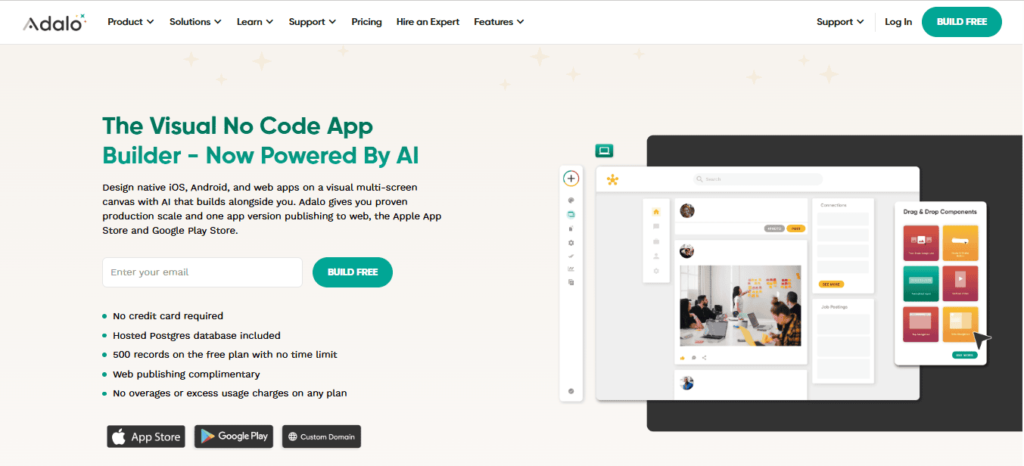
3. Adalo
Adalo is another popular no-code platform designed specifically for building mobile applications.
It allows developers to design mobile interfaces visually while also managing databases and workflows.
Key Features
Drag-and-drop mobile app builder
Built-in database system
Integration with APIs
One-click publishing for mobile apps
Best For
Adalo is a great option for beginners who want to build mobile apps without coding.
Pros
Simple and beginner friendly
Native mobile app support
Visual design tools
Cons
Limited scalability for large applications
Some performance limitations
4. Draftbit
Draftbit is a powerful platform that focuses on building mobile applications using React Native.
Unlike many no-code tools, Draftbit gives developers more control and flexibility.
Key Features
Visual mobile app builder
React Native foundation
Full code export capability
API integrations
Best For
Draftbit is ideal for developers and agencies who want both no-code convenience and code flexibility.
Pros
Code export for full control
Professional mobile app development
Strong customization capabilities
Cons
Slightly steeper learning curve than beginner platforms
5. Softr
Softr focuses on building web applications and portals using Airtable or external data sources.
It is widely used for building marketplaces, membership sites, and client portals.
Key Features
Pre-built templates
Airtable integration
Membership and user management
Custom web apps without coding
Best For
Softr works well for marketplaces, directories, and internal portals.
Pros
Fast setup
Great for data-driven applications
Strong integration with Airtable
Cons
Less flexible than full development platforms
6. Thunkable
Thunkable is another no-code platform designed for cross-platform mobile app development.
It allows developers to build apps that run on both Android and iOS using a visual builder.
Key Features
Drag-and-drop interface
Cross-platform mobile development
Built-in components
API integrations
Best For
Thunkable is ideal for developers who want to create simple mobile apps quickly.
Pros
Cross-platform deployment
Beginner friendly interface
Good for prototypes and MVPs
Cons
Limited advanced customization options
Comparison of Top Bubble Alternatives
Platform
Best For
Mobile Apps
Code Export
Difficulty
FlutterFlow
Native mobile apps
Yes
Yes
Medium
Glide
Internal tools
Limited
No
Easy
Adalo
Beginner mobile apps
Yes
No
Easy
Draftbit
Developers and agencies
Yes
Yes
Medium
Softr
Web portals and marketplaces
No
No
Easy
Thunkable
Simple mobile apps
Yes
No
Easy
Best Platforms for Startups vs Agencies
Different types of builders have different needs. Choosing the right platform depends heavily on your goals.
Best platforms for startup founders
Startup founders usually prioritize speed and cost efficiency. Their main goal is to launch a minimum viable product quickly.
Best options include:
Glide
Adalo
These platforms allow founders to build functional apps quickly without deep technical knowledge.
Best platforms for agencies
Agencies often build applications for multiple clients. They require platforms that offer scalability, customization, and professional development flexibility.
Best options include:
Draftbit
FlutterFlow
These platforms allow developers to export code or customize applications more deeply.
However, App Natively is built with one goal in mind — to be the most affordable drag-and-drop AI native app builder for startups and agencies that want powerful results without the high development cost.
Conclusion
Bubble remains one of the most powerful no-code development platforms available, but it is not always the best fit for every project. Developers who need stronger mobile support, simpler workflows, or more flexible pricing may benefit from exploring other options.
Platforms like App Natively, FlutterFlow, Glide, Adalo, Draftbit, Softr, and Thunkable each offer unique advantages depending on your goals.
The best approach is to evaluate your project requirements, test a few platforms, and choose the one that aligns with your development workflow.
With the rapid growth of no-code technology, builders today have more opportunities than ever to turn ideas into real applications without writing complex code.
Frequently Asked Questions (FAQs)
What is the best Bubble alternative for mobile apps?
App Natively, FlutterFlow and Draftbit are among the best alternatives for building high-performance mobile applications.
However, App Natively is the most affordable option suitable both for startups and agencies.
Are there free no-code app builders like Bubble?
Yes, many platforms such as App Natively, Glide and Adalo offer free plans for building basic applications.
Can no-code platforms build scalable applications?
Yes. Many modern no-code tools are capable of supporting large applications when designed correctly.
Which no-code platform allows code export?
Platforms like FlutterFlow and Draftbit allow developers to export source code for further customization.